
Sodium copper chlorophyllin (SCC) is derived from the chlorophyll molecule and is a semi-synthetic pigment. The incorporation of the synthetic component increases the stability of the complex and widens the versatility of the application of the molecule to include the dispersion of the pigment in water.
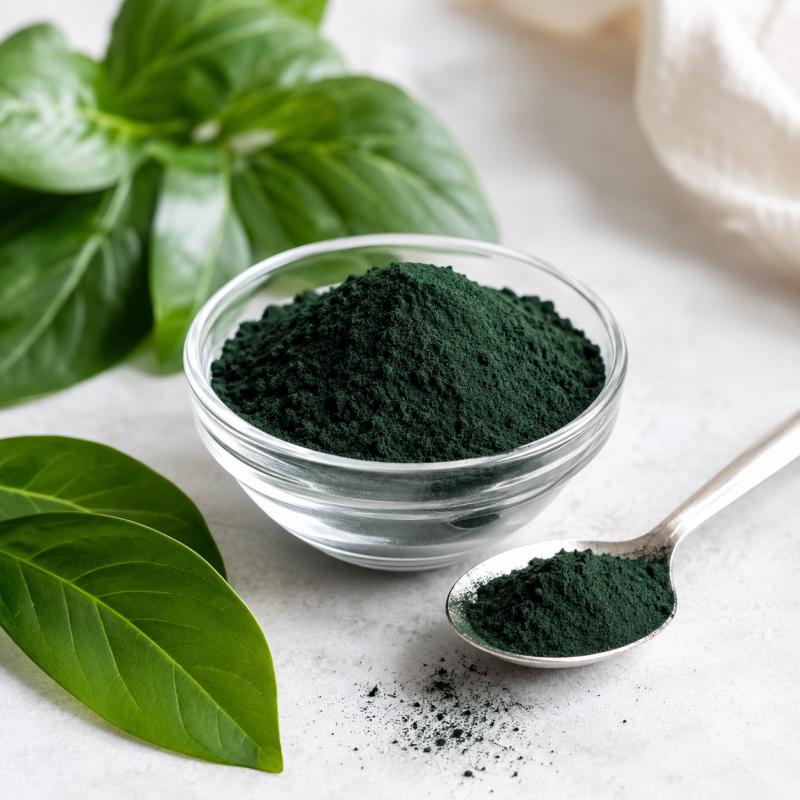
Because of these characteristics, the uses of Sodium Copper Chlorophyllin are expanding to include dietary supplements and food products, medicines, and personal care products.
At B-Thriving, we produce high-purity sodium copper chlorophyllin powder from specific plant sources. We aim to offer a precisely defined ingredient with a high degree of evaluation, flexible specifications, and active support for its formulation.
From Natural Chlorophyll to a Functional Ingredient
Natural chlorophyll has low solubility in water and is adversely affected by changing storage conditions that include heat and light and by exposure to oxygen and acids. When compared to natural chlorophyll, sodium copper chlorophyllin offers the following advantages in commercial formulations:
•Greater Convenience: Sodium copper chlorophyllin is available in powdered form and therefore has greater solubility in water and can be incorporated into formulations for products that are intended to be used for oral care and other water-soluble products.
•Color Stability: The copper structure is more stable than chlorophyll in the native form. Thus, sodium copper chlorophyllin will have color stability.
•Appearance: Sodium copper chlorophyllin provides a deep green color that is easily recognizable in standard and consistent production.
•Formulation Flexibility: The characteristics of sodium copper chlorophyllin provide great formulation potential in the production of capsules, tablets, powders, liquids, creams and even food products.
Due to these attributes, Sodium Copper Chlorophyllin has become a popular commercial ingredient.
Key Sodium Copper Chlorophyllin Benefits
1. Support for Internal Deodorization
The support for internal deodorization is probably the most talked-about Sodium Copper Chlorophyllin benefit.
•Interactions with odorous compounds: Chlorophyllin may bind with some sulfur-containing metabolites that have an unpleasant odor and are associated with body or fecal odor.
•Helpful-care applications: Traditionally, it has been used with hygiene methods for controlling odor for patients with ostomies or for patients with continence issues.
•Individual differences: The deodorizing effect may be due to differences in dosage, diet, metabolism, and individual physiology.
Sodium copper chlorophyllin should be considered auxiliary to other means of controlling odor.
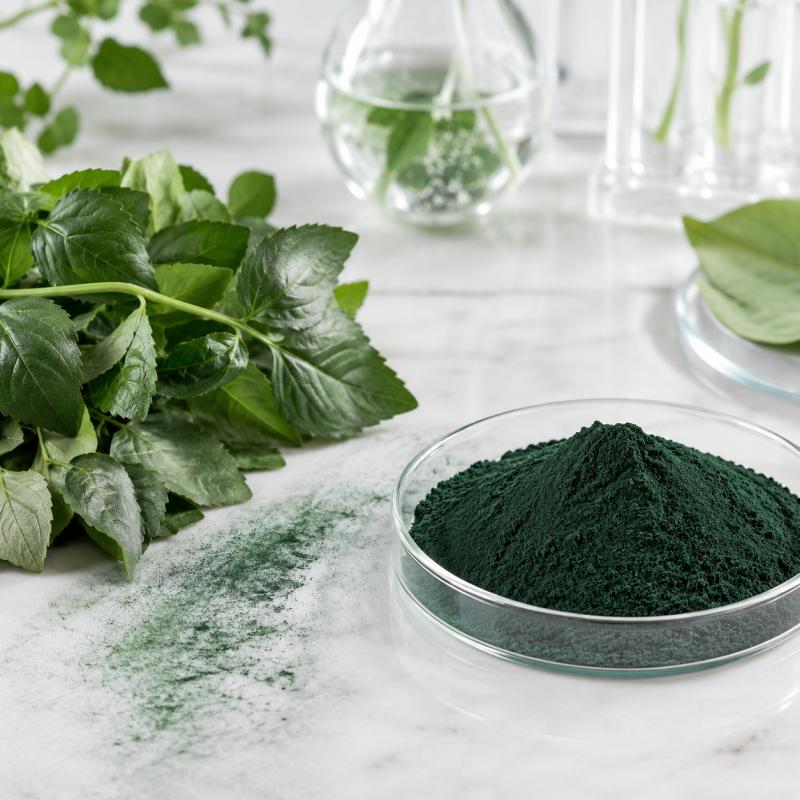
2. Antioxidant Activity
Recent research has dominated investigations into the antioxidant effects of chlorophyllin.
•Interactions with reactive oxygen species: There is some evidence to suggest that chlorophyllin may be capable of adduct formation with some free radicals and reactive oxygen species.
•Control of lipid peroxidation: Very early-stage studies have suggested that chlorophyllin may be able to inhibit lipid peroxidation.
•Cooperativity: The potential of chlorophyllin to be combined with various other antioxidants, such as vitamins and plant extracts, is dependent upon the formulation.
The sodium copper chlorophyllin actions are somewhat understood with the mechanisms discussed. Without sufficient evidence and appropriate legislative structures, products should not be allowed to make further claims.
3. Topical and Skincare Applications
Sodium copper chlorophyllin has a long history of incorporation in topical formulations and is still relevant to some cosmetic applications.
•Wound-care legacy: Some initial clinical studies evaluated the use of chlorophyllin in promoting granulation and epithelial cells.
•Odor management: Due to its deodorizing effect, it can be used in products for the management of odor as well as in skin and wound care.
•Aesthetic Value: The formulations of mineral, botanical, or plant-based skin care can utilize dark green color.
•Functional Use: Today, Sodium Copper Chlorophyllin is typically used in cosmetics as a colorant or functional supporting ingredient.
4. Dietary Contaminant Interaction
Sodium copper chlorophyllin has some documented positive benefits with respect to its interaction with some dietary contaminants.
•Aflatoxin: Some studies indicate that chlorophyllin may interact with aflatoxin B1 and possibly impact its bioavailability in the gastrointestinal tract.
•Mutagen interaction: Some laboratory studies documented the interaction of chlorophyllin with some heterocyclic amines, which are generated during the cooking of food at high temperatures.
•Formulation use: These studies are more relevant to a controlled setting or short-term studies than to generalized detox claims.
It is advised that sodium copper chlorophyllin not be marketed as a broad-spectrum detox product.
5. Water Soluble Green Coloration
Sodium copper chlorophyllin is a natural commercial green food colorant.
•Brilliant green color: Sodium copper chlorophyllin imparts an intense green shade to food, drinks, dietary supplements, products for oral care and cosmetics.
•Enhanced formulation: Because it is water soluble, sodium copper chlorophyllin is incorporated into water-based formulations more easily and evenly than other forms of chlorophyll.
•Improved stability during processing: Sodium copper chlorophyllin is more stable than other forms of chlorophyll during processing to varying degrees of heat and light.
•Flexible Product Positioning: Local regulations may identify the product as sodium copper chlorophyllin, copper chlorophyllin complex, or as an authorized color additive.
Sodium Copper Chlorophyllin Applications
| Application Sector | Typical Formats | Relevant Functional Value |
| Dietary supplements | Capsules, tablets, powders | Support for deodorization; positioning as an antioxidant |
| Functional beverages | Drink mixes, shots, liquid supplements | Coloring and differentiation; soluble green color |
| Food Products | Confectionery, bakery, and dairy alternatives | Green color; stable |
| Oral care | Toothpaste, mouthwash, breath products | Used for color and historic purposes for deodorization |
| Personal care | Creams, masks, gels, soaps | Provides green color; suggests use for skin care applications |
| Specialized topical products | Ointments and care preparations | Heritage of use for wound care and management of odor |
The final applications and the claims that are allowed vary depending on the market of destination, the form of the product, the classification of the ingredient, and the applicable regulations.
Specifications for Sodium Copper Chlorophyllin from B-Thriving
B-Thriving offers the following specifications for their Sodium Copper Chlorophyllin.
•Part Used: Leaf
•Active Ingredient: Sodium Copper Chlorophyllin 100%
•Test Method: UV Spectrometry
•Appearance: Dark Green Powder
•Solubility: Water soluble
•Available Support: Samples, technical documents, customization
B-Thriving Manufacturing and Technical Support
B-Thriving utilizes a specification-based supply model.
•Customized Physical Attributes: At B-Thriving locations, you can customize the particle size and processing features for a specific formulation.
•B-Thriving strives to keep their documentation excellent and thus provides requested product specifications and certificates of analysis.
•Support for application-related issues: Technical support is provided for issues such as solubility, blending, discoloration, and stability as well as for other tests if required.
•Support for variable orders: The production team is available to support sampling orders and to support order modifications.
•Trusted supply and demand support: The supply and demand support team provides reliable on-time delivery service.
Realize the Value of Sodium Copper Chlorophyllin with B-Thriving
Sodium Copper Chlorophyllin Benefits allow formulators to find the best balance of functionality, evidence, compliance, and commercialization. Contact B-Thriving for ordering specifications and samples, current pricing, and any technical queries related to your next formulation for a supplement, food, beverage, oral care, or personal care product.
FAQs
Q1. What is sodium copper chlorophyllin?
Sodium copper chlorophyllin refers to a water-soluble form of chlorophyll that has been synthetically altered. This form has a stable center with a replaced, commercially adaptable copper.
Q2. What is the primary sodium copper chlorophyllin benefit?
While the advantages of sodium copper chlorophyllin are numerous, it is primarily known and used for its ability to internal deodorization.
Q3.Can sodium copper chlorophyllin help with internal deodorization?
Sodium copper chlorophyllin has been used to help manage odor from the body, feces, and even from wounds. Effects of the formulation may depend on a variety of factors including diet and personal metabolism.
Q4. Can sodium copper chlorophyllin help with oxidation?
Early studies show that sodium copper chlorophyllin can help moderate lipid oxidation, while also interacting with some reactive oxygen species. Health related claims for this substance should be limited to the regulations and evidence available in the region.
Q5. Is sodium copper chlorophyllin a food safe dye?
One of the primary advantages of sodium copper chlorophyllin is the ability to impart a bright and water-soluble green color to foods. This benefit can also be used in beverages, candy, dietary supplements, and oral care products.

