

Millet is a well-known cereal grain; however, millet seed extract is a lesser known ingredient. It could be used by product developers for functional foods, beauty from within products, mild skin care products and dietary supplements.
The sourcing challenge: Millet ingredient may refer to a number of very different ingredients. The composition and formulation behavior of millet flour, protein, oil and fermented millet and concentrated seed extract are not similar.
Buyers should specify the type of millet material they are looking for, and the role that the millet material will play in the final product before approving a supplier or sample.
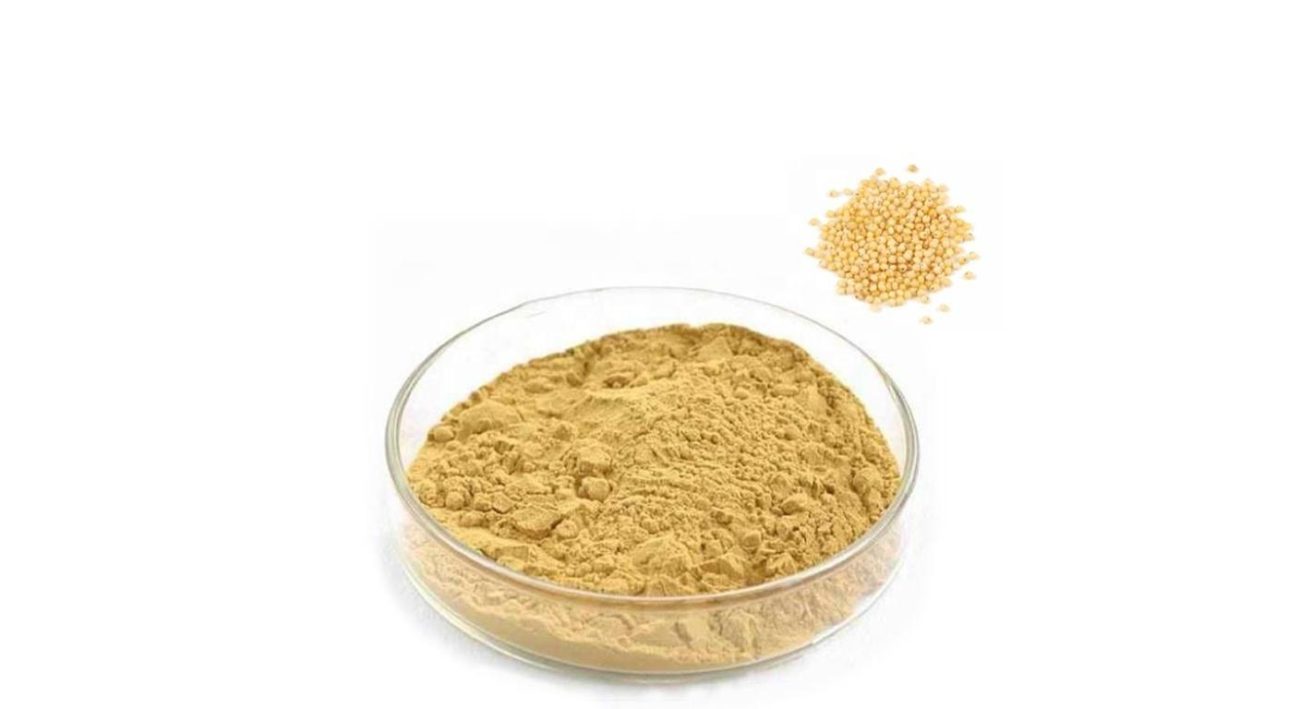
Millet Seed Extract: What Is It?
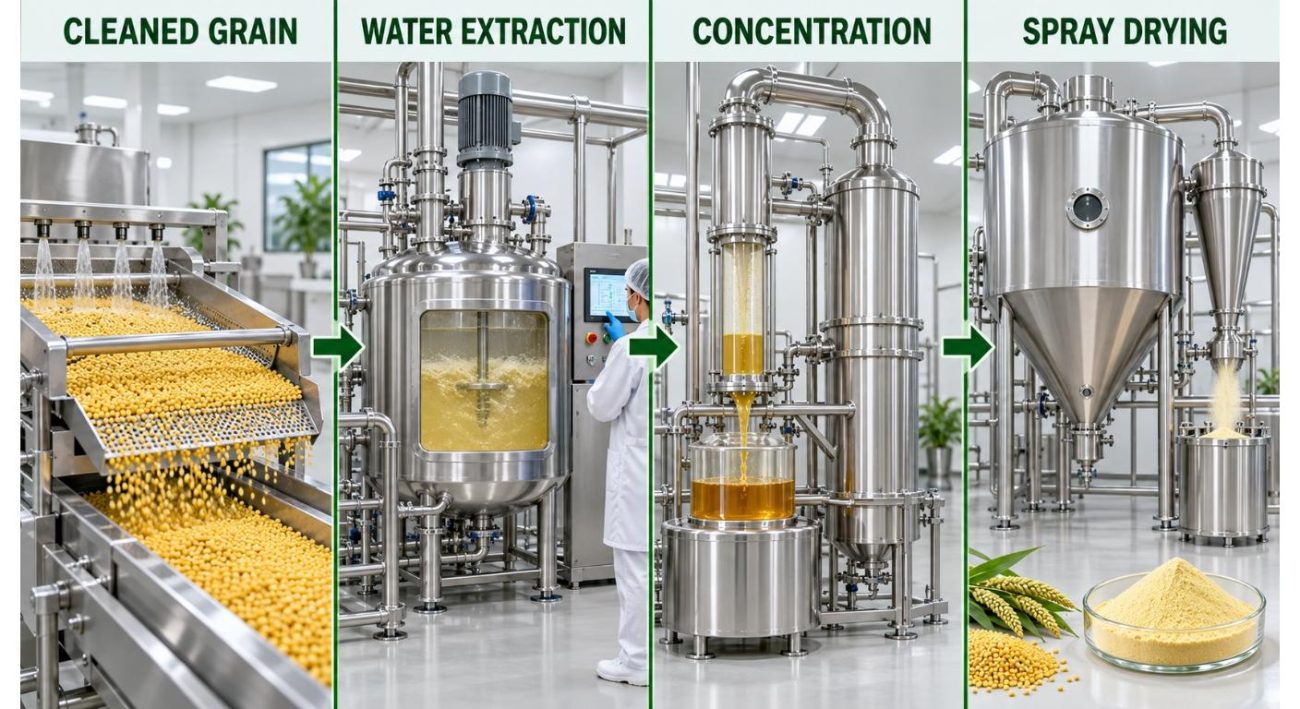
The millet seed extract is extracted from millet grain, a selected soluble fraction of the grain is concentrated into a liquid and then dried to a stable powder. The extract can consist of a combination of polysaccharides, flavonoids, amino acids and other compounds found in the grain, depending on the process used.
B-Thriving’s present day Millet Extract is said to be made from spray dried, low temperature, water extracted millet grain and is a pale yellow fine powder. It is listed to have a 10:1 extraction ratio and TLC identification.
This information represents a broad category of product type, but the information that a formulator requires to determine if the ingredient will be suitable for their formula—composition information, physical-property and application information—must still be provided.
Millet Extract is NOT Flour or Oil of Millet.
Millet flour is principally made from dried and ground grain. Can contain a significant amount of the starch, protein, fiber and natural flavoring of the grain and typically needs to be added at a higher rate.
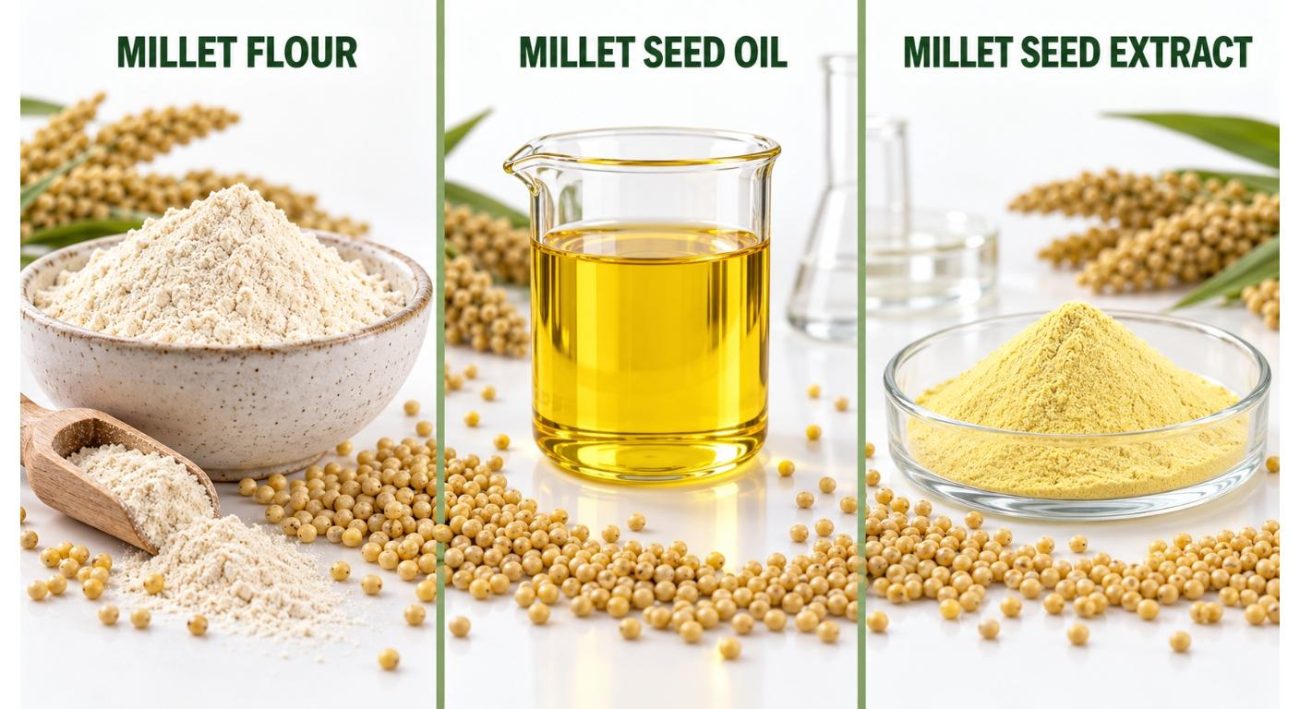
The lipid soluble components of millet seed oil act like an oil phase. May be beneficial in emulsions or oil based products, but cannot replace a Water Extracted powder.
Millet seed extract, which is more concentrated, is made to extract selected soluble constituents. Color, taste, dispersibility and active profile are highly dependent upon the extraction and drying process.
Therefore, developers should not select millet ingredient based on the name. The form that provides the desired composition and functions in the production system is correct.
| Millet Ingredient | Production Method | Main Formulation Characteristic | Typical Format |
| Millet flour | Drying and milling | High starch and grain flavor | Foods and powder blends |
| Millet protein | Protein separation | Adds protein and may affect texture | Nutrition powders |
| Millet seed oil | Pressing or lipid extraction | Oil-phase ingredient | Emulsions and oil blends |
| Millet seed extract | Extraction, concentration and drying | Concentrated soluble components | Supplements, foods and skincare |
| Fermented millet | Controlled microbial fermentation | Modified flavor and composition | Specialty foods and cosmetics |
Interpret What 10:1 Extract Ratio Means
A 10:1 ratio will typically mean that 10 units of starting material have been used to generate one unit of extract. It is not to be interpreted as the treatment powder containing 10% of a specific active component, or ten times more effective than millet flour.
The meaning of the ratio may get influenced by extraction efficiency, moisture of the starting material, filtration losses and use of carriers. The composition of 2 10:1 extracts may therefore be different.
Inquire about the ratio being based on dry or fresh product, and if a carrier is used in the spray drying process. When there is a particular polysaccharide or flavonoids that are significant, ask for quantitative data and not only the extraction ratio.
Specifically verify Millet Species and Material used
The term “millet” refers to a group of cereals and is used commercially for a number of them. Foxtail millet, pearl millet, finger millet and proso millet are not the same raw materials.
The supplier should specify the species and indicate if the seed or whole grain/ polished grain or other fraction is used. This data should be the same on the TDS, specification sheet and batch CoA.
TLC can be used for identifying botanical or chemical-profile, however it is not able to quantify all active compounds. The buyer should enquire as to the reference material used and what aspect of the extract is being confirmed by the TLC method.
Select the Extract and match to the Application.
For functional foods and powdered supplements, flavor, color, moisture, and dispersibility and compatibility with proteins, minerals and sweeteners are important factors that should be taken into consideration when evaluating the formulation. A pale yellow powder can still have an impact on the light coloured finished product.
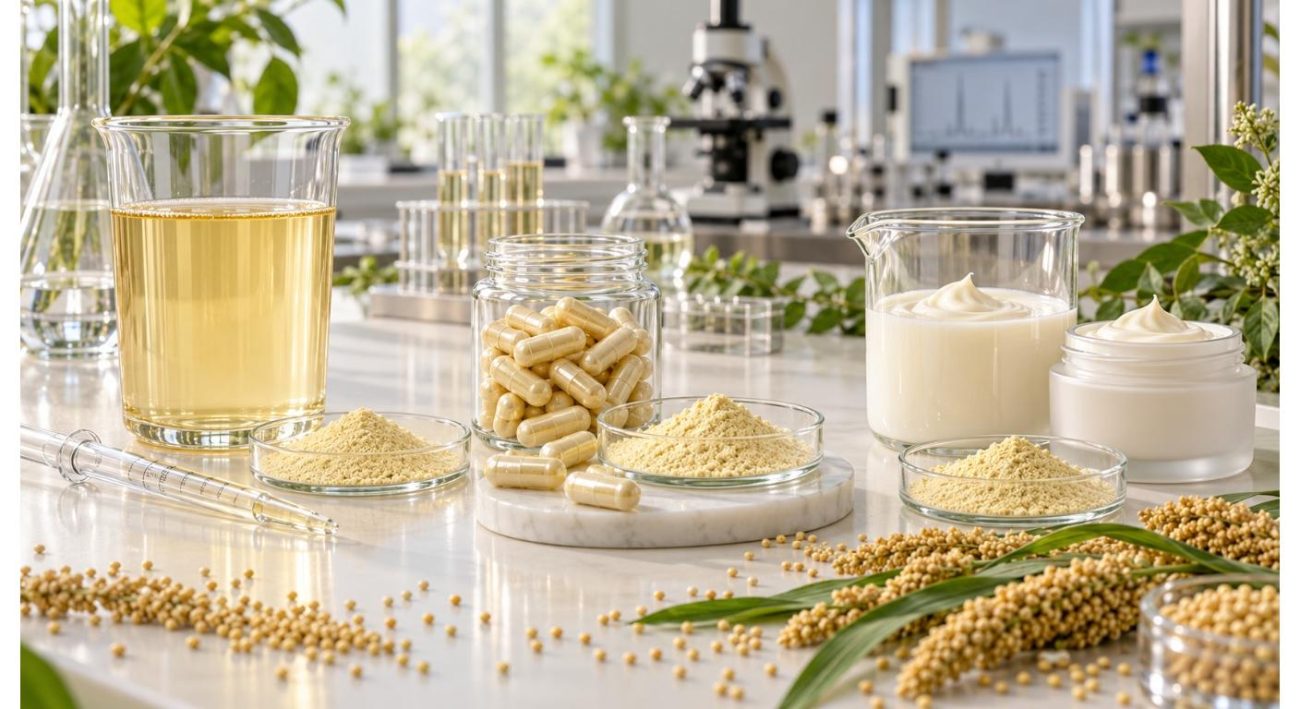
In the case of capsules or tablets, particle size, bulk density and blending uniformity and flow are important characteristics. If the extract is too “thick,” it may need some adjustments to the formulation.
When evaluating extracts of millet seeds in skin care products, water-phase compatibility, pH tolerance, odor and color stability and interaction with preservatives should be evaluated. B-Thriving’s overview of plant extracts for beauty supplements also illustrates why it is important to always start with the final product format and positioning.
| Application | First Trial | Main Risk to Observe |
| Capsules | Dry blending test | Poor flow or segregation |
| Tablets | Compression trial | Uneven content or weak tablets |
| Functional beverages | Water-system trial | Sediment and flavor impact |
| Nutrition powders | Reconstitution test | Lumping and grain-like taste |
| Skincare emulsions | Water-phase addition | Precipitation or color drift |
| Serums | Low-viscosity stability test | Haze and settling |
Test for Solubility and Dispersion separately
The words soluble and dispersible are not synonymous. Soluble extract will form a solution under certain conditions; dispersible powder will form a temporary solution with the powder particles settling out.
Ask for a solubility or dispersibility method which specifies solvent, concentration, temperature, mixing time and time of observation. Without these conditions, a term like “water soluble” is of little value.
Test the sample in the actual formulation and NOT just plain water. Change in behavior may occur due to acidity, minerals, proteins, surfactants and other botanical ingredients.
Assess the effects of the sensory and visual impacts.
It could contain millet ingredients which may add a grain taste, smell or light yellow color. While these may not be quality issues, they may have an impact on product positioning.
Functional-food developer should test the ingredient at the desired level of intake. The skincare formulator should look at the color and smell post-emulsification, heating and storage.
Don’t test only the freshly prepared sample. Reobservations after stability testing due to sedimentation, darkening, odor changes, or precipitation that may occur after stability testing.
Read Safety and quality documents
Ask for a TDS, specification sheet, batch-specific CoA and pertinent safety data. B-Thriving’s botanical extract technical data sheet guide outlines what to include in the identity, composition, storage and physical-property fields.
Testing parameters may vary and include moisture, microbiological parameters, heavy metals, pesticide residues and others related to the origin and destination market. Each result should be associated with the provided batch.
Buyers should also check allergen claims, vegan status and carriers/processing aids. These details have an impact on labeling and clean label claims.
Run a Bench Trial BEFORE Setting the Specification.
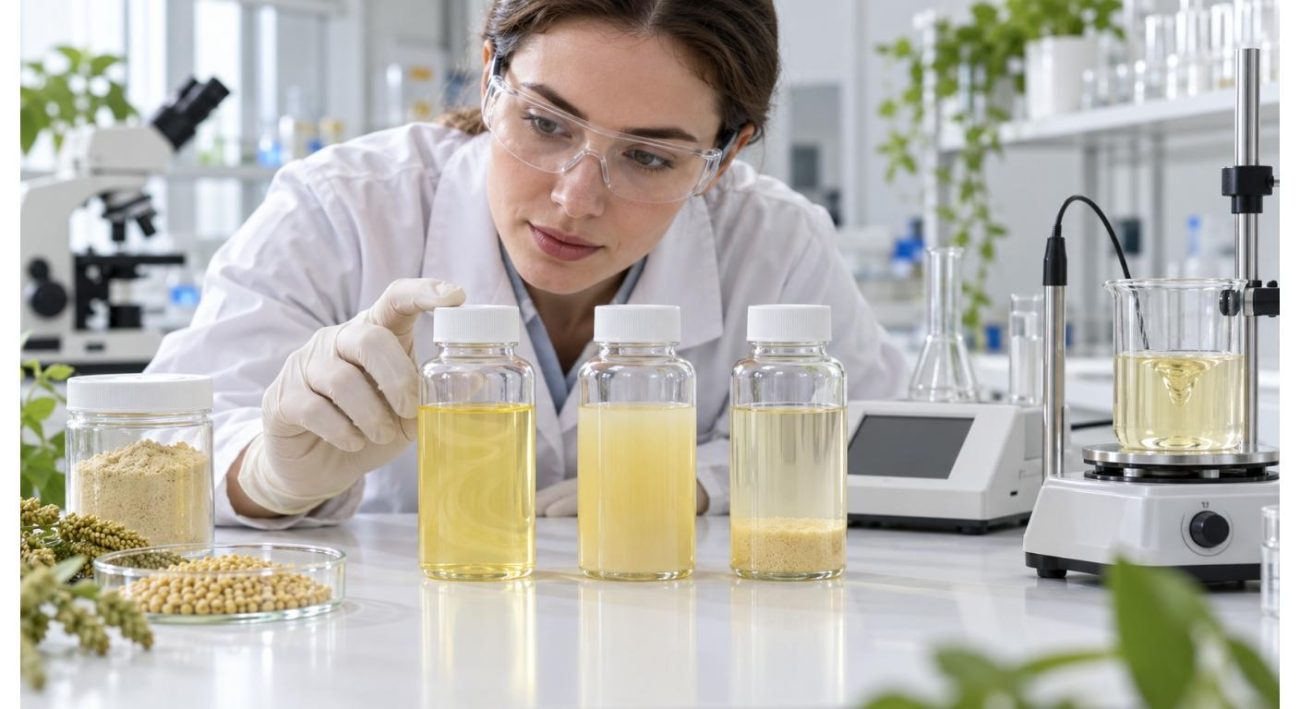
Start on a small bench test on use level. Document mixing sequence, temp, PH, processing time and notes right after mixing.
Next, find out which attributes are very important to the product. These can be such things as a maximum sediment, acceptable colour range, moisture limit, particle size or microbial specification.
If the trial is successful, make these requirements into a purchasing specification. This will help ensure that subsequent commercial lots get approved even if they have the same 10:1 label.
Create the commercial Order.
Inquire which batch from the normal commercial batch is the sample from and if the same specification can be supplied repeatedly. Check MOQ, delivery time, package and storage requirements.
The millet extract from B-Thriving comes with a three-year shelf life in 25 kg drum packaging. The buyer should request if there are smaller trial quantities available and the storage conditions that maintain the claimed shelf life.
Contact the supplier via the B-Thriving inquiry page for a present specification, sample or quotation.
Conclusion
When choosing millet seed extract, material identification as well as extraction process and performance (not simply the word millet and the ratio of 10:1) should be taken into consideration.
With this knowledge developers can differentiate it from other grain flour and oil, and validate the source raw material and test its use in actual production, so as to establish a more useful specification for food, supplement or skin care production.
FAQs
Q1. What is the extract of millet seed?
It is a product made by extracting certain selected components from millet grain and drying the extract. It doesn’t involve just milling millet to flour.
Q2. The 10:1 millet extract is what?
Describes the general relationship between starting material and final extract in general. Does not provide any percentage of any one active compound.
Q3. Does millet seed extract dissolve in water?
Its behavior will be dependent upon extraction process, carrier and use concentration. Buyers are advised to request test conditions and ensure it is verified in their actual formulation.
Q4. Is it possible to use millet seed extract in the field of skincare?
Can be tested for cosmetic formulations of choice. The first tests to conduct are compatibility, colour, odour, pH stability and preservative interaction.
Q5. Is TLC a quantitative or qualitative test?
TLC is usually employed to aid identification or to compare chemical profiles. If a claim is made about an active ingredient, it must be quantified in a separate assay.

