
Oregano is an aromatic herb utilized in culinary and non-culinary applications, including developed products and introduced services for humans and animals. Compared with ground oregano, oregano extract powder provides a concentration of specific phytochemicals and enhanced consistency of formulation attributes.
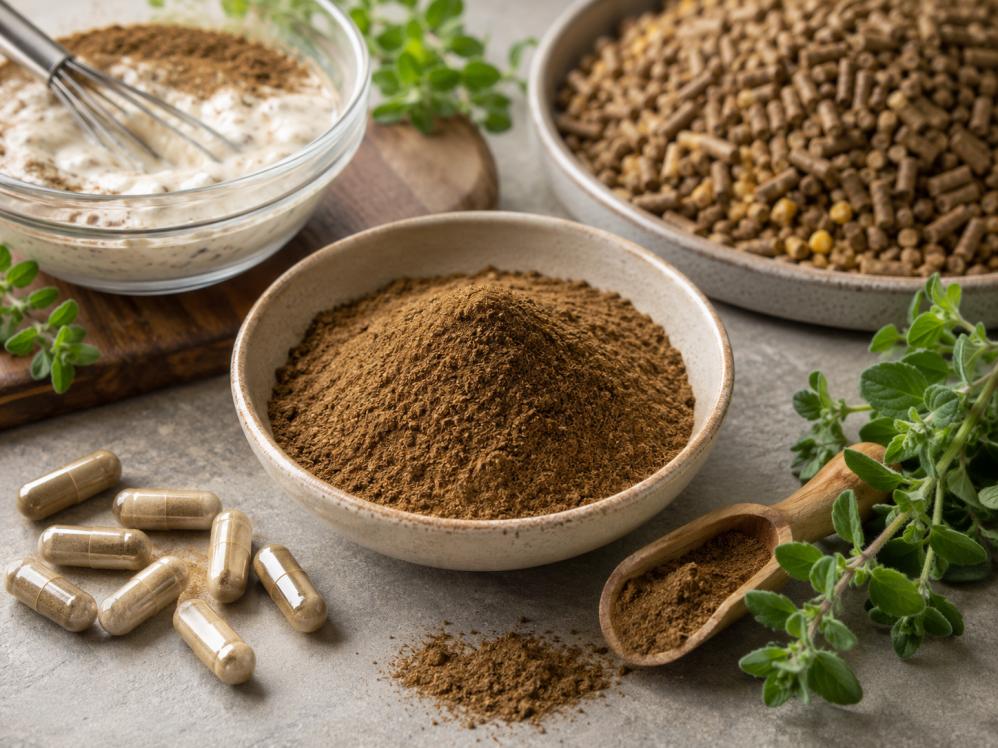
Active compounds and carriers, along with the methods of testing and the physical characteristics of the finished product, will differ commercially. This Oregano Extract Powder Buying Guide provides a comparison of product specifications, applications, quality documents, and capabilities of suppliers to assist manufacturers in placing bulk orders.
What Is Oregano Extract Powder?
Botanical Origin of Oregano
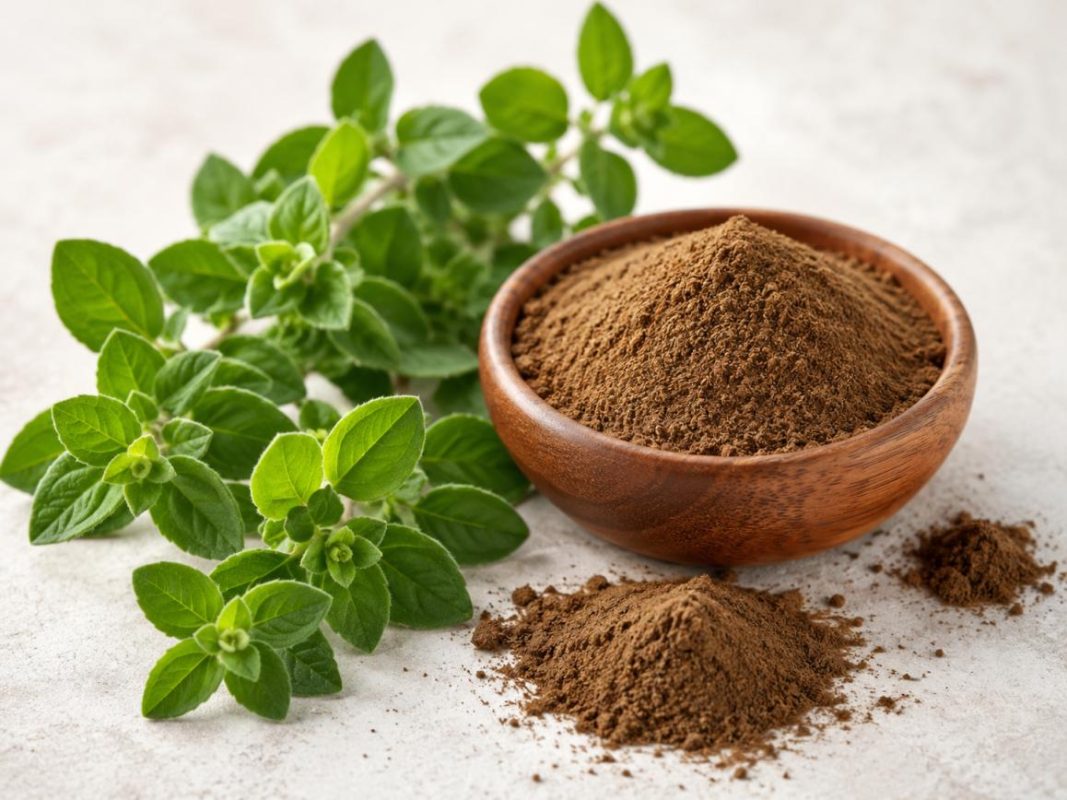
Oregano extracts are generally supplied from the species Origanum vulgare. The selection of the variety, the locale of cultivation, the conditions under which the plants grew, when they were harvested, and which part of the plant is used all affect the chemistry of the final ingredient.
It is imperative that buyers understand the part of the plant and the botanical name, as the composition of the product can vary greatly when manufactured from the leaves and aerial or the whole plant.
How Oregano Extract Powder Is Produced
The production of oregano extract powder typically follows these steps:
•Selection and cleaning of raw material
•Grinding and/or pretreatment
•Extraction
•Filtration and concentration
•Carrier addition
•Drying
•Sieving and blending, followed by quality testing
The variation in the production process is largely due to the differences in the desired extraction ratio, the active compounds, the desired solubility, and the use.
Oregano Powder vs. Oregano Extract Powder
| Comparison | Oregano Powder | Oregano Extract Powder |
| Processing | Oregano Powder involves the grinding/milling of the whole oregano herb after it’s been dried. | Oregano Extract Powder has gone through the extraction process, meaning it has been concentrated and dried. |
| Compound concentration | Oregano Powder has relatively low concentration of active compounds that may even be inconsistent. | Oregano Extract Powder can be standardized and therefore, the concentration of active compounds can be higher and more consistent. |
| Main uses | Oregano Powder is mainly used as a spice or seasoning and in commercial herbal products. | Oregano Extract Powder is mainly used in dietary supplements, and in food and animal feed products. |
| Formulation amount | Oregano Powder is used in relatively higher amounts. | Oregano Extract Powder is used in relatively lower amounts. |
Quality evaluation/Oregano Powder’s quality can mostly be evaluated through sensory evaluation and basic physical tests. The quality of Oregano Extract Powder can mostly be evaluated through assays, and tests for purity, carriers, and methods.
Key Active Compounds in Oregano Extract Powder
Carvacrol
Carvacrol is an important constituent of oregano essential oil and is classified as a phenolic compound. It is frequently used as a standardization indicator for commercial oregano ingredients. Its concentration should be verified using an appropriate analytical method rather than estimated only from an extraction ratio.
Thymol
Thymol may occur together with carvacrol. Its level depends on the oregano variety, growing conditions, raw-material batch, and extraction process.
Additional Compounds Found in Nature
•Rosmarinic acid: This compound, which is polyphenolic in nature, is prevalent among members of the mint family.
•Flavonoids: Oregano has multiple naturally occurring flavonoids.
•Terpenes: These compounds provide oregano with its characteristic smell and taste and also its formulation behavior.
•Phenolic Compounds: When assessing different extracts, the total of the phenolic profile may help.
These constituents are studied for antioxidant, microbial-balance, digestive, and inflammatory-response applications, but oregano extract should not be presented as a guaranteed treatment for disease.
Understanding Oregano Extract Powder Specifications
A practical Oregano Extract Powder Buying Guide should evaluate more than one specification.
| Specification | What Buyers Should Confirm |
| Botanical name | Correct Latin plant identity |
| Plant part | Leaf, aerial part, or whole herb |
| Active ingredient | Carvacrol, total phenols, or another marker |
| Assay | Declared concentration of the active compound |
| Extraction ratio | Such as 10:1 or 20:1 |
| Test method | TLC, HPLC, GC, or another suitable method |
| Appearance | Color, odor, texture, and powder condition |
| Carrier | Maltodextrin, gum arabic, or another material |
| Moisture | Suitability for storage and stability |
| Particle size | Compatibility with blending, tablets, or capsules |
| Solubility | Water dispersibility or oil compatibility |
| Microbiology | Total count, yeast, mold, and pathogens |
| Contaminants | Heavy metals, pesticides, solvents, and foreign matter |
Understanding Carvacrol Content
Product formulations may have different carvacrol concentrations. These formulations may be:
•Low Concentration Extract: Useful if oregano is one amongst many in the overall botanical blend.
•Standardized Powder: Gives formulators the opportunity to work with flexibility within predetermined limits of active ingredients.
•High Carvacrol Powder: Odor and stability would be an issue and it may have other components of oregano oil.
•Encapsulated Oregano Oil Powder: It is the powdered version of oregano oil. It is made through a carrier or encapsulation technology to powder the liquid oil of oregano.
To analyze carvacrol, you will have to evaluate the production batch, test method, carrier, and the certificate of analysis. Comparing percentages will not be enough.
Ratios vs. Standardized Extracts
Extraction ratios are the most common example of ratios. In the case of ratios, the value is often equated to the amount of units of raw herb used to produce the extract. The value of an extraction ratio may be diminished by a number of variables that may include the raw material’s moisture content, extraction efficiency and losses incurred in the process.
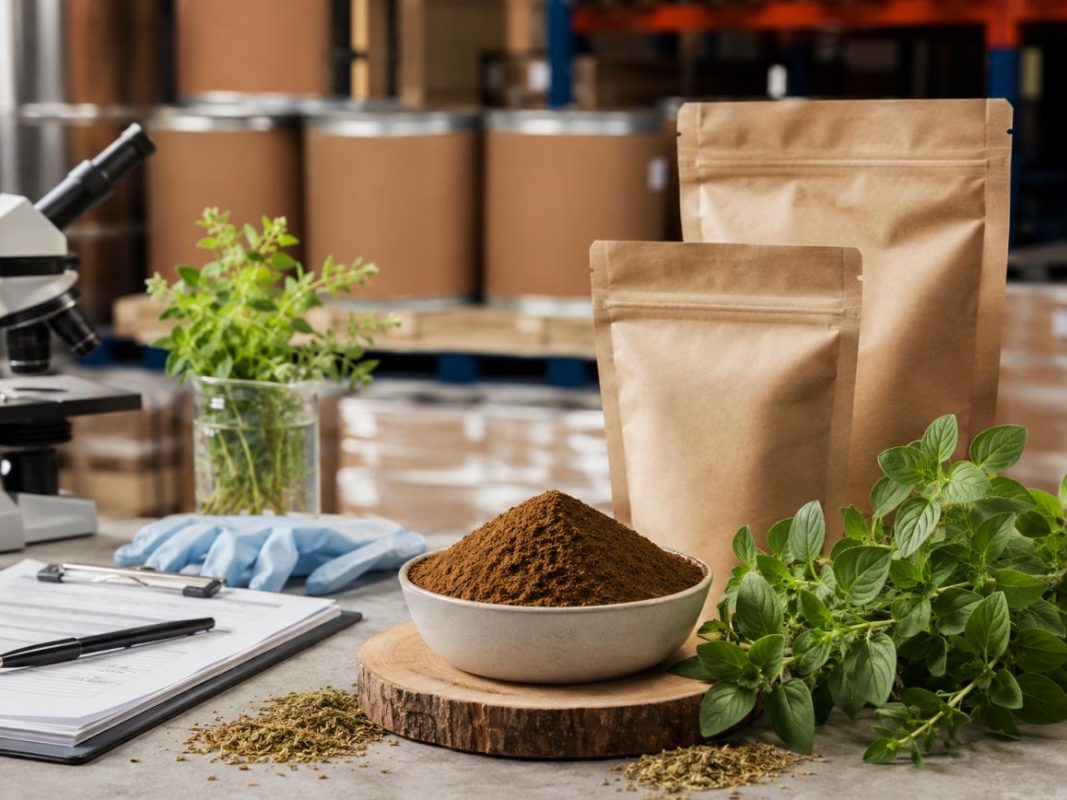
Simply knowing the ratio will not indicate the value or potency of a formulation. The following should be verified:
•Botanical identity: Must be documented to the correct species of oregano and the right plant part.
•Extraction Method: The purpose must be clearly defined in order to substantiate the method.
•Active-compound content: A quantitative assay would be of more value to the formulation.
•Carrier disclosure: Must indicate the type and the amount of carrier.
•Batch consistency: This must be substantiated through a number of COAs.
To achieve consistent performance and repeatability, brands must use standardized extracts.
Typical Uses of Oregano Extract Powder
| Use | Main Buying Considerations |
| Dietary supplements | Assay and capsule filling considerations and regulations |
| Functional foods | Flavor, color, solubility, and stable under heat |
| Beverage powders | Dispersibility and sedimentation features, odor management |
| Animal nutrition | Consistency in batch and blending |
| Botanical blends | Compatibility with other extracts |
| Capsules and tablets | Particle size, flowability, and bulk density |
| Private label products | Regulatory documents, labeling, and product traceability |
Typical Cost Considerations
•Not only price: A lower price may represent reduced active ingredient, increased carrier, or fewer quality assessments.
•Extraction ratio: Active ingredients will not be compensated by a claim of 10:1 or 20:1.
•Ignoring the carrier: Carriers can significantly reduce the active ingredients, affect solubility, label compliance, and challenge processing.
•Generic COA: A shipment cannot be processed with only a generic Certificate of Analysis (COA).
•No samples: Flowability, odor and color need assessment. Also, the new formulation needs to be assessed for compatibility with existing formulations.
•Ignoring regulations: Food and dietary supplement formulations, cosmetic, and animal feed formulations have varying requirements.
•Extract assumptions: There is a lot of variation with botanical sources, production methods, and extract standardization.
Why Choose B-Thriving?
Established in 2010, Xi’an B-Thriving I/E Co., Ltd. focuses on the extraction of herbs and their preparations as natural ingredients and active pharmaceutical ingredients for the pharmaceutical, biotechnology, cosmetic, nutrition and feed industries.
Standardized Oregano Extract
| Item | Specification |
| Part used | Leaf |
| Extract Ratio | 10:1 |
| Test Method | TLC |
| Appearance | Brown fine powder |
B-Thriving combines careful raw-material selection, precision pulverization, modern drying, in-house testing, and batch quality management.
•Selection: Herbs are evaluated for origin, appearance, botanical identity, and chemical profile.
•Manufacturing control: The processing method aids in keeping aroma and sensitive botanical constituents intact.
•Laboratory Testing: Analysis of the constituents of input and output materials is performed by contemporary suitable equipment.
•Contaminant Management: Treatment processes such as drying manage microbial, metallic and other types of contamination.
•Assured standards: Manufacturing complies with relevant standards and regulations of the Chinese Pharmacopoeia.
•R&D: Our team aims at further optimization of the production processes and the addition of new botanical ingredients.
Conclusion: Make Informed Decisions When Purchasing
An effective Oregano Extract Powder Buying Guide must look at the botanical identity, active constituents, extraction ratio, carrier, presence of contaminants, and consistency of appearance, documentation, and batch—and not the price.
For specifications, technical documents, or samples of our oregano extract, please reach out to B-Thriving.
FAQs
Q1. What is oregano extract powder?
The definition is as simple as the name. The powder is extracted from the oregano herb and distilled into a powder for extended use.
Q2. The distinction between oregano powder and oregano extract powder?
Powdered oregano is the physically ground herb. An extract powder involves taking the extract and dehydrating it.
Q3. A ratio of 10:1 for oregano extract means what?
Oregano extract with a ratio of 10:1 means that the extract was made with 10 parts of oregano. A 10:1 extract does not mean that the extract has 10 active components.
Q4. What is carvacrol in oregano extract?
Oregano essential oil is a carvacrol rich oil. The presence of carvacrol in oregano oil is often used as a quality control marker for the oil.
Q5. Is a higher carvacrol percentage always better?
Not necessarily. Although higher carvacrol may indicate a more potent oil, the optimal carvacrol percentage will depend on the purpose of the oil including safety and stability.

