
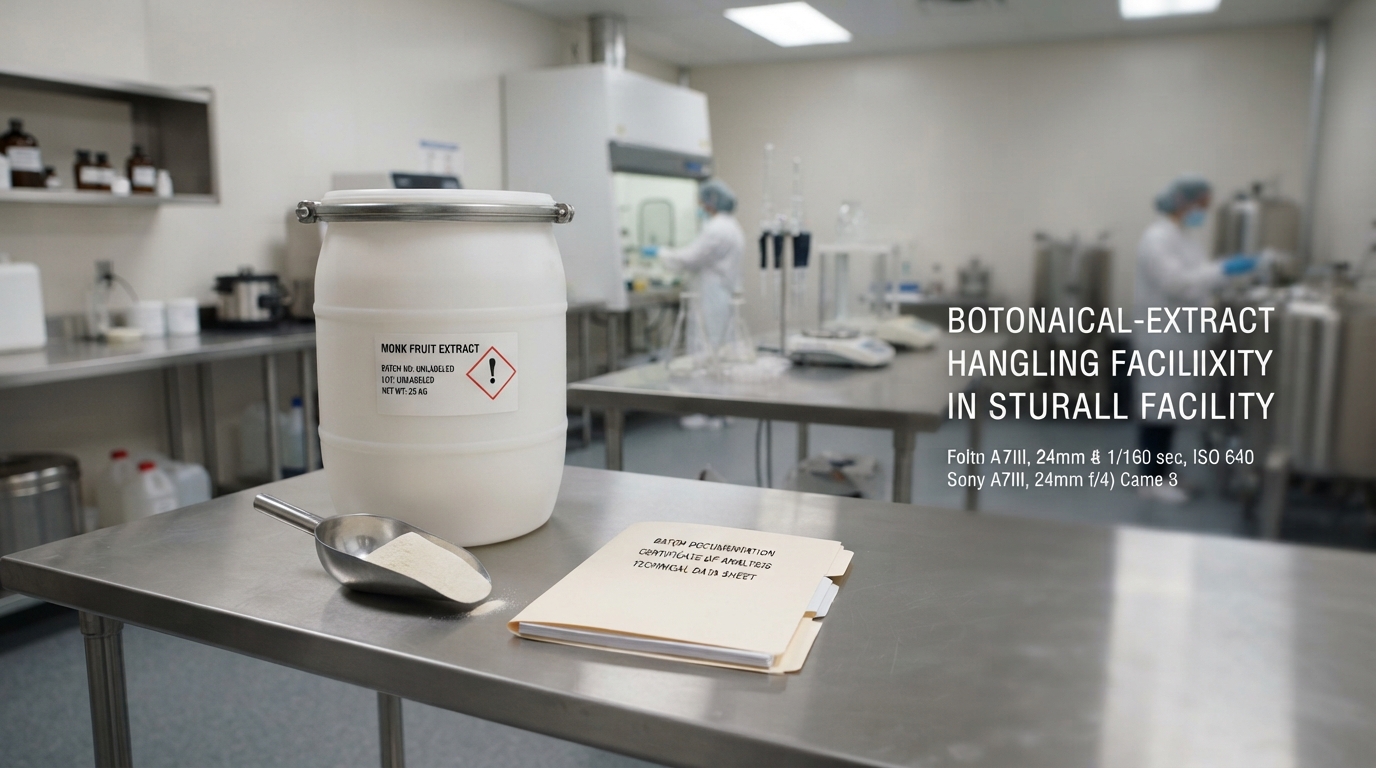
Bulk monk fruit extract is a standardized commercial ingredient derived from the fruit of Siraitia grosvenorii (also called Luo Han Guo), sold to manufacturers for use in food, beverage, and dietary supplement formulations. This sourcing guide explains what to specify, which documents to request, how to evaluate suppliers, and what mistakes to avoid when purchasing monk fruit extract in commercial quantities.
For manufacturers, sourcing monk fruit extract is not simply a matter of finding the lowest price. The extract’s mogroside profile, physical form, solubility, documentation, and regulatory status all affect whether it will perform as expected in a finished product. Understanding these factors before contacting suppliers will save time, reduce risk, and lead to better purchasing decisions.
What Is Bulk Monk Fruit Extract?
Monk fruit extract is a high-intensity natural sweetening ingredient produced from monk fruit, a small gourd native to southern China. The fruit contains a group of compounds called mogrosides, which are responsible for its sweetness. Mogroside V is the most abundant and commonly used marker for commercial standardization.
Bulk monk fruit extract differs from consumer retail products in both scale and specification. Manufacturers purchase standardized extracts with defined active-compound levels, documented specifications, and batch-specific quality data. Bulk materials are supplied in larger quantities and are intended for use as ingredients in other products, not for direct consumer sale.
Monk fruit extract is one of several natural sweeteners available to formulators. For broader context on how it fits into the natural-sweetener category, see our guide to natural sweetener options.
Key Specifications to Evaluate Before You Buy
When comparing bulk monk fruit extract from different suppliers, the most important document is the product specification sheet. The following specifications matter most for manufacturing decisions.
| Specification | What It Tells You | Why It Matters |
|---|---|---|
| Mogroside V content (%) | The amount of mogroside V in the extract | Primary standardization marker; affects sweetness and pricing |
| Total mogrosides (%) | The combined mogroside content | May be higher than mogroside V alone if other mogrosides are present |
| Physical form | Powder, granule, or liquid | Determines handling, blending, and application suitability |
| Solubility | Whether the extract dissolves in water | Critical for beverages and liquid processing |
| Moisture content (%) | Water content in the powder | Affects shelf life, flowability, and microbial stability |
| Particle size | Mesh or micron range | Influences blending uniformity and dissolution rate |
| Shelf life | Stated stability period | Needed for inventory planning and storage |
| Packaging | Container type and weight | Affects handling, storage, and logistics |
Most commercial monk fruit extracts are standardized to a specified mogroside V percentage. Common levels include 5%, 10%, 20%, 30%, 40%, and 50%, although the exact available range varies by supplier. The appropriate level depends on the application, desired sweetness intensity, and cost targets.
Mogroside V, Potency, and Extract Ratio: Why They Are Not the Same
One of the most common sourcing mistakes is confusing extract ratio with potency percentage. These terms describe different things.
| Term | What It Means | Example |
|---|---|---|
| Extract ratio | The ratio of starting plant material to finished extract | A 10:1 extract means 10 kg of plant material produced 1 kg of extract |
| Potency/assay percentage | The measured amount of a specific compound in the extract | 20% mogroside V means 200 mg of mogroside V per gram of extract |
| Purity | The proportion of the material that is the target compound versus other constituents | High purity may refer to a refined isolate or concentrated fraction |
A 10:1 extract ratio does not mean the extract contains 10% mogroside V. The ratio describes processing yield, not active-compound content. The only reliable way to compare products is by the assay results shown on the Certificate of Analysis (CoA) or Technical Data Sheet (TDS).
When requesting quotations, always ask for the mogroside V assay percentage and the analytical method used to measure it. High-performance liquid chromatography (HPLC) is the most common method for quantifying mogrosides. If a supplier cannot provide this information, that is a significant concern.
How to Read Supplier Documents: CoA vs TDS

Manufacturers evaluating bulk ingredients should request both a Technical Data Sheet (TDS) and a Certificate of Analysis (CoA). These documents serve different purposes.
| Document | What It Contains | When It Applies |
|---|---|---|
| TDS (Technical Data Sheet) | Product-level specifications: appearance, physical form, particle size, moisture, packaging, shelf life, storage conditions | Describes the general product and its standard characteristics |
| CoA (Certificate of Analysis) | Batch-specific test results: assay, identity, heavy metals, microbial limits, residual solvents, batch number, testing date | Verifies that a specific batch meets the stated specifications |
The CoA is the more critical document for verifying a specific delivery. It should include:
- Batch number and production date
- Mogroside V assay result with testing method
- Heavy metal results (lead, arsenic, cadmium, mercury)
- Microbial testing results
- Residual solvent testing where applicable
- The laboratory that performed the testing
- Acceptance limits for each parameter
Do not assume that one CoA represents all batches. Each batch should have its own CoA with matching batch numbers. If a supplier offers only a single generic certificate, ask for batch-specific documentation.
The TDS provides helpful background about the product’s physical and chemical characteristics, but it is not batch-specific evidence. Always ask for the CoA before confirming an order.
Choosing the Right Monk Fruit Extract for Your Application
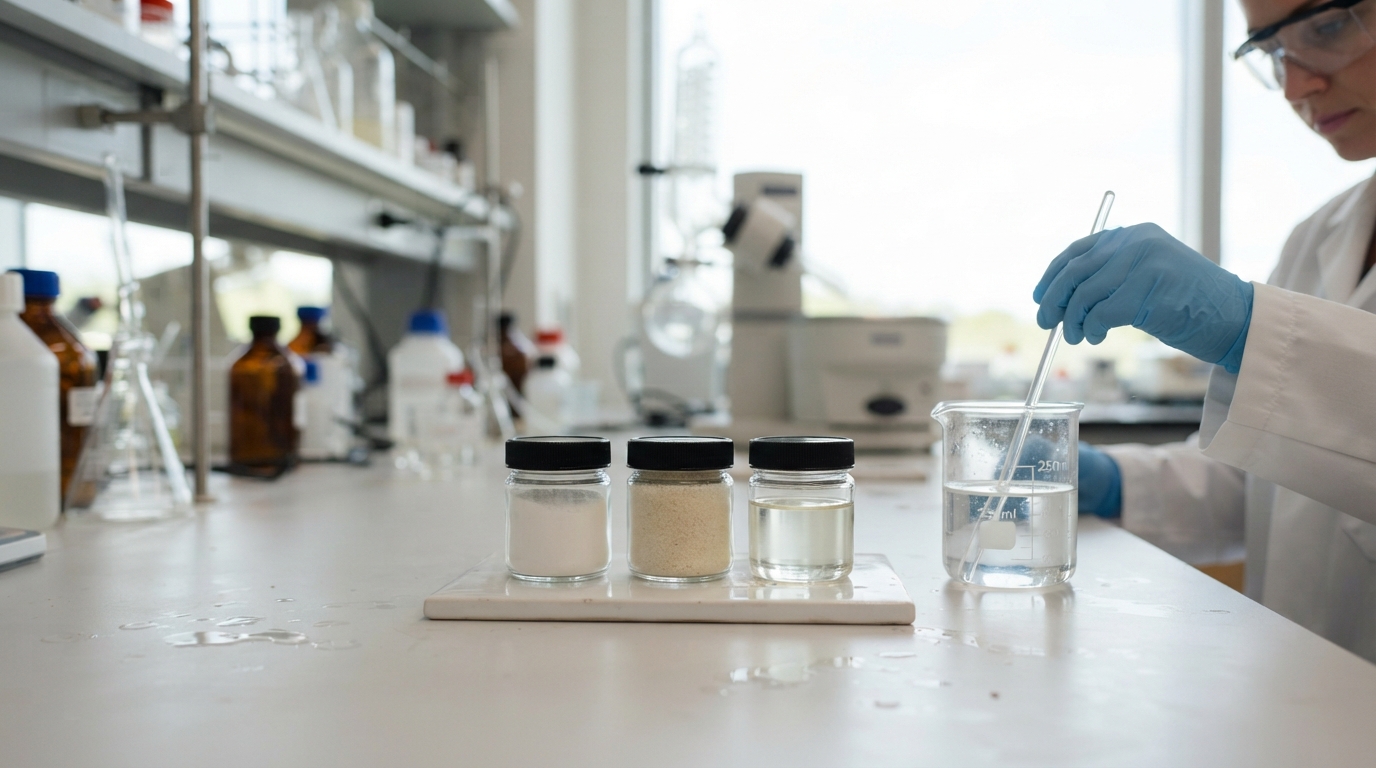
The ideal specification depends on how the extract will be used. Different applications place different demands on the ingredient.
| Application | Key Requirements | What to Evaluate |
|---|---|---|
| Beverages | Water solubility, clean taste, processing stability | Solubility testing data; how the extract performs in liquid systems |
| Bakery and food | Heat stability, moisture behavior | Heat stability data; how the powder blends with dry ingredients |
| Dietary supplements | Powder consistency, dosing accuracy, documentation | Assay consistency; batch-to-batch variation; regulatory documentation |
| Sweetener blends | Compatibility with other sweeteners | How it combines with stevia, erythritol, or other ingredients |
For beverages, solubility is especially important. A standard powder may require more mixing time or may leave sediment in clear liquids. Some suppliers offer formulations designed for improved solubility. Ask about the extract’s behavior in your specific processing conditions.
For supplements, batch consistency matters because each batch must deliver the same active-compound level across production runs. Ask suppliers how they control standardization and what historical batch data they can provide.
Monk fruit extract can also be combined with other natural sweeteners such as stevia extract natural sweetener to improve taste, balance sweetness, or reduce cost. If you are exploring blends, compare the specifications of both ingredients before finalizing a formulation.
For more detail on food-specific uses, see our article on applications of mogrosides in food.
How to Evaluate a Bulk Monk Fruit Extract Supplier
Supplier evaluation should go beyond price and basic product specifications. A reliable supplier should be able to provide clear answers to technical, commercial, and documentation questions.
Steps for Evaluating a Supplier
- Request documentation first. Ask for the TDS, CoA, and any available technical data before discussing pricing.
- Verify the source material. Ask about the origin of the monk fruit, growing practices, and how the raw material is controlled.
- Ask about the extraction and standardization process. A reputable supplier should describe their method and how they ensure batch consistency.
- Check the testing methods. Confirm that HPLC or another validated method is used for mogroside quantification.
- Request a sample. Evaluate the extract in your own formulation before committing to a large order.
- Confirm commercial terms. Ask about MOQ, lead time, packaging, shelf life, storage requirements, and payment terms.
- Verify certifications. Request the actual certificate and check its scope, issuing body, and product applicability. Do not rely on a logo or a general statement.
- Assess communication quality. A supplier that responds slowly or vaguely during the evaluation phase is unlikely to improve after the order.
Questions to Ask a Supplier Before You Request a Quote
Use the following checklist to structure your inquiry:
- Where is the monk fruit grown and harvested?
- What extraction and purification methods are used?
- What is the mogroside V assay for this product?
- What is the total mogroside content?
- What is the physical form, solubility, and particle size?
- What moisture content and shelf life are documented?
- Can you provide a batch-specific CoA with the testing method?
- What is the batch traceability process?
- Which certifications do you hold that apply to this product?
- What are the MOQ and lead time?
- What packaging options are available?
- Can you supply samples for evaluation?
Sourcing Pitfalls to Avoid
Several mistakes commonly occur when manufacturers purchase monk fruit extract for the first time.
- Confusing extract ratio with potency. Always base comparisons on assay results, not process ratios.
- Accepting generic certificates. A CoA without a batch number, testing date, or laboratory identification may be generic or non-binding.
- Assuming one CoA covers all batches. Each delivery must be verified independently.
- Choosing price over documentation. A low-cost extract without proper testing and traceability is a poor value if it fails regulatory or quality review.
- Ignoring target-market requirements. Approval for monk fruit extract in one country does not guarantee approval elsewhere.
- Trusting unverified certifications. Confirm the certificate’s scope, issuing body, and applicable products before relying on it.
Regulatory and Compliance Considerations for Worldwide Buyers
Monk fruit extract is not automatically approved for every use in every market. Regulatory status depends on the specific extract, the intended application, and the jurisdiction where the product will be sold.
In the United States, certain monk fruit extracts have been the subject of FDA GRAS notices. For example, FDA evaluated a specific GRAS notice for Siraitia grosvenorii fruit extract with stated mogroside V concentrations. That notice applies to the specific material and use conditions described in the filing, not to all monk fruit extracts generally. See the FDA GRAS Notice 784 and GRAS Notice 627 for examples of the level of product-specific detail involved.
In the European Union, the European Food Safety Authority has evaluated monk fruit extract applications, and its conclusions depend on the specific extract and proposed food categories. The 2019 EFSA safety assessment illustrates that safety considerations are tied to the evaluated product and use.
In Australia and New Zealand, Food Standards Australia New Zealand (FSANZ) has approved monk fruit extract as a food additive under specific conditions. The FSANZ approval report for Application A1129 shows how approval can be limited by use level and product category.
The practical implication for manufacturers: confirm the regulatory status of the specific monk fruit extract in each market where the finished product will be sold, and request supporting documentation from the supplier.
Ready to Source Monk Fruit Extract in Bulk?
Once you have clarified your application requirements, specification needs, and target markets, the next step is to compare suppliers against the criteria in this guide. Request samples, CoA/TDS documentation, and quotations from candidates. If you are evaluating B-Thriving as a potential source, contact our team to confirm current product availability, specifications, and commercial terms before placing an order.

