

Microencapsulated botanical ingredients are botanical extracts or active compounds enclosed in a protective carrier or wall material. The encapsulation system is designed to improve handling and protect selected properties such as stability, dispersibility, taste, or release — but the result depends on the botanical, the carrier, the process, and the intended application.
This guide explains what microencapsulated botanical ingredients are, why they are used, how they are produced, and how to evaluate them as a formulator, product developer, or procurement professional.
What Is a Microencapsulated Botanical Ingredient?
A microencapsulated botanical ingredient is not simply a dried extract that has been turned into a powder. In a conventional spray-dried extract, the botanical solids are dried without necessarily being protected or functionally structured. In a microencapsulated ingredient, the botanical extract or active compound is intentionally surrounded, coated, or embedded in a carrier matrix.
The structure usually has two parts:
- Core: the botanical extract, standardized extract, or isolated active compound.
- Wall or carrier: the material that surrounds or holds the core, such as a starch, gum, protein, lipid, wax, or cellulose-based material.
The prefix “micro” indicates that the resulting particles are typically in the micrometer range, although the exact particle size depends on the method, the carrier, and the target application. The technology is used across dietary supplements, functional foods and beverages, cosmetics, and other ingredient-driven products.
Why Encapsulate Botanical Ingredients?
Encapsulation is not a single function; it is a toolbox of protective and functional strategies. According to Glanbia Nutritionals, microencapsulation applies a protective barrier around an active material. In practice, that barrier can serve several purposes:
- Protect sensitive compounds. Oxidation, light, moisture, heat, and acid conditions can degrade botanical actives such as polyphenols, essential oils, pigments, and volatile flavor compounds.
- Improve water dispersibility. Some botanical extracts and lipophilic actives do not disperse easily in water. A suitable carrier can make them more compatible with aqueous beverages and liquid formulations.
- Mask unwanted taste or odor. Bitter, astringent, or strongly aromatic botanicals can be partially hidden inside the carrier.
- Modify release. The wall material can delay or control when the active is released in a formulation or during digestion.
- Improve handling. Encapsulated powders may flow better, mix more evenly, and produce less dust than sticky or hygroscopic extracts.
The important caveat: encapsulation does not automatically make a botanical ingredient more stable or more bioavailable. Whether a benefit is achieved depends on the active compound, the carrier chemistry, the encapsulation method, the storage conditions, and the final product matrix.
Main Microencapsulation Methods for Botanical Ingredients
There is no single “best” encapsulation method. The different processes vary in heat exposure, particle structure, carrier requirements, retention, and scale-up cost. A useful review of microencapsulation of bioactives for food applications, published in Food & Function, covers the main method families and their practical constraints.
| Method | Principle | Best suited for | Main trade-offs |
|---|---|---|---|
| Spray drying | Atomizes a liquid emulsion or solution into hot air to form dry particles | Widely used for food and supplement ingredients; works with many carriers | Heat exposure can affect sensitive compounds; carrier loading can be high |
| Freeze drying | Freezes the feed material and removes water by sublimation under vacuum | Heat-labile botanicals and actives that cannot tolerate spray-drying temperatures | Slower and usually more expensive; porous structure may affect dispersibility |
| Ionic gelation | Forms gel particles when a polymer such as sodium alginate interacts with ions | Water-soluble extracts and some oil-in-water systems | Process can be batch-oriented; particle size and release need careful control |
| Coacervation | Relies on phase separation of one or more polymers around the active core | Actives needing a denser, more defined coating | More complex process; may be less common in large-scale ingredient production |
Spray Drying
Spray drying is one of the most common commercial routes for producing encapsulated botanical ingredients. The botanical extract is first combined with a carrier in water, then atomized into a hot-air stream. Water evaporates quickly, leaving dry particles in which the botanical material is distributed inside the carrier matrix.
The main limitation is heat. Botanical compounds that are sensitive to thermal degradation, oxidation, or volatilization may lose potency during drying. Carrier selection and inlet/outlet temperature control are therefore critical.
Freeze Drying
Freeze drying is a useful alternative for botanicals that cannot tolerate heat. The liquid formulation is frozen, then dried under vacuum so that the ice sublimates directly from solid to vapor. This gives a gentle drying route for heat-labile polyphenols and other sensitive compounds.
The trade-off is cost and processing time. Freeze-dried materials can also be porous and may need additional formulation work to achieve the flow, density, or dispersibility required for a specific application.
Research on freeze-dried microencapsulation of bergamot pomace extract, published in Sustainable Food Technology, demonstrates how the drying method and encapsulation system affect stability and antioxidant behavior during storage. The result reinforces that stability is formulation-specific, not a universal property of all encapsulated botanicals.
Ionic Gelation and Other Methods
Ionic gelation uses polymers such as sodium alginate that form a gel network when crosslinked with ions. For example, a study in Heliyon describes microencapsulation of a blend of Azadirachta indica oil and Tinospora cordifolia extracts using sodium alginate and ionic gelation. Methods like this can be useful when a defined gel structure or controlled release profile is needed.
Other methods, such as coacervation, use phase separation of polymers around the active core. The broader point is that each encapsulation strategy has its own chemistry, cost structure, and performance trade-offs. Buyers should match the method to the botanical active and the final application rather than assume one process is inherently superior.
How to Choose Wall and Carrier Materials
The wall or carrier material often determines whether an encapsulated botanical ingredient actually works in the target product. Carrier selection affects active loading, dispersibility, release, sensory properties, and stability.
| Carrier family | Typical function | Common examples |
|---|---|---|
| Carbohydrates | Main structural carriers; good water solubility and film-forming properties | Maltodextrin, modified starch, cyclodextrins |
| Gums and hydrocolloids | Thickening, emulsification, and gel formation | Gum arabic, alginate, pectin, carrageenan |
| Proteins | Emulsification and film formation | Gelatin, pea protein, soy protein, whey protein |
| Lipids and waxes | Moisture barrier and controlled release | Beeswax, hydrogenated fats, phospholipids |
| Cellulosic materials | Coating and structural support | Cellulose ethers, microcrystalline cellulose |
A water-soluble botanical active may need a different carrier than an oil-soluble active. The carrier must also be compatible with the final product’s pH, processing temperature, and labeling requirements. For example, a maltodextrin or modified starch system may work well in a beverage, while a lipid or wax-based system may be more appropriate when moisture protection is the main goal.
One commercial example from Actera describes a microencapsulated yerba mate extract produced by water extraction and carried in maltodextrin and modified starch. This shows how the carrier is chosen to fit both the botanical and the intended use of the finished powder.
Specifications That Matter: Potency, Extract Ratio, and Active Loading
When evaluating a microencapsulated botanical ingredient, the label or specification sheet can contain several different numbers. They do not mean the same thing.
- Assay percentage (%): the concentration of a specific marker or active compound in the tested material. For example, an extract standardized to 10% polyphenols contains 10 g of polyphenols per 100 g of that extract, as measured by the stated analytical method.
- Extract ratio (e.g., 10:1): the relationship between the starting raw plant material and the resulting extract. A 10:1 extract was produced from 10 parts of plant material to make 1 part of extract. The ratio does not tell you the percentage of any active compound.
- Active loading: the amount of active compound present in the finished encapsulated powder, including the carrier. Active loading is usually expressed as a percentage or weight per weight basis.
- Standardization: a process used to adjust the extract so that the marker compound is present at a consistent, stated level from batch to batch.
A common mistake is to treat an extract ratio as if it were a potency percentage. For example, a “10:1 extract” is not automatically 10% active. Likewise, an encapsulated powder with a high percentage of carrier may have a lower active loading than the original standardized extract, even if the extract itself is concentrated.
For illustration, 100 g of finished encapsulated powder might contain 80 g of carrier and 20 g of a botanical extract. If that extract is standardized to 10% of a marker compound, then the finished powder contains 2 g of marker in 100 g of powder — an active loading of 2%, not 10%. This distinction matters for dosing, label claims, and product development.
Testing and Documentation: CoA, TDS, and Batch Consistency
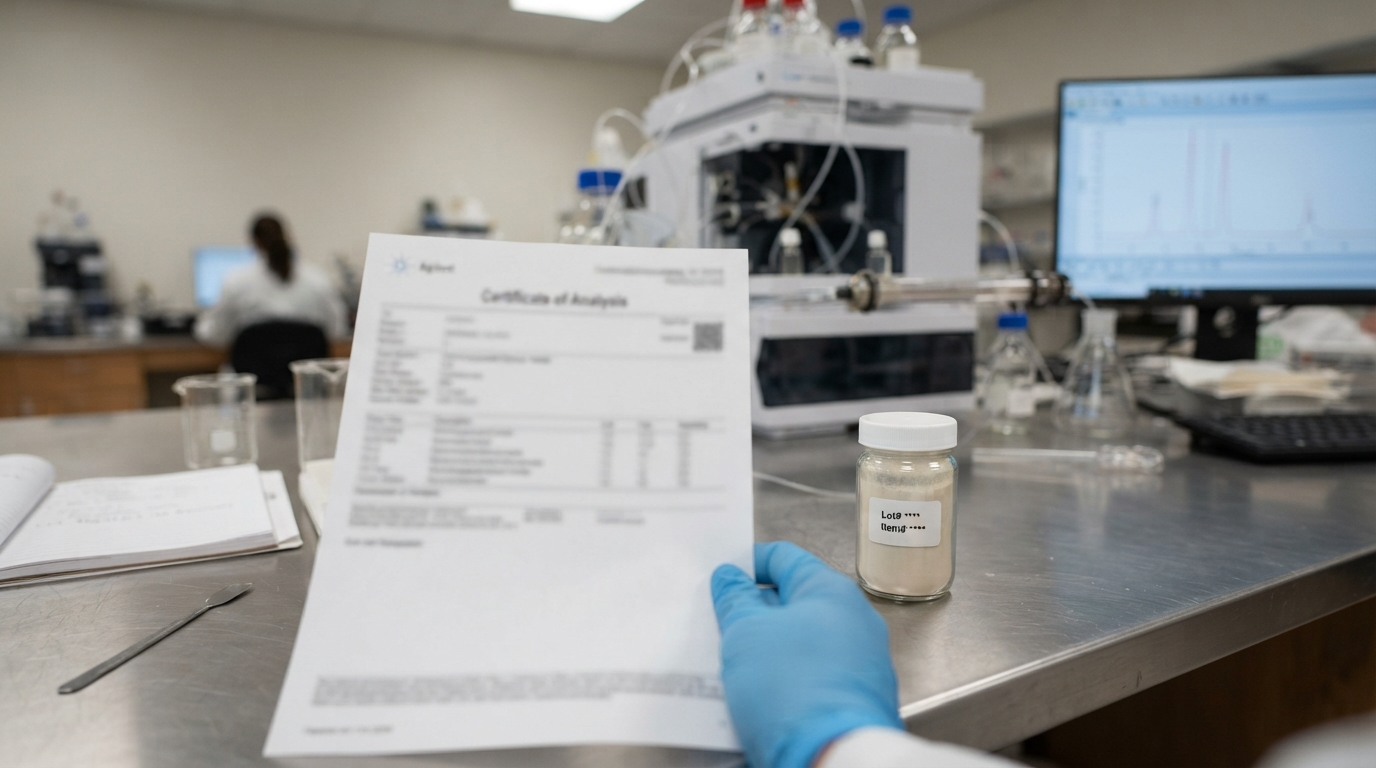
A specification sheet only tells part of the story. Buyers should understand the difference between the two main documents suppliers provide.
| Document | What it describes | Typical contents |
|---|---|---|
| Certificate of Analysis (CoA) | A specific batch of material | Batch number, assay result, identity, moisture, microbial limits, heavy metals, residual solvents or pesticides, and the test methods used |
| Technical Data Sheet (TDS) | The general product specification | Physical form, particle size, solubility, bulk density, packaging, storage conditions, and intended shelf life |
A CoA is batch-specific. It verifies that the material received in that shipment met the stated specifications. A TDS describes the product as a whole and may not change from batch to batch.
Analytical testing is also part of the decision. HPLC is commonly used to quantify marker compounds in botanical extracts. UV/Vis spectrophotometry can be used for certain compounds, but its specificity depends on the method and the sample matrix. Buyers should ask which analytical method was used for the certificate and whether that method is appropriate for the specific active.
Certifications such as GMP, ISO, or USDA Organic are relevant only when their scope is clear. A certificate may apply to a specific product, a production line, a facility, or an ingredient source. It should not be treated as a blanket guarantee for every product the supplier sells. Ask for the certificate, its issuing body, and the scope.
Applications of Microencapsulated Botanical Ingredients
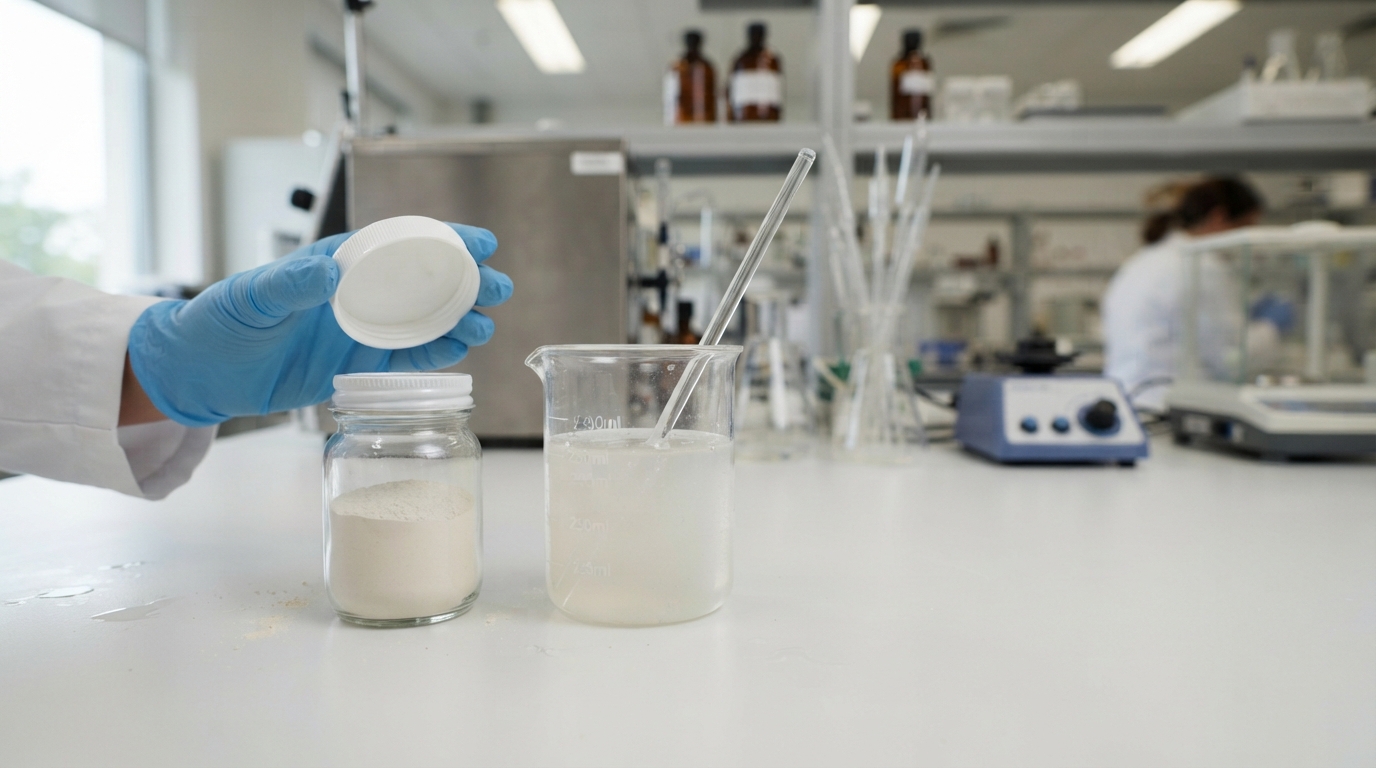
The right encapsulation system depends on how the ingredient will be used. Application requirements often dictate the carrier, particle size, loading, and release profile.
| Application | What matters most | Typical questions to ask |
|---|---|---|
| Dietary supplements (capsules, tablets, powders) | Dose uniformity, compressibility, release, and active stability | Will the encapsulated powder blend and compress evenly? Is the active loading disclosed? |
| Functional foods and beverages | Dispersibility, heat/pH stability, appearance, and taste | Will the powder disperse without sedimentation? Does the carrier affect flavor or texture? |
| Cosmetics and skincare | Phase compatibility, odor, color, and sensory feel | Is the carrier compatible with emulsions or water-based formulas? Does it alter the color or finish? |
| Sports nutrition and wellness formats | Mixability, stability during processing, and label clarity | Does the ingredient survive mixing, heat, or acidic conditions? |
The application determines which specification matters most. A beverage formulation may prioritize water dispersibility and a clean taste. A capsule formulation may prioritize pouring and blending properties. A cosmetic formulation may prioritize odor, color, and emulsion compatibility.
Microencapsulation vs. Liposomal Delivery
Microencapsulation and liposomal delivery are different technologies, and the right choice depends on the active, the application, and the desired end-product behavior.
| Factor | Microencapsulated botanical ingredients | Liposomal nutraceutical ingredients |
|---|---|---|
| Structure | Solid or semi-solid particle with the botanical active dispersed in or coated by a carrier matrix | Phospholipid vesicle structure that can carry actives in a lipid-based system |
| Carrier materials | Starches, gums, proteins, lipids, waxes, cellulose | Phospholipids and related lipid materials |
| Typical format | Dry powder or granule | Liquid, gel, or dried liposomal preparation |
| Main function | Protection, handling, dispersibility, masking, and release modification | Lipid-compatible encapsulation with a different delivery profile |
There is no universal winner. Microencapsulation is often convenient for dry formats and offers a wide range of carriers and process options. Liposomal delivery uses a different structural principle and may be worth evaluating when the active, the final matrix, or the desired performance points toward a lipid-based system.
For a broader explanation of the liposomal side of the category, see the parent guide to liposomal nutraceutical ingredients. If you are actively sourcing ingredients, it may help to compare how a liposomal ingredient supplier documents its specifications and applications.
Questions to Ask a Microencapsulated Botanical Ingredient Supplier
Useful supplier evaluation goes beyond price and availability. The following checklist covers the technical and commercial questions that matter most:
- Ask for the current CoA and TDS for the exact batch you are evaluating.
- Confirm the botanical species, plant part, extraction method, and solvent system used.
- Ask which marker compound is used for standardization and which analytical method is used to measure it.
- Confirm whether the assay percentage refers to the extract, the finished encapsulated powder, or the active loading in the total product.
- Ask which carrier or wall material is used and why it was selected for that active.
- Request data on encapsulation efficiency, particle size, moisture content, bulk density, and water dispersibility.
- Ask how shelf life and storage conditions were determined, and whether stability data covers the specific finished powder or only the extract.
- Confirm batch-to-batch consistency, including how assay results, contaminant limits, and microbiological limits are controlled.
- Request application-specific data if you plan to use the ingredient in a beverage, cosmetic, or other demanding format.
- Ask for a small sample and evaluate it in your own formulation before scaling up.
Limitations and Common Pitfalls
Microencapsulation is a practical technology, but it is not a solution to every botanical formulation problem. Being clear about limitations helps avoid costly mistakes.
- Carrier dilution: the finished powder contains the botanical active plus the carrier, so the active concentration in the final powder is usually lower than in the original standardized extract.
- Process degradation: spray drying can expose heat-sensitive compounds to thermal stress. Freeze drying and other gentle methods may preserve actives better but cost more.
- Encapsulation efficiency varies: not all of the botanical active is necessarily retained inside the particles. Some may remain on the surface or be lost during processing.
- Dispersibility is not automatic: a carrier that works well in one application may not produce the desired behavior in another.
- Bioavailability claims must be qualified: an encapsulation study cannot be generalized across all botanicals. The evidence depends on the specific compound, formulation, dose, and test system.
- Shelf life must be verified: stability is determined by the ingredient, packaging, storage conditions, and the final product matrix. It should not be assumed from a generic product description.
The best way to approach a microencapsulated botanical ingredient is to define the problem you are trying to solve — stability, dispersibility, taste, release, or handling — and then compare the available carriers, methods, and supplier documentation against that requirement.
If the lipid-based route is also worth considering, the next step is to compare it against the same specifications: carrier system, active loading, test methods, stability data, and application fit. A good starting point is to review how a liposomal ingredient supplier documents its ingredients and supports them with data.

