
Marker compounds in herbal extracts are chemically defined constituents — or groups of constituents — used to verify the identity, purity, and potency of a botanical ingredient. The European Medicines Agency (EMA) defines them as constituents of interest for quality control purposes, regardless of whether they possess confirmed therapeutic activity. In simple terms: they are the measurable reference points that tell you whether a batch of extract actually contains what the label says.
If you source herbal extracts for nutraceutical, pharmaceutical, or cosmetic formulations, understanding marker compounds is not optional. They sit at the foundation of every standardized extract specification, every COA field you review, and every EU regulatory dossier your product depends on.
For a broader foundation, see our guide on what is a standardized herb extract before continuing.
The Two Core Types of Marker Compounds

Not all marker compounds carry the same regulatory weight. The EMA formally separates them into two categories, and knowing the difference directly affects how you read a COA or evaluate a supplier’s specification sheet.
What Are Active Markers?
Active markers are constituents generally accepted to contribute to the therapeutic activity of the herbal substance. When a supplier standardizes an extract to a specific active marker, they are claiming that the measurable level of that compound reflects the extract’s functional quality.
Classic examples include hypericin in Hypericum perforatum (St. John’s Wort), withanolides in Withania somnifera (ashwagandha), and ginsenosides in Panax ginseng. European Pharmacopoeia monographs reference these compounds as primary quality benchmarks.
The EMA guideline on quality of herbal medicinal products states that where constituents with known therapeutic activity exist, those constituents should be used for identification and quantification. Active markers carry the strongest regulatory standing in an EU dossier.
What Are Analytical Markers and When Are They Used?
Analytical markers serve solely for analytical purposes. They do not contribute known therapeutic activity but remain useful for confirming botanical identity, batch consistency, and process reproducibility.
Suppliers rely on analytical markers when the therapeutically active compounds are either unknown, unstable, or too complex to reliably quantify. A reliable analytical marker still signals that the correct plant was used, that the extraction process was consistent, and that the batch falls within specification.
For procurement teams, the distinction matters at dossier stage. An active marker on a COA offers stronger evidence of functional quality. An analytical marker confirms identity and consistency — both are legitimate, but they answer different questions.
How Are Marker Compounds Selected for Herbal Extracts?
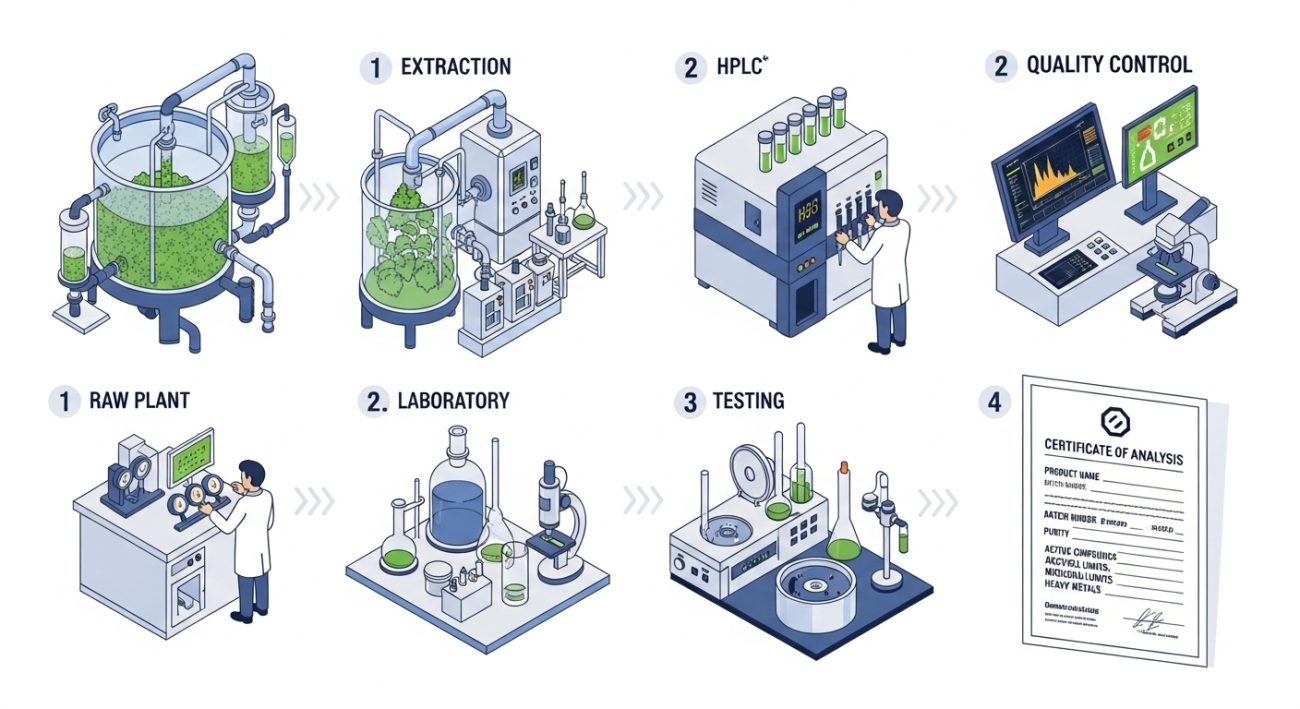
Selecting a marker is not arbitrary. The WHO and EMA both publish selection criteria that guide manufacturers and regulatory reviewers toward markers that hold scientific and analytical validity.
WHO Guidelines for Marker Substance Selection
According to WHO selection criteria, a marker substance should:
- Occur naturally in sufficient quantities in the herbal material
- Be representative of the main therapeutic or pharmacological profiles of the plant
- Be stable under normal storage and testing conditions
- Be quantifiable using validated analytical methods
- Be specific enough to differentiate the target plant from adulterants or substitutes
Where constituents with known biological activity are available, WHO guidance recommends prioritizing those. If no bioactive constituent is confirmed, compounds with recognized biological activity or characteristic structural features serve as the next best option.
EMA Requirements for Herbal Medicinal Products
The EMA’s reflection paper on markers adds further precision. Where a herbal medicinal product contains a substance with constituents of known therapeutic activity, those constituents must be used for identification and quantification. Where they are not known, active or analytical markers should be used instead.
The EMA also requires that the same marker should be used consistently for both release testing and stability testing. Switching markers between batches is only acceptable when justified by validated analytical data — a point often missed in supplier negotiations.
Understanding EMA requirements matters most if your product will enter the EU market under Directive 2004/24/EC. Reviewing how your supplier selects and documents markers early in the qualification process saves significant re-work at dossier stage.
Common Marker Compounds by Extract Category
The table below covers the most commercially relevant herbal extracts and the marker compounds buyers encounter most frequently.
| Herbal Extract | Marker Compound(s) | Marker Type | Typical Assay Method |
|---|---|---|---|
| Ashwagandha (Withania somnifera) | Withanolides | Active | HPLC-UV |
| Ginkgo (Ginkgo biloba) | Flavonol glycosides, terpene lactones | Active | HPLC |
| Turmeric (Curcuma longa) | Curcuminoids (curcumin, bisdemethoxycurcumin) | Active | HPLC-UV |
| Ginseng (Panax ginseng) | Ginsenosides | Active | HPLC |
| Green Tea (Camellia sinensis) | EGCG (epigallocatechin gallate) | Active | HPLC |
| Milk Thistle (Silybum marianum) | Silymarin | Active | HPLC |
| Rhodiola (Rhodiola rosea) | Rosavins, salidroside | Active | HPLC |
| Echinacea (Echinacea purpurea) | Cichoric acid, alkylamides | Analytical/Active | HPLC |
For a detailed look at one of the most widely sourced examples, see what does standardized to 95% curcuminoids mean.
Marker Compounds in Adaptogen and Tonic Extracts
Adaptogens like ashwagandha, ginseng, and rhodiola are among the most actively sourced extracts in European nutraceuticals. Procurement teams consistently request withanolide and ginsenoside specifications as a baseline qualification step. Batch-to-batch consistency in these markers is the primary measure QA managers use to evaluate supplier reliability — not just for product performance, but for labelling compliance under EU food supplement regulations.
Marker Compounds in Anti-inflammatory and Antioxidant Extracts
Curcuminoids from turmeric and EGCG from green tea are well-characterized active markers with published reference standards. European buyers sourcing these ingredients should expect to see HPLC-based assay results on COAs, with concentration expressed as a percentage of extract weight. Specification ranges typically follow European Pharmacopoeia or supplier-validated in-house standards.
How Marker Compounds Are Tested and Verified
Knowing what a marker compound is matters less than knowing how its concentration is verified. For procurement and QA teams, the analytical method on a COA determines how much trust you can place in the result.
HPLC as the Gold Standard for Marker Quantification
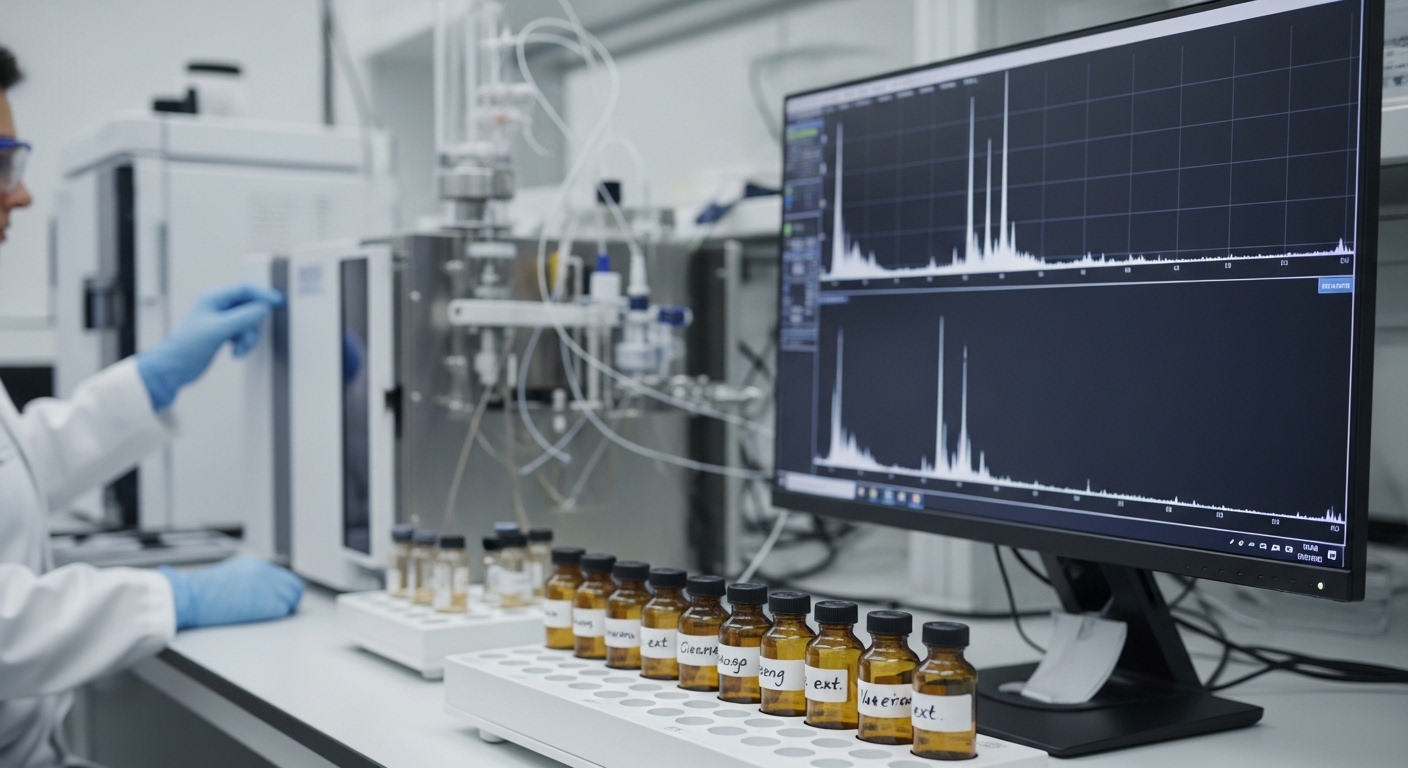
High-Performance Liquid Chromatography (HPLC) is the most widely used method for quantifying marker compounds in herbal extracts. It separates individual chemical constituents from a complex extract matrix and measures each one’s concentration with high specificity and reproducibility.
HPLC results give you a precise percentage of the target marker compound relative to total extract weight. When a COA states “standardized to 5% withanolides by HPLC,” that figure is a validated, instrument-measured value — not an estimate. Validated HPLC methods aligned with Ph. Eur. or USP standards carry the strongest credibility in EU regulatory submissions.
TLC, UV-Vis, and Emerging Analytical Methods
Thin-Layer Chromatography (TLC) is often used for rapid identity confirmation rather than quantification. UV-Vis spectrophotometry provides quantitative data but with lower specificity than HPLC — acceptable for some analytical markers, less so for active markers in high-stakes applications.
Fingerprint analysis by HPLC or HPTLC is increasingly used alongside single-marker testing, particularly for complex extracts where several constituents collectively determine quality. This method produces a chemical profile of the whole extract rather than a single data point.
What to Look for in a Marker Compound COA
A supplier COA should specify more than just a percentage. When reviewing any COA for marker compound data, check for the following fields:
- Marker compound name (IUPAC or common name, matching the specification)
- Assay method (HPLC, UV, TLC — and whether the method is validated)
- Concentration result (expressed as % w/w with specification range)
- Batch number and production date
- Test date and expiry or retest date
- Reference standard used (pharmacopoeial or in-house)
Marker Concentration Ranges and Specification Limits
Specification limits define the acceptable window for marker concentration in a commercial batch. For quantified extracts, the EMA states that the acceptable range for constituents with known therapeutic activity at the time of release is typically the declared value ±5%. Where only analytical markers apply, the range should reflect validated analytical performance across multiple production batches.
How to Request a COA with Marker Compound Data from B-Thriving
B-Thriving provides full batch COAs with HPLC-verified marker data for all standard herbal extracts. You can request a COA, a sample, or submit an RFQ directly through our standard herbal extract catalog.
Why Marker Compounds Alone Don’t Guarantee Extract Quality
This is a point many suppliers avoid discussing openly. Marker compounds are essential tools, but they do not capture the full picture of extract quality.
The Difference Between Standardization and True Efficacy
A high marker compound concentration does not automatically guarantee that an extract will perform as expected in a finished formula. Research has demonstrated that some marker compounds show limited correlation with the broader biological activity of the whole botanical. The marker serves as a proxy — useful, validated, and regulatory-essential, but still a proxy.
For European buyers building health products under EU food supplement or HMP frameworks, this distinction matters. Supplier transparency about what a marker confirms — and what it does not — is itself a quality signal. A supplier who explains the limits of marker testing is more credible than one who does not.
Fingerprint Analysis as a Complement to Marker Testing
Chromatographic fingerprinting maps the complete chemical profile of an extract across multiple constituents simultaneously. It detects adulteration, confirms batch-to-batch consistency, and captures interactions between compounds that single-marker testing misses.
Progressive extract manufacturers use fingerprint analysis alongside standard HPLC marker quantification, particularly for extracts entering pharmaceutical or premium nutraceutical applications. Asking a supplier whether they use fingerprint analysis — in addition to single-marker COAs — is a meaningful qualification question.
Marker Compounds and EU Regulatory Compliance
For buyers sourcing herbal extracts destined for the EU market, marker compound documentation is directly tied to regulatory clearance.
EMA Directive 2004/24/EC and Marker Documentation
EU Directive 2004/24/EC established the regulatory framework for traditional herbal medicinal products across EU member states. Under this framework, manufacturers must demonstrate consistent quality using validated marker-based specifications supported by EU pharmacopoeial monographs or EMA-recognized analytical methods. Suppliers who cannot provide this documentation create a compliance gap that will surface during regulatory review.
Even for food supplement applications outside the HMP framework, EU buyers face increasing expectation from national competent authorities to demonstrate ingredient quality through documented marker testing.
What European Buyers Must Request from Herbal Extract Suppliers
Before issuing an RFQ or placing a bulk order, EU procurement teams should request the following from any herbal extract supplier:
- Full batch COA with HPLC-verified marker compound data
- Specification sheet showing declared marker range and acceptance limits
- Confirmation of analytical method (in-house validated or pharmacopoeial reference)
- Confirmation of GMP compliance (EU GMP Annex 7 or equivalent)
- Stability data or retest date for the marker compound in question
- Sample for independent third-party verification, if required
Understanding the full herbal extract standardization process will help you ask the right questions during supplier qualification.
How B-Thriving Verifies Marker Compounds in Every Batch
Xi’an B-Thriving supplies standardized herbal extracts to European nutraceutical, pharmaceutical, and cosmetic manufacturers with full marker documentation as standard — not on request.
In-House Testing vs. Third-Party Lab Certification
B-Thriving conducts HPLC-based marker quantification at the batch level, with COAs generated per production lot. For buyers requiring independent verification, samples are available for third-party testing prior to order confirmation. This approach supports your internal QA process without adding lead time to the procurement cycle.
Transparency about testing is not a differentiator — it is a minimum expectation for EU-facing supply. B-Thriving’s position is straightforward: if a marker compound specification is listed, the batch result and the analytical method that supports it are both available.
Request a Sample or COA for Any Standard Herbal Extract
Every extract in our catalog is available for sample dispatch with a corresponding COA. If you need marker-specific data for a formulation decision or supplier audit, contact our team directly.
[Request a Sample] [Download COA] [Submit an RFQ]
Browse the full range at our standard herbal extract catalog or contact B-Thriving to discuss your specification requirements.
Frequently Asked Questions
What is the difference between an active marker and an analytical marker in herbal extracts?
An active marker is a constituent accepted to contribute to therapeutic activity, while an analytical marker serves solely for identification and quality verification. The EMA requires active markers where therapeutically active constituents are known; analytical markers apply when they are not.
Can the same compound serve as both an active and an analytical marker?
Yes. A compound used primarily for identity testing can later be reclassified as an active marker if sufficient evidence of therapeutic contribution emerges. The EMA accepts this reclassification when supported by validated analytical and pharmacological data.
How do marker compounds prove the quality of a herbal extract?
Marker compounds provide a measurable, reproducible reference point for batch quality. A verified marker concentration confirms that the correct botanical was used, the extraction process was consistent, and the batch falls within agreed specification limits.
Why can’t marker compounds alone guarantee herbal extract efficacy?
Markers are proxies. Some show limited correlation with the full biological activity of a complex botanical. They confirm chemical consistency, not functional outcome. This is why fingerprint analysis and multi-constituent profiling increasingly complement single-marker COAs in quality-focused supply chains.
What should a herbal extract COA show about marker compounds?
A complete COA should state the marker compound name, the assay method used, the measured concentration result, the specification range, batch number, test date, and the reference standard applied. Missing any of these fields is a qualification red flag.
What does the EMA require for marker documentation in herbal medicinal products?
The EMA requires that constituents with known therapeutic activity serve as markers for quantification and identification. Where such constituents are unknown, active or analytical markers must be used. The same marker should be applied consistently across release and stability testing.
How is HPLC used to quantify marker compounds in herbal extracts?
HPLC separates individual compounds from the extract matrix using liquid chromatography and measures each compound’s concentration against a validated reference standard. Results are expressed as percentage of extract weight and are traceable, reproducible, and accepted by EU regulatory authorities.
How do European nutraceutical buyers use marker compound data to qualify suppliers?
Buyers use marker data to verify label claims, assess batch consistency, confirm compliance with EU pharmacopoeial standards, and compare supplier specifications before committing to a bulk purchase or OEM agreement. Consistent, well-documented marker data across multiple batches is one of the strongest indicators of a supplier’s quality management capability.

