
Stevia extract production and supply is where “clean sweetness” becomes a practical ingredient you can formulate, label, and scale with confidence. For many buyers, stevia sounds simple: a natural sweetener from a leaf. In real manufacturing, the value comes from controlling potency, purity, and consistency—so every batch tastes the same and performs the same in your product.
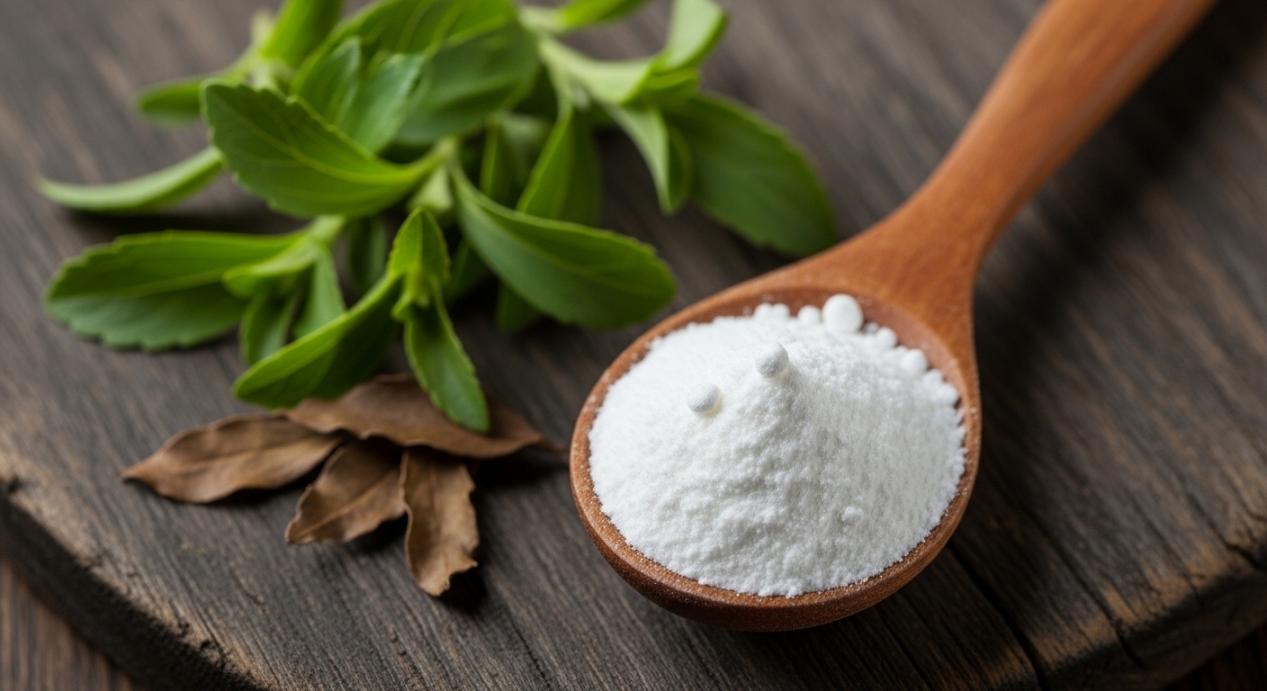
Why Stevia Fits Clean, Low-Calorie Sweetness Goals
Stevia extract is known for delivering strong sweetness with very low calories. In many applications, it can support sugar reduction without forcing brands to rely on artificial sweeteners. A key reason is its intensity: stevia can be about 200–350 times sweeter than sucrose, yet the caloric impact can be around 1/300 of sugar in typical use. This “small dose, big sweetness” profile is what makes stevia attractive for clean-label food and beverage projects.
For consumers, the story is easy to understand: less sugar, fewer calories, and a plant-derived source. For product teams, the story is more technical: stevia helps you achieve sweetness targets while keeping the ingredient list shorter and more familiar.
What “Stevia Extract“ Really Means in Production
Stevia extract is produced from the leaf, and its key active components are steviol glycosides. When buyers compare options, the most useful information is the specification of steviol glycosides content—commonly 90% or 98%—because this tells you how concentrated the sweet components are.
At B-Thriving, we view stevia as an ingredient that must be managed like any other functional raw material. Sweetness is not only a marketing claim; it is a measurable output. That is why stevia extract production and supply depends on clear raw material selection, controlled processing, and repeatable testing that supports consistent results.
Performance Benefits That Matter in Real Formulas
Stevia is often selected for “clean sweetness,” but performance details decide whether it succeeds after launch. In practical terms, stevia is heat‑stable. It maintains potency and taste at higher temperatures, unlike sweeteners that degrade, so it works well for cooking and baking where heat is unavoidable.
Stevia is also widely positioned as safe for diabetics because it does not raise blood sugar in the same way as sucrose. Many brands choose stevia when they want a sweetness strategy that fits people managing blood sugar or those who simply want lower-sugar daily options. In addition, stevia has value beyond food. In oral care, it may help inhibit bacterial growth, supporting formulations designed to reduce dental issues such as tooth decay and gum concerns.
For a beginner, the takeaway is simple: stevia is not only “sweet.” It is a functional ingredient that can contribute to product stability, consumer-friendly nutrition goals, and broader application potential.
Steviol Glycosides Specs and Testing Beginners Should Ask For
Because stevia is potent, small changes in composition can change taste and sweetness perception. That is why buyers should request specifications and testing details, not just a product name. In professional stevia extract production and supply, HPLC (High Performance Liquid Chromatography) is a common test method used to confirm steviol glycosides content and batch consistency.
When evaluating suppliers, focus on questions that translate into fewer formulation surprises:
✓What is the steviol glycosides specification (e.g., 90% or 98%) and how is it tested?
✓Is the batch-to-batch profile consistent enough for long-term products and repeat orders?
✓Are key safety parameters controlled through modern processing and final testing?
These questions are not “extra.” They are how you protect your finished product from taste drift, label risk, or inconsistent sweetness in market.
How B-Thriving Builds Reliable Stevia Extract Production and Supply
Xi’an B-Thriving I/E Co., Ltd. was established in 2010 and focuses on manufacturing and supplying herbal extracts, natural products, and active pharmaceutical ingredients (APIs) for clients across pharmaceuticals, biotechnology, cosmetics, nutrition, and feed additives. Our work is built around one practical goal: make natural ingredients easier to use for global customers, even when the raw plant material naturally varies.
To support that goal, we use advanced processing approaches designed to protect active compounds during manufacturing. For example, our pulverizing technology is designed to help preserve sensitive components and support fine particle milling, including materials that may be hygroscopic or aromatic. We also invest in in-house testing capacity, using laboratory instruments to check quality through the manufacturing process—not only at the end. This approach turns “natural” into “reliable,” which is what brands need when they scale from pilot batches to large-volume supply.
For customers, these capabilities translate into practical benefits:
✓More consistent sweetness behavior across batches, reducing reformulation risk
✓Cleaner quality control workflow, supporting regulated or retailer-facing programs
✓A more stable supply foundation for long-term SKUs, not one-time purchases
Quality Control That Protects Your Brand and Your Consumers
Quality is not a single certificate. It is a production habit that runs from raw herb selection to final release. At B-Thriving, we apply strict controls across the production cycle:
•Raw Material Selection
We source stevia leaf materials through reliable suppliers and inspect them based on origin, appearance, and composition. This reduces early-stage variability and supports a more predictable finished extract.
•Advanced Manufacturing And Drying
Modern drying and processing methods help reduce risks related to microbes, heavy metals, and foreign matter. For hygroscopic materials, storage parameters are also treated as part of the quality plan, because stability is not only a factory issue—it is also a logistics issue.
•In-House Laboratory Testing
Our lab supports testing at multiple stages. For stevia extract production and supply, this means validating active levels and limiting batch variation so customers can ensure dependable formulas and labels.
•Standards And Continuous Improvement
We comply with applicable standards, including the Chinese Pharmacopoeia, and we sustain progress via R&D that integrates medicinal plant pharmacology with real‑world manufacturing.
CTA: Build a Clean, Low-Calorie Sweetness Program With B-Thriving
If you are developing a clean-label food, beverage, or oral care product and need dependable stevia extract production and supply, contact B-Thriving. Share your target application (baking, beverages, tabletop sweetener, or toothpaste), your preferred steviol glycosides 90% or 98% specification, and any compliance requirements. Count on us to set the right grade, outline test requirements, and align a supply plan for a smooth path to long‑term production.

