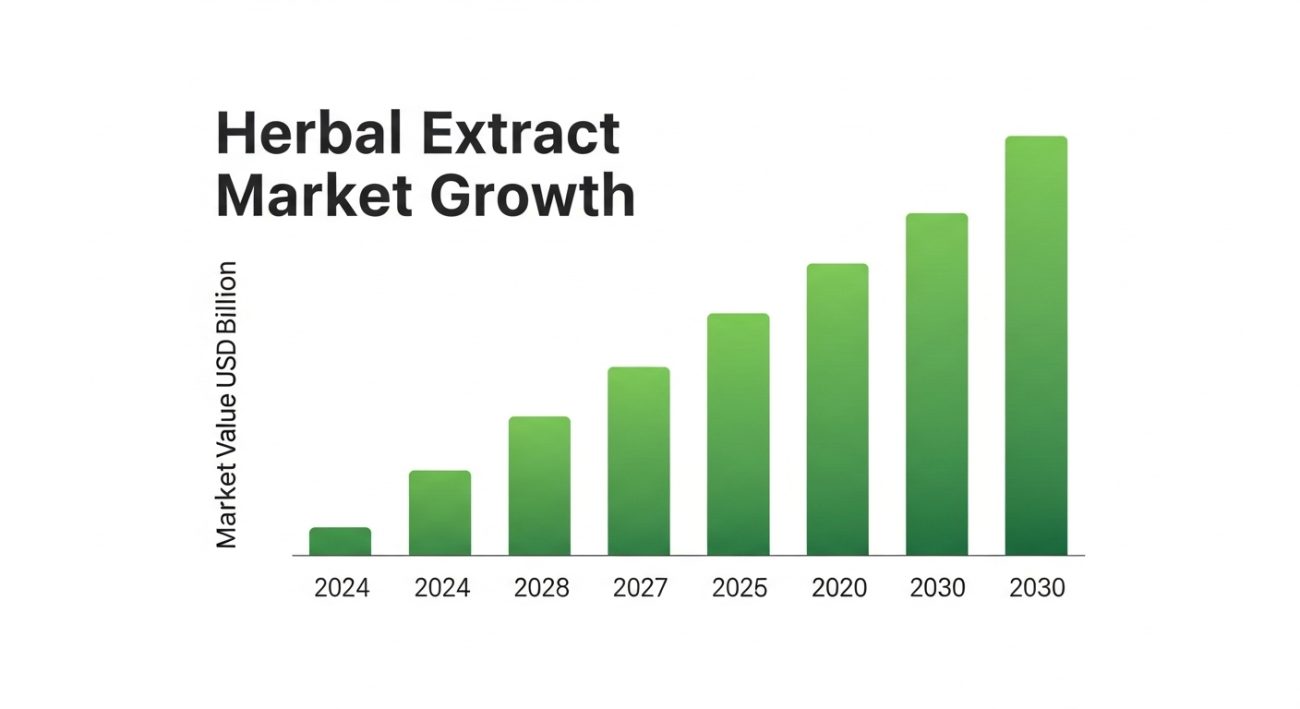
The global herbal extract market is valued at USD 39.2 billion in 2026 and is projected to reach USD 71.4 billion by 2032, growing at a CAGR of 10.5%. In Europe alone, the herb and spice extracts market is worth USD 2.72 billion this year, expanding at 6.25% annually through 2031. For procurement managers, formulators, and product development leads, that growth translates into a clear signal: botanical ingredients are no longer a niche — they are a core input across nutraceuticals, pharmaceuticals, and functional cosmetics.
This guide covers the 10 herbal extracts gaining the most traction in 2026, what standardization specs to demand, and how to qualify a supplier for compliant EU-market supply. If you are shortlisting ingredients for your next formulation or reviewing your raw material sourcing strategy, this is your practical starting point.
You can browse our full range of standardized botanical ingredients to match your specific formulation requirements.
Why These 10 Herbs Are Dominating 2026 Demand
Three converging forces are reshaping European demand for botanical extracts in 2026.
First, clean-label regulation pressure is intensifying. Germany — which holds 34.5% of regional demand and grows at a 7.34% CAGR — is leading a wave of manufacturers shifting away from synthetic actives toward documented, traceable botanical inputs. Second, the aging European population is driving consistent interest in preventive health, creating steady formulation demand for adaptogens, liver-support ingredients, and cognitive health botanicals. Third, EU scrutiny around adulteration and supply chain fraud is rising sharply, which means buyers now require deeper supplier documentation — not just a product spec sheet, but full COA, residue testing data, and sourcing transparency.
Together, these pressures favor suppliers who combine scale, standardization consistency, and regulatory readiness. That is precisely where ingredient selection starts to matter.
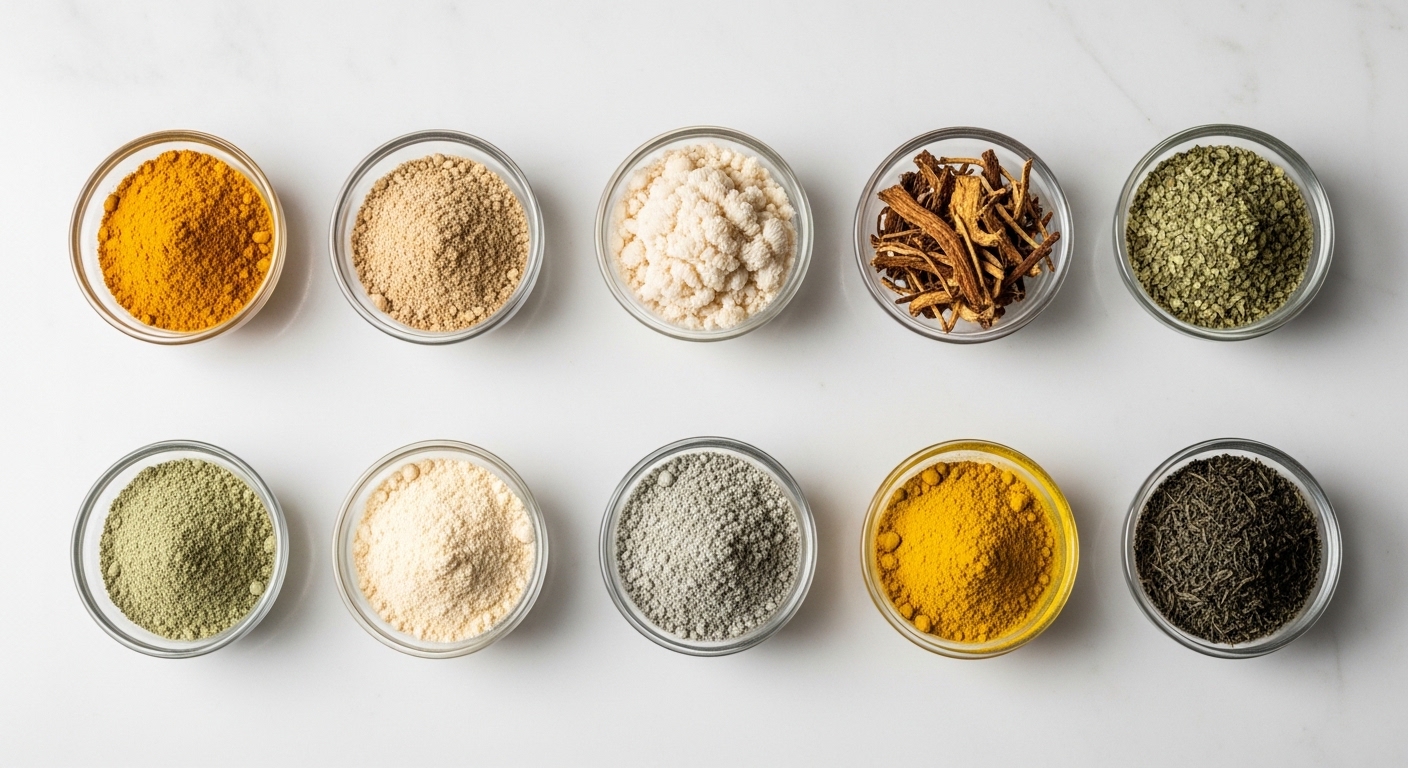
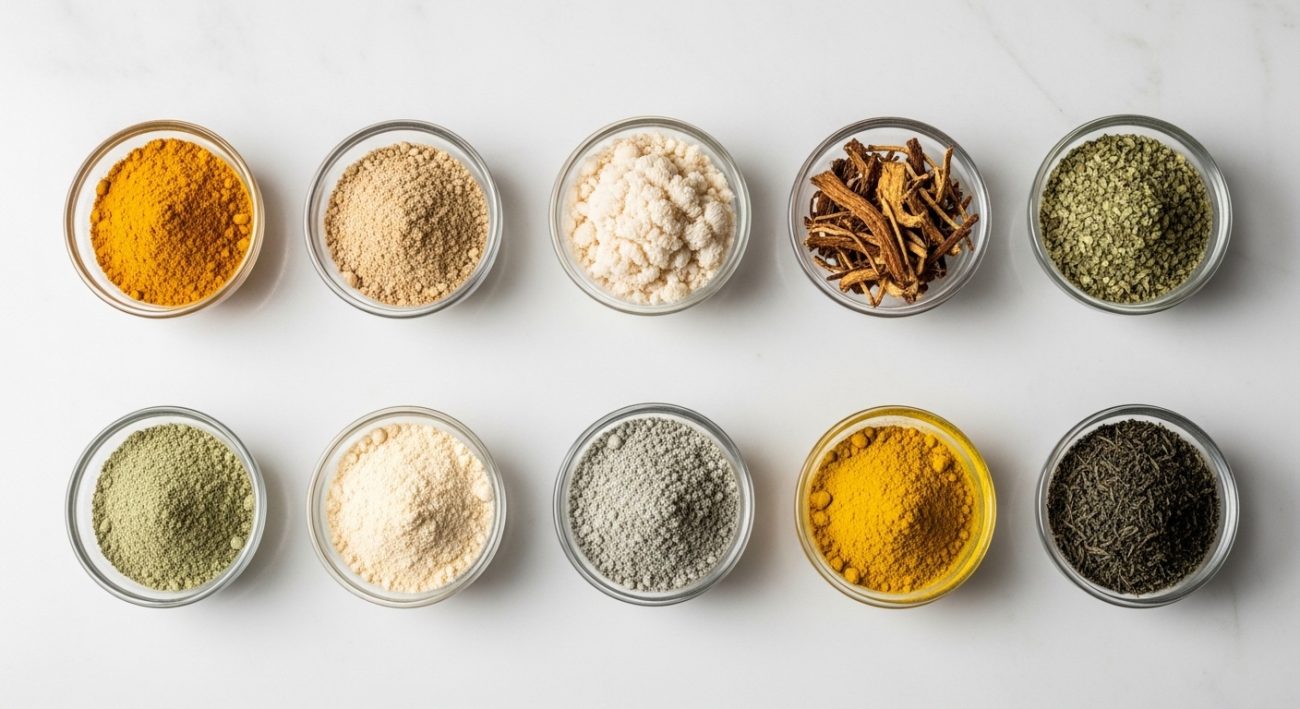
The 10 Most In-Demand Herbal Extracts for 2026 Formulations
The extracts below are ranked by cross-market momentum — based on EU market data, formulator interest signals, and procurement search behavior. Each entry includes the key quality spec to request.
| Herb | Standardization Spec | Primary Applications | Form |
|---|---|---|---|
| Ashwagandha | 5% Withanolides | Nutraceuticals, Pharma, Functional Beverages | Powder |
| Turmeric / Curcumin | 95% Curcuminoids | Nutraceuticals, Cosmetics, Pharma | Powder |
| Lion’s Mane Mushroom | 30% Polysaccharides / 20% Beta-Glucans | Nootropics, Supplements, Functional Foods | Powder |
| Bacopa Monnieri | 20% Bacosides | Cognitive Supplements, Nootropic Stacks, Ayurvedic | Powder |
| Rhodiola Rosea | 3% Rosavins / 1% Salidroside | Sports Nutrition, Stress-Relief Supplements | Powder |
| Green Tea (EGCG) | 98% Polyphenols / 50% EGCG | Anti-Aging Cosmetics, Supplements, Beverages | Powder |
| Reishi Mushroom | 30% Polysaccharides / 4% Triterpenes | Immune Support, Adaptogen Blends, Functional Foods | Powder |
| Moringa Leaf | 20:1 Extract Ratio | Nutrition Supplements, Food Fortification, Cosmetics | Powder |
| Milk Thistle (Silymarin) | 80% Silymarin | Liver Health, Pharma APIs, Detox Formulas | Powder |
| Berberine | 97% Berberine HCl | Metabolic Health, Pharma APIs, Blood Sugar Management | Powder |
Ashwagandha Extract — Adaptogen Leader for Stress and Vitality
Ashwagandha (Withania somnifera) consistently tops shortlists for European supplement formulators. Its withanolide content drives both efficacy and marketability — procurement managers should request a minimum of 5% withanolides on the COA, with heavy metal and pesticide residue reports included.
Demand is strongest in the stress-management and sleep supplement segments, followed by functional beverages and sports recovery products. For EU-market use, check the ingredient’s status under your target product category — ashwagandha is regulated differently across nutraceutical and medicinal product classifications.
Turmeric / Curcumin Extract — Anti-Inflammatory Formulation Staple
Curcumin is the most widely sourced herbal extract in the European nutraceutical market, and it is not slowing down. The standard for pharma-grade and premium supplement applications is 95% curcuminoids, with a detailed HPLC analysis on the COA. Bioavailability enhancement — whether via piperine combination, liposomal encapsulation, or micellar technology — is a key differentiator for downstream formulators.
Cosmetics buyers are increasingly specifying curcumin for its antioxidant activity in anti-aging and skin-brightening formulations. This cross-category versatility makes it a high-priority ingredient to source at consistent quality.
Explore our curcumin and related standardized plant extracts for bulk supply options.
Lion’s Mane Mushroom Extract — Nootropic for Cognitive Health
Lion’s Mane (Hericium erinaceus) is the fastest-growing functional mushroom extract in European supplement launches in 2026. Its active compounds — polysaccharides and beta-glucans — support nerve growth factor (NGF) activity, which positions it well in the cognitive health and memory supplement category.
Request 30% polysaccharides and 20% beta-glucans as a minimum specification. Also verify whether the extract is sourced from the fruiting body or mycelium, as this affects both bioactive concentration and regulatory classification in some EU member states.
Bacopa Monnieri Extract — Memory and Focus in Nootropic Stacks
Bacopa is underused by European formulators relative to its clinical backing, which makes it a strong differentiation opportunity right now. Standardized to 20% bacosides, it fits naturally into cognitive performance stacks alongside Lion’s Mane or Rhodiola.
For Ayurvedic-positioned brands operating in EU markets, verify that the supplier’s documentation supports the ingredient’s traditional use history — this is relevant to THMPD registration requirements under Directive 2004/24/EC.
Rhodiola Rosea Extract — Fatigue-Fighting Adaptogen for Sports Nutrition
Rhodiola occupies a precise niche: anti-fatigue and endurance support in the sports nutrition segment. The standard specification is 3% rosavins and 1% salidroside, and these ratios should always be stated separately on the COA — not grouped as a combined figure.
European sports nutrition brands require thorough documentation for Rhodiola, particularly around sourcing origin and extraction solvents. Request full residue testing and confirm extraction method compliance with EU organic regulation (EU) 2018/848 if an organic claim is intended.
Green Tea Extract (EGCG) — Antioxidant Powerhouse Across Categories
Green tea extract is one of the few botanical ingredients that performs across nutraceutical, pharmaceutical, and cosmetic applications simultaneously. Its EGCG (epigallocatechin gallate) fraction drives both supplement efficacy claims and cosmetic antioxidant functionality.
Specify 98% total polyphenols and minimum 50% EGCG on the COA for high-performance applications. Cosmetic formulators should also verify solubility data and stability testing results to ensure compatibility with their base formulas.
Reishi Mushroom Extract — Immune-Modulating Functional Ingredient
Reishi (Ganoderma lucidum) is gaining traction as the immune support segment grows alongside European consumer interest in functional foods. The key quality markers are 30% polysaccharides and 4% triterpenes — both should be confirmed via HPLC or UV analysis.
Like Lion’s Mane, buyers should clarify fruiting body versus mycelium origin, and request documentation on heavy metal limits in accordance with applicable EU food supplement regulations.
Moringa Leaf Extract — Nutrient-Dense Superfood for Fortification
Moringa (Moringa oleifera) is gaining ground in European functional food and fortification applications, particularly in plant-protein and wellness product lines. A 20:1 concentration ratio is the standard for extract-grade supply, with full amino acid and micronutrient profile documentation available for formulation support.
Cosmetics buyers are also specifying moringa for its fatty acid profile and skin-conditioning properties. Confirm whether your supplier offers both extract powder and oil-form supply for dual-application flexibility.
Milk Thistle Extract (Silymarin) — Liver Support with Clinical Credibility
Milk thistle is one of the most clinically documented herbal ingredients in European pharmacopoeias. Its active complex, silymarin, is standardized to 80% content for pharmaceutical and premium supplement applications. NaturExtracts France, cited as a leading EU pharma-grade supplier, highlights EU GMP compliance as the baseline quality requirement for this ingredient.
For pharma-channel buyers, verify that your supplier can provide EU GMP Part II documentation, which EMA requires for herbal extracts used as active pharmaceutical ingredients.
Berberine Extract — Metabolic Health Ingredient Gaining EU Traction
Berberine (Berberis spp.) is one of the most discussed ingredients in European metabolic health formulation circles in 2026, particularly for blood sugar management and cardiovascular support products. The primary commercial form is berberine hydrochloride at 97% purity.
One critical procurement note: berberine’s regulatory status varies by application in the EU. It is accepted in dietary supplements in several member states but faces Novel Food scrutiny in others. Verify your target market’s classification before finalizing sourcing. Always request a detailed regulatory dossier from your supplier alongside the COA.
How to Evaluate Herbal Extract Quality as a B2B Buyer
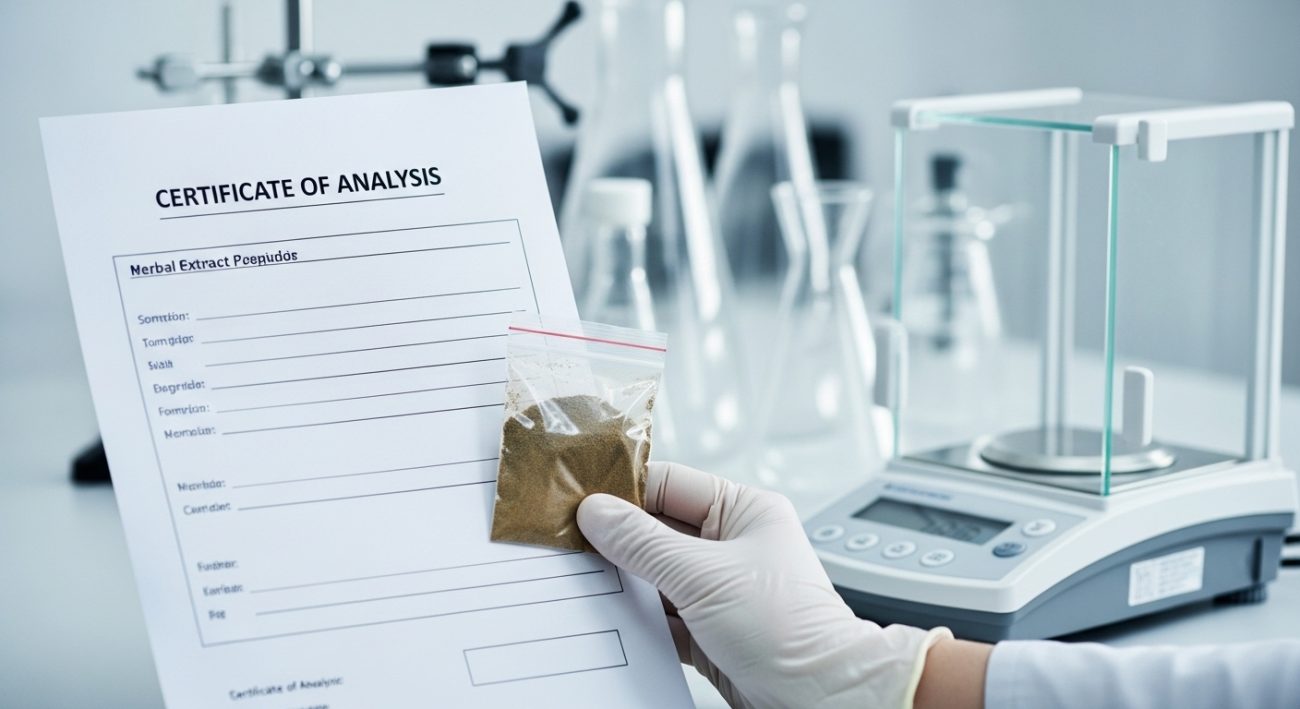
Ingredient trend data is only half the sourcing decision. The other half is qualifying whether a supplier can deliver consistent, compliant material — batch after batch.
What to Look for in a COA for Herbal Extracts
A complete Certificate of Analysis for any standardized herbal extract should include the following at minimum:
- Active compound assay (HPLC or UV method, % by weight)
- Heavy metal testing (Lead, Arsenic, Mercury, Cadmium within EU limits)
- Pesticide residue screening (per EU MRL regulations)
- Microbiological testing (Total plate count, Salmonella, E. coli)
- Moisture content and loss on drying
- Solvent residue testing (confirming extraction solvents are EU-permitted)
- Particle size specification (especially for powder applications)
A supplier who provides all of these without being prompted is operating at the transparency standard European buyers now expect. If a COA is missing any of these elements, ask why — and document the response.
EU Regulatory Requirements for Imported Herbal Extracts
Importing botanical extracts into Europe involves navigating several overlapping frameworks. Under Directive 2004/24/EC, any ingredient intended for herbal medicinal products must comply with EMA herbal monographs, or the supplier must demonstrate a documented tradition of safe use — at least 30 years total, with 15 within the EU.
For dietary supplement applications, relevant frameworks include Directive 2002/46/EC on food supplements and EU Novel Food Regulation (EU) 2015/2283 for ingredients without a significant history of EU consumption. The EU organic standard (EU) 2018/848 applies if organic certification is required.
From a GMP standpoint, herbal extracts used as APIs must be manufactured in compliance with EU GMP Guide Annex 7 and Part II, as clarified by EMA guidance. For nutraceutical applications, ISO 22000 and HACCP are the baseline quality management frameworks European buyers expect.
Procurement teams should request the supplier’s current GMP certificate, any applicable EU organic or ECOCERT certificates, and confirmation of which EMA herbal monographs their extraction processes align with.
Why Source Trending Herbal Extracts from B-Thriving?
Xi’an B-Thriving I/E Co., Ltd. supplies standardized herbal extracts, botanical monomers, APIs, vitamins, enzymes, and pigments to B2B buyers globally, with a growing client base in European nutraceutical and pharmaceutical markets.
Bulk Supply, OEM/ODM Support, and Fast RFQ Response
B-Thriving’s facility is built for high-volume, consistent supply — not one-off sample batches. The production process uses advanced extraction technology that retains essential active compounds and volatile oils through a refined milling process, with lab-verified purity and potency per batch.
For brands building proprietary formulations, B-Thriving offers full OEM/ODM support — from custom extraction ratios to private label packaging, tailored to your product’s regulatory and market positioning requirements. Every order is supported by batch-specific COA documentation and technical formulation guidance upon request.
Browse the complete standard herb extract product range — over 134 standardized botanical ingredients available for bulk supply and custom formulation.
Request a Free Sample or COA for Any Herbal Extract
Qualified buyers can request a free sample, COA, or technical specification sheet for any ingredient in B-Thriving’s portfolio. The RFQ process is designed for procurement teams: submit your ingredient name, required specification, target application, and annual volume — and receive a formal quotation with full documentation.
Frequently Asked Questions
What is a standardized herbal extract?
A standardized herbal extract is one where a specific active compound — such as 95% curcuminoids in turmeric or 5% withanolides in ashwagandha — is guaranteed at a consistent concentration in every batch. Standardization is the key quality benchmark that separates pharmaceutical-grade botanicals from commodity herbs.
What certifications should I require from a herbal extract supplier for EU markets?
At a minimum, request ISO 22000 or HACCP certification, EU GMP compliance (for pharma applications), and a current COA with heavy metal, pesticide, and microbiological testing. For organic applications, ECOCERT or EU 2018/848 organic certification is required.
Is ashwagandha legal to import and sell in Europe?
Ashwagandha is permitted in dietary supplements in most EU member states, but its classification varies. Some countries categorize it under food supplements; others may require Novel Food authorization. Always confirm the regulatory status in your specific target market before finalizing sourcing.
What is the difference between fruiting body and mycelium in mushroom extracts?
Fruiting body extracts, such as Lion’s Mane and Reishi, typically yield higher concentrations of bioactive polysaccharides and beta-glucans than mycelium-based extracts. Most premium European supplement brands specify fruiting body material — confirm this with your supplier and verify it on the COA.
What EU regulation governs herbal extracts used as APIs?
The EMA requires that herbal extracts used as active pharmaceutical ingredients comply with EU GMP Guide Part II and Annex 7, which covers manufacturing, testing, and documentation standards specific to herbal medicinal products.
How do I verify a supplier’s COA is authentic and not templated?
Request a batch-specific COA — not a generic document. It should include the batch or lot number, production date, test date, instrument reference (e.g., HPLC method), and the testing laboratory’s details. A credible supplier will provide third-party lab results on request.
What is the minimum order quantity for bulk herbal extract supply?
MOQ varies by ingredient and supplier. For established extract suppliers like B-Thriving, typical starting quantities range from 1 kg (sample qualification) to 25 kg for commercial supply. Submit an RFQ with your target volume for accurate pricing and lead time.
Are liposomal or microencapsulated herbal extracts available for B2B supply?
Yes. Liposomal and microencapsulated formats are increasingly requested for bioavailability-enhanced supplement formulations. B-Thriving offers liposomal and microcapsule product options alongside standard botanical extracts — contact the team directly to discuss your formulation requirements.

