
Most people searching for milk thistle supplements face the same confusing wall of labels: “whole herb,” “standardized to 80% silymarin,” “seed powder,” or “full-spectrum extract.” Here is what the supplement industry rarely tells you: a ConsumerLab.com review found that 8 out of 10 products claiming 80% silymarin standardization actually delivered only 51.7–60.4% of the compound they promised. Choosing the wrong form — or a poorly manufactured version of the right form — means you may be paying full price for a fraction of the benefit.
At B-Thriving, we specialize in manufacturing and supplying standardized herbal extracts to nutraceutical brands worldwide from our facility near the Qinling Mountains in Xi’an, China. In our work producing and supplying milk thistle extract to global supplement brands, we have seen firsthand how critical the distinction between whole herb and standardized extract truly is. This guide gives you the complete, evidence-based picture.
What Is Whole Herb Milk Thistle (Seed Powder)?
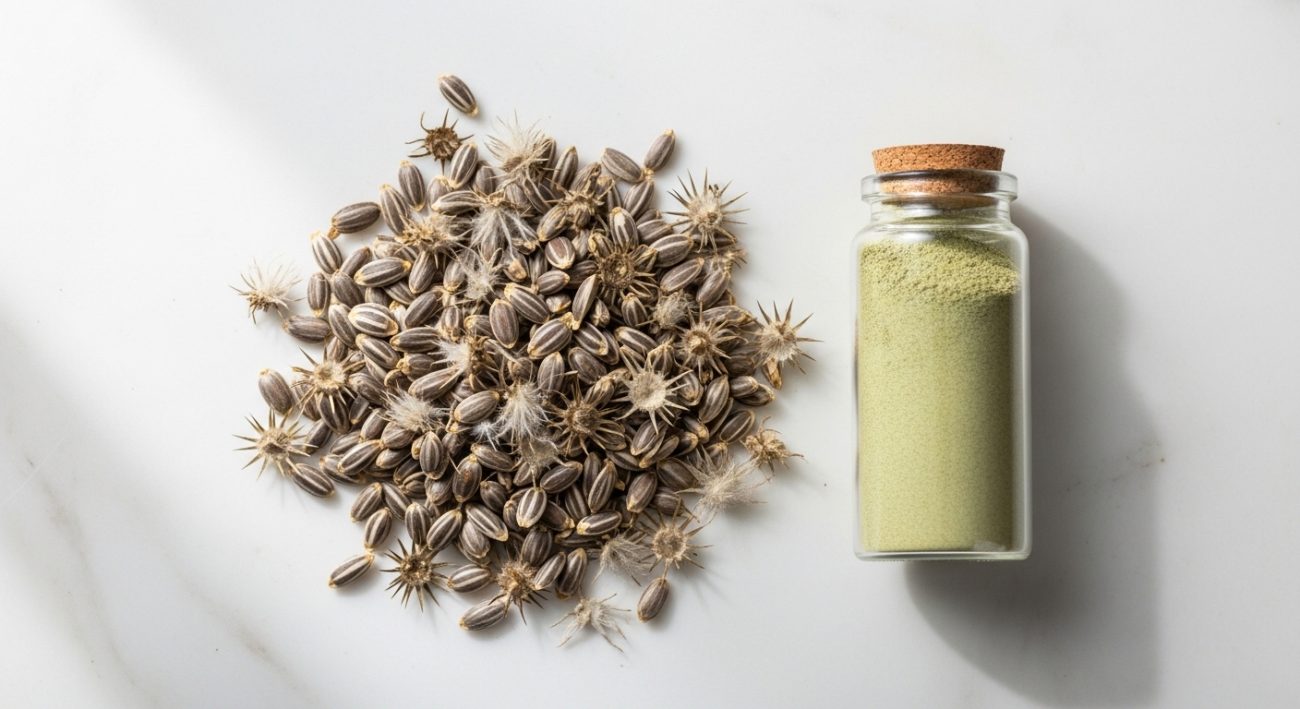
Whole herb milk thistle is the ground seed of Silybum marianum, containing its complete natural phytochemical matrix. Because no concentration process is applied, it delivers only 1–3% silymarin by weight. A 500mg capsule of whole seed powder provides just 5–15mg of active silymarin — far below the doses used in clinical liver trials.
The whole herb preserves the full plant matrix — including flavonolignans, fatty acids, chlorogenic acid, and trace phytochemicals that are removed or reduced during extraction. Traditional European herbal medicine used this whole-seed form for centuries as a liver tonic and digestive support. Its proponents argue that the unaltered plant complexity creates a broader therapeutic range through what is commonly called the “entourage effect.”
The practical challenge, however, is consistency. Because soil conditions, harvest timing, and seed genetics all affect natural silymarin content, two batches of the same whole herb product can vary significantly in potency. For anyone seeking reliable, measurable liver support, this variability is a genuine concern.
Key compounds found in whole herb milk thistle:
- Silymarin complex (Silybin A, Silybin B, Silychristin, Silydianin, Isosilybin A, Isosilybin B)
- Taxifolin — a flavonoid often absent in isolated extracts
- Chlorogenic acid
- Essential fatty acids (linoleic acid, oleic acid)
- Beta-sitosterol
- Natural flavonoids and pigments
What Is Standardized Milk Thistle Extract?
Standardized milk thistle extract is a concentrated form processed to guarantee a specific percentage of silymarin — most commonly 70–80% by weight. This means a 500mg capsule delivers approximately 350–400mg of active silymarin per dose — up to 80 times more than the same dose of whole seed powder, making it the form used in virtually every published clinical trial.
The extraction process typically uses ethanol or water-ethanol solvents to selectively isolate silymarin compounds from the seed matrix. The resulting extract is then tested using High-Performance Liquid Chromatography (HPLC) to confirm the silymarin percentage meets the guaranteed label claim. This standardization process is what makes clinical dosing possible and reproducible across batches.
As a botanical extract supplier, B-Thriving produces milk thistle extract using closed-loop solvent recovery and multi-stage drying to preserve bioactive compound integrity while ensuring the product is low in ash and solvent residues. Every batch ships with a full Certificate of Analysis (COA) confirming HPLC-verified silymarin content.
The critical caveat: not all “standardized” products are equal. The ConsumerLab quality crisis — covered in detail below — reveals that the word “standardized” on a label is only as trustworthy as the manufacturer behind it.
Silymarin: The Active Compound You Need to Understand
Silymarin is not a single molecule — it is a complex of at least seven flavonolignans extracted from Silybum marianum seeds. Among these, Silybin B shows the strongest hepatoprotective activity in clinical research, while the full complex works synergistically to protect liver cells from oxidative damage, reduce inflammation, and support liver regeneration in conditions like NAFLD and alcoholic liver disease.
The Silymarin Complex — More Than One Compound
Understanding which compounds are present — and in what quantities — is the single most important factor when comparing milk thistle products. This is where whole herb and standardized extract diverge significantly.
| Compound | Found in Whole Herb? | Found in Standard Extract? | Hepatoprotective Evidence |
|---|---|---|---|
| Silybin A | ✅ Yes | ✅ Yes (marker compound) | High — direct antioxidant and anti-fibrotic activity |
| Silybin B | ✅ Yes | ✅ Yes (marker compound) | Highest — most studied isomer; primary clinical target |
| Isosilybin A | ✅ Yes | ⚠️ Variable (often reduced) | Moderate — anti-inflammatory, antioxidant |
| Isosilybin B | ✅ Yes | ⚠️ Variable (often reduced) | Moderate — emerging research |
| Silychristin | ✅ Yes | ⚠️ Partially retained | Moderate — membrane-stabilizing properties |
| Silydianin | ✅ Yes | ⚠️ Partially retained | Low to moderate — antioxidant support |
| Taxifolin | ✅ Yes | ❌ Often absent | Low — precursor flavonoid; broad antioxidant support |
Head-to-Head Comparison: Standardized Extract vs. Whole Herb
Standardized milk thistle extract delivers dramatically higher silymarin per dose and is the only form used in peer-reviewed liver trials. Whole herb preserves coflavonolignans like taxifolin and a broader phytochemical spectrum, but lacks the dosing precision needed for clinical-grade liver support. Critically, neither form resolves the underlying bioavailability challenge both share.
| Metric | Whole Herb (Seed Powder) | Standardized Extract (70–80%) |
|---|---|---|
| Silymarin content | 1–3% of dry weight | 70–80% guaranteed |
| Silymarin per 500mg dose | 5–15mg | 350–400mg |
| Compound spectrum | Full (incl. taxifolin) | Reduced (marker compounds only) |
| Batch consistency | Variable by harvest | Guaranteed minimum |
| Used in clinical trials | Rarely | Standard protocol |
| Oral bioavailability | Low (~10–20%) | Low (~20–50%) |
| Cost to consumer | Lower | Higher |
| Third-party quality risk | Largely untested | 80% of tested products failed ConsumerLab |
| Traditional use history | Centuries of European use | Modern pharmaceutical approach |
For a broader context on how these two categories compare across other herbal species, read our in-depth guide: Standardized Extract vs. Whole Herb.
The Dirty Secret: Why “80% Silymarin” Labels Are Often Misleading
Not all milk thistle supplements deliver what they promise. A ConsumerLab.com review found that 8 out of 10 products claiming 80% silymarin standardization contained only 51.7–60.4% actual silymarin when tested with validated HPLC methods. This means consumers received up to 35% less active compound than the label claimed — a significant dosing gap for anyone relying on the product for liver support.
How does this happen? Many manufacturers use non-specific colorimetric testing methods — such as the vanillin-sulfuric acid assay — rather than the validated USP/HPLC method. Colorimetric tests measure a broader pool of polyphenols, not just silymarin isomers specifically, which artificially inflates the reported silymarin percentage on a label.
A 2019 study published in Scientific Reports (Nature) compounds the concern: researchers testing 26 commercial milk thistle products found mycotoxin contamination, pesticide residues, and microbial counts exceeding safe limits in multiple samples. This contamination risk applies to both whole herb and extract products when sourced without rigorous incoming quality controls.
In our supply chain at B-Thriving, we address this directly: every batch of milk thistle extract is accompanied by an HPLC-confirmed COA, and our contract farming near the Qinling Mountains provides full traceability from raw seed to finished extract powder — eliminating the supply chain gaps where contamination most commonly enters the product.
The Bioavailability Problem Both Forms Share
Both whole herb and standardized milk thistle extract face the same fundamental limitation: silymarin has an oral bioavailability of only 20–50%. Its lipophilic structure and poor water solubility mean a significant portion of consumed silymarin is never absorbed into the bloodstream, regardless of the dose stated on the label. A high-quality 70% standardized extract may show 400mg silymarin on the label, but only 80–200mg may reach systemic circulation.
This biological barrier is one of the most important — and least discussed — factors when evaluating which form to choose.
The Third Option Nobody Talks About — Enhanced Delivery Formats
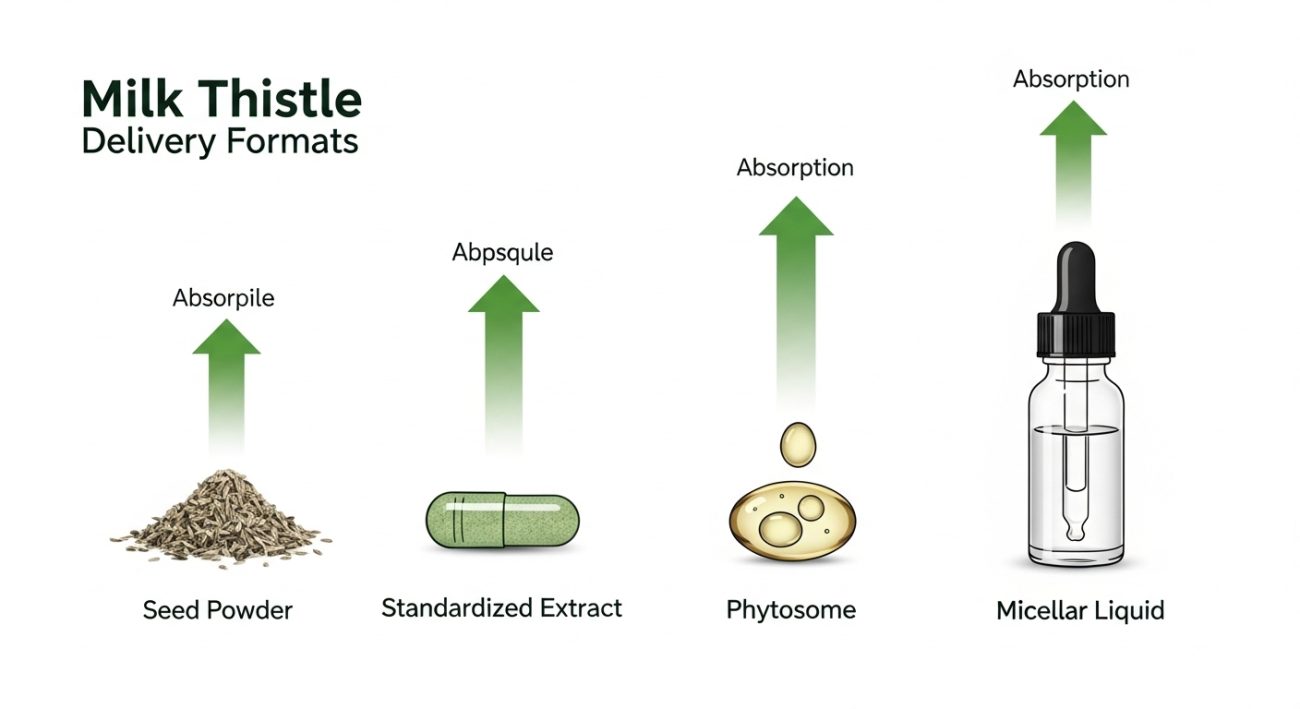
Newer formulation technologies have largely solved the bioavailability problem. A 2025 human pharmacokinetic trial demonstrated that a micellar milk thistle formulation achieved an 18.9-fold higher peak plasma concentration (Cmax) compared to standard extract — a clinically meaningful improvement that renders the whole herb vs. extract debate almost secondary for high-need users.
| Delivery Form | Approximate Bioavailability | Cost Level | Best Use Case |
|---|---|---|---|
| Whole Herb (Seed Powder) | Very low (~10–20%) | Low | General wellness, traditional herbal support |
| Standardized Extract (70–80%) | Low to moderate (~20–50%) | Moderate | Clinical liver support from a verified source |
| Phytosome (Phosphatidylcholine-bound) | Enhanced (~3–5x standard) | High | Improved absorption under medical supervision |
| Micellar Formulation | Very high (up to 18.9x Cmax vs. standard) | Premium | Targeted liver therapy, advanced clinical support |
Curious how standardized extracts compare across different herbal delivery formats? Our comprehensive guide on full spectrum extract vs. standardized extract covers this in detail.
Safety, Drug Interactions & Who Should Avoid Both
Milk thistle is considered safe for most adults at studied doses, but CYP3A4 enzyme inhibition is a documented pharmacological effect of silymarin. This means it can increase blood levels of prescription drugs that use the same liver metabolic pathway — potentially to dangerous levels — making a healthcare provider consultation mandatory before use alongside medications.
Drugs with potential interaction risk:
- Blood thinners (warfarin, rivaroxaban)
- Certain statins (simvastatin, lovastatin)
- Diabetes medications (metformin; insulin potentiation risk)
- Oral contraceptives
- Immunosuppressants (cyclosporin)
- Certain antiviral medications (HIV protease inhibitors)
Contraindications:
- Ragweed or daisy family (Asteraceae) allergy
- Hormone-sensitive conditions: breast cancer, ovarian cancer, endometriosis, uterine fibroids (silymarin has mild estrogenic activity)
- Pregnancy and breastfeeding (insufficient safety data)
The clinical research consensus supports 420mg of silymarin per day, divided into two to three doses, as both effective and safe for liver support — with studies of this dose running up to 41 months without serious adverse events. Health Canada’s 2025 safety assessment of milk thistle seed reaffirmed this general safety profile at recommended doses.
Disclaimer: This article is for informational purposes only and does not constitute medical advice. Always consult a licensed healthcare provider before beginning any new supplement regimen.
Which Should YOU Choose? (Decision Framework)
For a straightforward decision, standardized milk thistle extract is the evidence-backed choice for anyone seeking targeted liver support. However, the right form depends on your specific health goal, budget, and ability to verify product quality.
Choose Whole Herb (Seed Powder) if:
- Your goal is general, long-term wellness rather than acute liver support
- You prefer a traditional, whole-plant herbal approach
- Budget is a primary concern and you have no active liver condition
- You are not relying on it for any specific medically relevant dose
Choose Standardized Extract (70–80% Silymarin) if:
- You have a specific liver concern: NAFLD, alcoholic liver disease, or elevated liver enzymes
- You want clinical-grade, reproducible dosing consistent with published trials
- You will verify the COA with HPLC confirmation before purchasing
- A healthcare provider has recommended a specific daily silymarin dose
Choose Phytosome or Micellar Formulation if:
- You have used standard extract without satisfying results
- You are under medical supervision for active or advanced liver disease
- Maximum bioavailability per dose is your primary priority
As a supplier of standardized herbal extracts, B-Thriving works with nutraceutical brands that need exact silymarin specifications — including particle size, solvent residue limits, and HPLC-backed documentation — to build supplement lines that hold up to clinical and regulatory scrutiny.
How to Buy Milk Thistle the Right Way (Label Reading Guide)
Knowing how to read a milk thistle supplement label is as important as knowing which form to choose. Most quality failures happen at the purchasing stage — not the formulation stage — because consumers cannot distinguish a legitimate COA from a fraudulent one.
Your 6-Point Quality Checklist:
- Confirm “standardized to X% silymarin” is explicitly stated — not just “milk thistle extract” without a percentage
- Look for Silybin B listed separately — it signals a manufacturer sophisticated enough to fractionate and quantify individual isomers
- Require a Certificate of Analysis (COA) from HPLC testing — not a colorimetric or general total polyphenol assay
- Check for third-party verification seals — USP, NSF International, or direct ConsumerLab approval
- Verify seed origin if possible — European-grown Silybum marianum from Italy or Germany has the strongest quality history
- Avoid proprietary blends that hide actual silymarin mg — if the label shows “Milk Thistle Complex 600mg” without specifying silymarin content in milligrams, that is a red flag
For a comparison of whole herb forms versus tinctures and other liquid formats, our guide on standardized herbal extract vs. tincture is a practical companion read. If you are evaluating multiple herbal supplements simultaneously, our analysis of saw palmetto standardized extract vs. whole herb follows the same decision framework.
Frequently Asked Questions
Is whole herb milk thistle better than standardized extract?
Not for targeted liver support. Standardized extract is clinically superior for specific liver conditions because it guarantees a therapeutic silymarin dose — typically 350–400mg per 500mg capsule. Whole herb provides a broader phytochemical profile including taxifolin and other coflavonolignans, but only delivers 5–15mg of silymarin per 500mg dose, which is far below effective clinical levels.
How do I know if my milk thistle supplement is actually 80% silymarin?
Request or verify a Certificate of Analysis confirming HPLC-specific testing, not colorimetric analysis. ConsumerLab found 80% of products claiming 80% silymarin actually delivered only 51.7–60.4% when HPLC-tested. Look for independent third-party verification from USP, NSF International, or ConsumerLab to confirm that label accuracy has been independently validated.
Can I take milk thistle with prescription medications?
Not without consulting your doctor first. Silymarin inhibits the CYP3A4 liver enzyme, which can raise blood levels of certain statins, blood thinners, diabetes medications, oral contraceptives, and immunosuppressants to potentially unsafe levels. This drug interaction risk applies to both whole herb and standardized extract forms and is not eliminated by taking a lower dose.
What is the correct dose of milk thistle standardized extract for liver health?
Clinical trials for liver support consistently use 420mg of silymarin per day, divided into three doses of 140mg each. This dose has been studied as safe for up to 41 months. To reach this dose, you typically need a 500–600mg capsule standardized to 70–80% silymarin, taken two to three times daily. Always confirm the silymarin mg per dose — not just the total capsule weight — when reading a label.
What is the difference between milk thistle phytosome and standard extract?
Milk thistle phytosome binds silymarin to phosphatidylcholine — a phospholipid — which dramatically improves absorption through the gut wall by making silymarin more compatible with cell membranes. Standard extract silymarin is poorly water-soluble and absorbs at only 20–50%. Micellar formulations take this further, with a 2025 human trial showing up to 18.9 times higher peak plasma concentration versus standard extract from the same silymarin dose.

