

Standardized saw palmetto extract — specifically liposterolic extract with 85% fatty acids — delivers consistent, measurable potency that whole dried berries simply cannot match. For European formulators and procurement teams specifying BPH supplements, scalp health cosmetics, or EU-licensed herbal medicines, standardized extract is the clear procurement-grade choice. Whole herb powder serves only limited, niche use cases.
If you’re comparing standardized extract vs whole herb options across multiple botanicals, saw palmetto is one of the clearest cases where the extract form wins on almost every specification criterion.
What Is Saw Palmetto Standardized Extract?
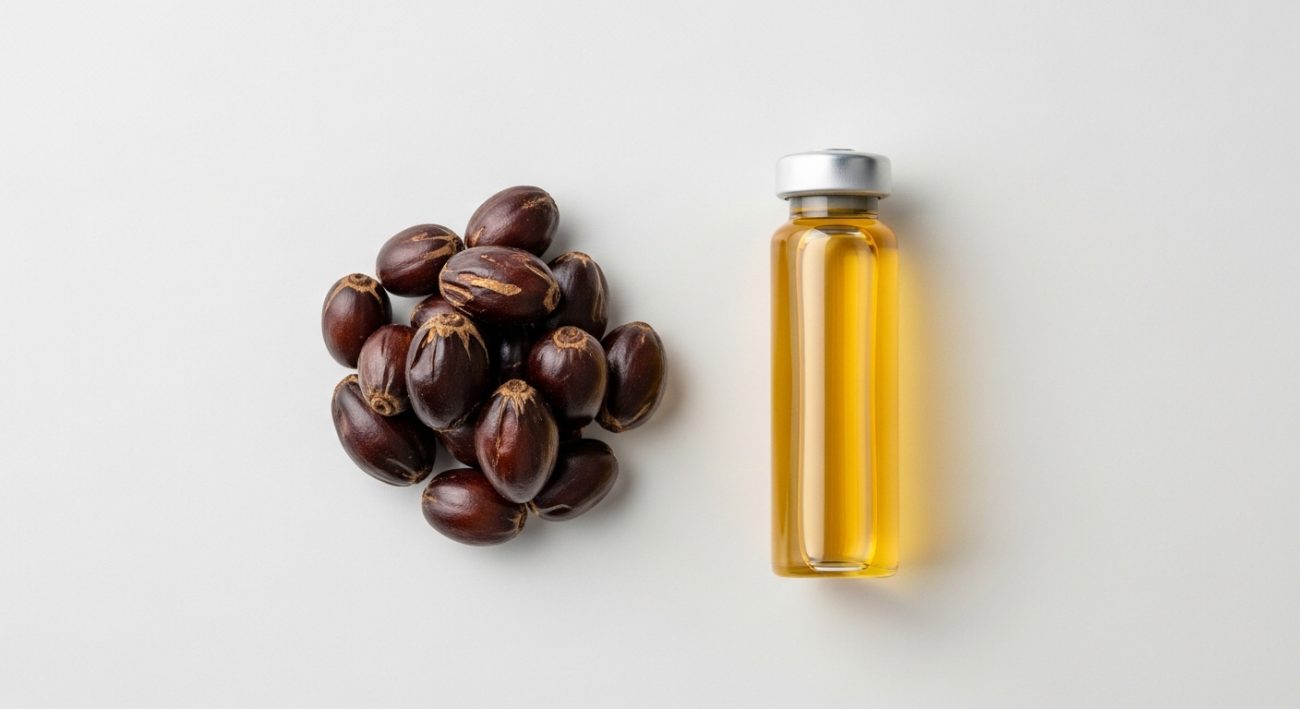
Saw palmetto standardized extract — derived from the ripe berries of Serenoa repens — is a concentrated liposterolic preparation standardized to a defined percentage of total fatty acids and phytosterols. The most widely used specification is 85% total fatty acids, produced through supercritical CO₂ or hexane extraction.
Unlike a simple dried berry powder, a standardized extract delivers a consistent chemical profile across batches. That consistency is exactly what formulators and QA managers need when building product specifications for regulated European markets.
Key Active Compounds: Fatty Acids, Phytosterols, and Polysaccharides
The primary actives in saw palmetto extract include:
- Fatty acids — lauric, oleic, myristic, palmitic, and linoleic acids; these are the principal markers used for standardization
- Phytosterols — particularly β-sitosterol, which contributes to the extract’s biological activity profile
- Polysaccharides — present in aqueous fractions; not commercially significant in liposterolic preparations
Manufacturers verify the fatty acid profile using gas chromatography (GC) or HPLC on every batch. Natural phytochemical variation in whole berry batches can exceed 35–40%, making non-standardized material unreliable for finished-product development.
Why Standardization to 85% Fatty Acids Matters for Dose Accuracy
For a formulator targeting 320 mg/day of active liposterolic extract — the dose referenced in the EMA/HMPC monograph — standardization to 85% ensures every softgel or capsule delivers what the label claims. Without standardization, a whole berry powder at the same fill weight may carry far less active content, making dose accuracy impossible to guarantee.
Extraction Methods: Supercritical CO₂, Hexane, and Ethanol Compared
Three extraction methods dominate commercial saw palmetto production:
| Method | Solvent Residue | EU Regulatory Status | Fatty Acid Yield | Notes |
|---|---|---|---|---|
| Supercritical CO₂ | None | Clean label; EU buyer preferred | High | Premium; increasingly demanded |
| Hexane | Trace (controlled) | EMA/HMPC monograph-aligned | High | Traditional pharmaceutical standard |
| Ethanol | Low | Acceptable for food supplements | Lower | More common in full-spectrum formats |
For a broader look at how standardization methods compare across botanical categories, our guide on full spectrum extract vs standardized extract covers the key trade-offs.
EMA-Compliant Extraction: What the HMPC Monograph Specifies
The European Medicines Agency (EMA) Committee on Herbal Medicinal Products (HMPC) has published a monograph for Sabalis serrulatae fructus. It references hexane-extracted liposterolic extract at 320 mg/day for traditional use associated with mild benign prostatic hyperplasia (BPH) symptoms.
This directly shapes procurement decisions. If a European buyer intends to include your extract in a registered traditional herbal medicine, they need hexane-extracted liposterolic extract that aligns with these specifications — in writing, with documentation to match.
What Is Whole Herb Saw Palmetto?
Whole herb saw palmetto refers to the dried and milled ripe berry of Serenoa repens — used as-is, without concentrated extraction. It retains the full range of native compounds, including water-soluble polysaccharides that are removed during liposterolic extraction.
Phytochemical Profile of Dried Saw Palmetto Berries
Dried saw palmetto berries contain roughly 1–2% total fatty acids by dry weight under favourable conditions — compared to 85% in standardized extract. That gap means a formulator would need 3–4 grams of whole berry powder to approximate the active content of 320 mg standardized extract. In practice, this makes capsule filling impractical for modern supplement formats.
Active Constituent Concentration: Raw Berry vs. Standardized Oil
| Form | Fatty Acid Content | Typical Dose Required | Batch Consistency |
|---|---|---|---|
| Whole dried berry | ~1–2% | 3,000–4,000 mg | Poor to variable |
| Standardized extract (85%) | 85% | 320 mg | Excellent |
This is not a minor formulation detail. It explains precisely why clinical studies on saw palmetto and BPH use standardized liposterolic extracts — not raw berry powder.
When Whole Berry Powder Still Has a Role in Formulations
Some formulators raise the “full-spectrum” argument — the idea that minor compounds in the whole berry work synergistically with fatty acids. For botanicals like echinacea or ashwagandha, this case is stronger. For saw palmetto, the dominant mechanism (5α-reductase inhibition) depends directly on the concentrated fatty acid fraction. Whole herb powder still appears in “whole herb” supplement lines as a cost-driven or positioning choice, but it rarely features in regulatory-grade EU product development.
Standardized Extract vs Whole Herb: Head-to-Head Technical Comparison
| Criterion | Standardized Extract | Whole Herb |
|---|---|---|
| Active content (%) | 85% fatty acids | ~1–2% |
| Dose required | 320 mg | 3,000–4,000 mg |
| Batch consistency | High (HPLC/GC-verified) | Variable |
| EU regulatory status | EMA/HMPC-aligned | Not referenced in HMPC monograph |
| Shelf life | Longer (concentrated, stabilised) | Shorter (oxidation risk) |
| Formulation suitability | Softgel, capsule, liposomal, topical | Capsule, powder blend |
| Clinical evidence base | Robust (multiple RCTs on standardized form) | Limited |
Potency, Consistency, and Batch-to-Batch Reliability
Phytochemical consistency is the core argument for standardized extract. Third-party analyses of commercial saw palmetto products have found significant variation in fatty acid content across brands — a problem most prevalent in non-standardized or whole berry preparations. For a procurement manager reviewing a supplier’s COA, the question is not just “what is the stated specification?” but “how do you verify it batch by batch?”
How HPLC and GC Testing Verify Fatty Acid Standardization
HPLC and GC are the standard test methods for confirming fatty acid profile and standardization level. When reviewing a COA for saw palmetto extract, request confirmation of:
- Individual fatty acid percentages (lauric, oleic, myristic — not just a total)
- Phytosterol content (β-sitosterol is the key marker)
- Heavy metal testing results
- Residual solvent levels, particularly for hexane-extracted grades
For a wider comparison of extract documentation requirements, see standardized herbal extract vs tincture.
Clinical Evidence: Does Standardized Extract Outperform Whole Herb?
Published research consistently uses standardized liposterolic extracts — not whole berry powder — as the test material. Studies confirm that saw palmetto liposterolic extract inhibits type II 5α-reductase, the enzyme that converts testosterone to DHT. A 2010 study on the ethanol extract SPET-085 reported specific IC₅₀ values for 5α-reductase type II inhibition — data only possible because the extract was consistently standardized. Whole herb powder cannot produce equivalent clinical data because it cannot deliver a controlled active dose.
What the EMA/HMPC Position Means for Your Product Application
The HMPC position grants traditional use status to hexane-extracted liposterolic saw palmetto for BPH — not a full efficacy approval. EU-licensed herbal medicines referencing this monograph can make a traditional use claim, provided the extract specification matches the monograph exactly. If your product application depends on this framework, your supplier must confirm extraction method and specification alignment in auditable documentation.
Cost and Supply Efficiency: Which Form Delivers Better Formulator ROI?
Standardized extract costs more per kilogram than dried berry powder. However, the cost-per-active-unit calculation reverses that picture quickly. When you account for the 3–4x higher dose required for whole herb, the total raw material input cost per finished unit is typically higher with whole herb — not lower. Add in elevated QC failure rates from batch inconsistency, and the cost case for standardized extract becomes clear.
EU Regulatory Compliance for Saw Palmetto Products
This is where saw palmetto sourcing diverges sharply from many other botanicals. In the EU, saw palmetto is primarily marketed as a herbal medicine under the Traditional Herbal Medicinal Products Directive (THMPD) — not simply as a food supplement. That classification imposes tighter documentation and specification requirements on the supply chain.
EMA Traditional Herbal Registration vs Health Claim Compliance
Under EFSA Regulation (EC) 1924/2006, saw palmetto does not hold an authorised EU health claim. Products sold as food supplements cannot make BPH-related efficacy claims. Under the THMPD pathway, however, manufacturers can reference traditional use for mild BPH symptoms — provided the extract specification aligns with the HMPC monograph. Your QA/RA team must confirm the applicable regulatory route before finalising the extract specification you source.
HMPC-Specified Extract Criteria Your Supplier Must Meet
For HMPC-aligned procurement, your supplier should confirm in writing:
- Extraction solvent: hexane
- Standardization: liposterolic extract with verified individual fatty acid profile
- Dose alignment: 320 mg/day active extract
- Documentation pack: GMP certificate, COA with HPLC/GC data, residual solvent test, heavy metals panel
GMP, ISO, and Documentation Standards European Buyers Require
European buyers typically require ISO 22000 or equivalent food-safety certification, evidence of EU GMP-equivalent manufacturing standards, and a full COA with every shipment. If a supplier cannot provide residual solvent data for hexane-extracted grades, treat that as a disqualifying gap — not a negotiation point.
For pharma-adjacent formulations where saw palmetto combines with 5α-reductase medications, also review herbal extract drug interaction considerations before finalising your formula.
Formulation Applications by Industry Segment
Nutraceutical Grade: Prostate Health and Hair Growth Supplements
The dominant application remains prostate health — specifically BPH management supplements targeting the 50+ male demographic across European markets. The standard delivery format is a 320 mg softgel containing standardized 85% liposterolic oil, supplied in bulk as an amber-coloured liquid.
Hair growth supplements represent a growing secondary segment. Saw palmetto positions as a plant-derived alternative in DHT-blocking formulations, often alongside zinc and pumpkin seed oil.
Softgel, Capsule, and Liposomal Delivery: Bioavailability Considerations
Saw palmetto extract is oil-soluble and well-suited to softgel encapsulation. Liposomal delivery formats are emerging for brands competing on enhanced bioavailability — relevant for both ingestible and topical hair health products where absorption rate drives product differentiation.
Cosmetic Grade: Scalp Health and Topical Hair Formulations
Cosmetic-grade saw palmetto extract features in scalp serums, shampoo bases, and leave-in treatments targeting androgenetic alopecia. The liposterolic oil’s solubility profile makes it compatible with lipid-phase formulation systems. For cosmetic applications, CO₂-extracted oil is preferred — it carries no residual solvent concerns and meets clean-label positioning requirements across EU markets.
Identifying Quality Issues in Saw Palmetto Supply
Saw palmetto extract has a documented adulteration problem in global supply chains. The primary issue involves substituting genuine standardized liposterolic extract with cheaper green berry powder or diluted oils. Both can pass basic colour and viscosity checks while failing to deliver the expected fatty acid content.
How to Spot Substandard Saw Palmetto Supply: 5 Red Flags
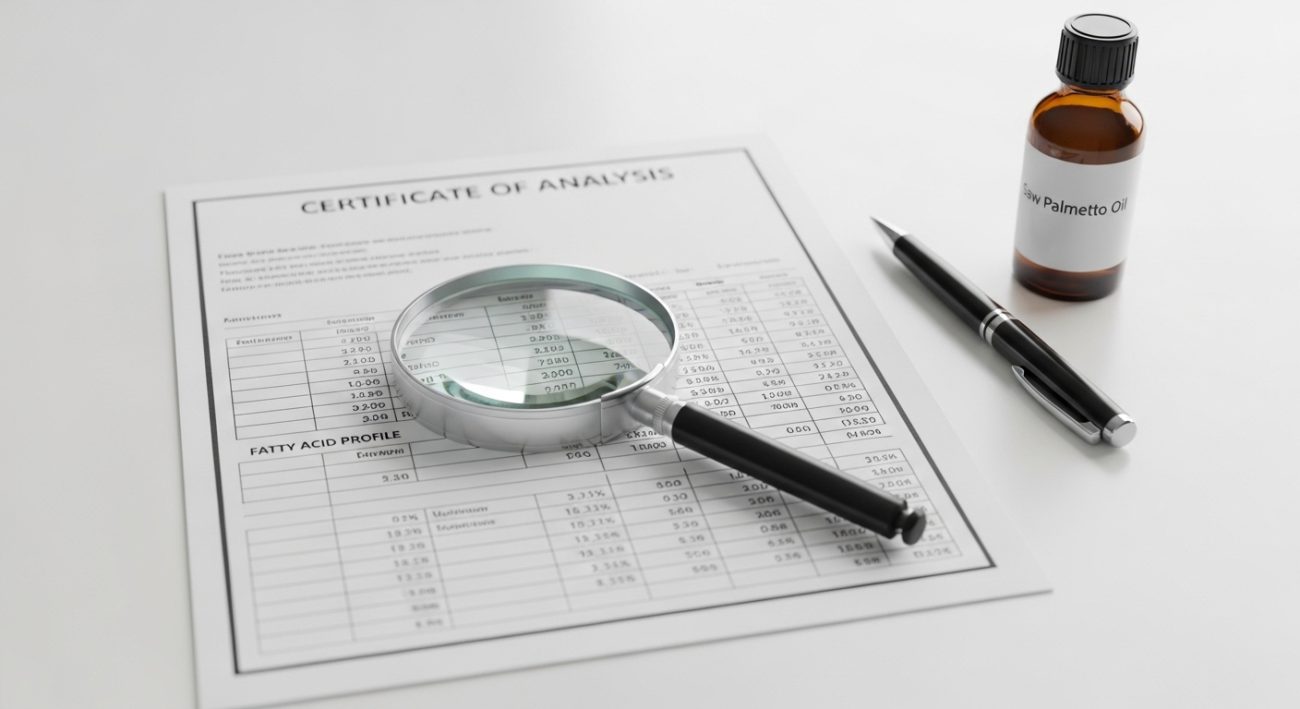
- No GC or HPLC data on the COA — total fatty acid claims without individual fatty acid breakdown are unverifiable and non-compliant with EU GMP expectations
- Unusually low pricing for 85% standardized grade — often signals diluted or adulterated material
- No residual solvent testing for hexane-extracted grades — a basic EU GMP requirement with no acceptable excuse for omission
- Missing phytosterol data — legitimate standardized liposterolic extract always includes β-sitosterol content
- Vague extraction method description — “proprietary process” or “plant extraction” without solvent disclosure is a procurement red flag
Green Berry Powder vs True Liposterolic Extract: How to Distinguish
Unripe green berry powder from Serenoa repens costs significantly less than ripe berry liposterolic extract and carries measurably lower fatty acid content. On a COA, this shows up as total fatty acid levels below 80%, irregular fatty acid ratios, and higher moisture content. Always request a full GC fatty acid profile report — not just a total percentage — before approving a new supplier.
How to Source Saw Palmetto Extract from B-Thriving
B-Thriving supplies saw palmetto extract in two primary grades — 45% total fatty acids powder and 85% liposterolic oil — both available for bulk orders with full COA documentation, HPLC/GC reports, and GMP certification. Explore the complete range of standardized botanical extracts to compare grades and specifications across botanical categories.
Available Grades, Standardizations, and MOQs
| Grade | Form | Standardization | Primary Application |
|---|---|---|---|
| Standard | Powder | 45% total fatty acids | General nutraceutical blends |
| Pharma/Nutraceutical | Oil | 85% liposterolic | Softgels, BPH supplements, EU herbal medicine |
| Cosmetic | Oil | 85% | Scalp serums, topical hair formulations |
MOQs and lead times are confirmed at the RFQ stage. Sample requests include a full COA and technical datasheet.
Request a Sample, COA, or RFQ: What to Expect
Submit your enquiry with the target grade, application segment, and estimated monthly volume. B-Thriving provides:
- COA with HPLC/GC data, heavy metal panel, and residual solvent results
- Technical datasheet covering solubility, appearance, and storage specifications
- GMP and ISO certification documentation on request
- Sample shipment to EU with full customs and regulatory documentation
Ready to specify saw palmetto extract for your next formulation? Submit your RFQ or request a free sample — include your target specification and grade, and we confirm availability within 24 hours.
Frequently Asked Questions
What is the difference between saw palmetto standardized extract and whole herb?
Standardized extract concentrates the active liposterolic fraction to 85% fatty acids, while whole dried berry contains roughly 1–2% fatty acids. For clinical-aligned dosing at 320 mg/day, standardized extract is the only practical option.
What does the EMA/HMPC monograph specify for saw palmetto extract?
The HMPC monograph references hexane-extracted liposterolic extract at 320 mg/day for traditional use associated with mild BPH symptoms. This is a traditional use position, not a full efficacy approval, and it applies specifically to hexane-extracted grades.
What should I check on a saw palmetto extract COA?
Verify individual fatty acid percentages via GC method, phytosterol content (β-sitosterol), heavy metal results, residual solvent data for hexane grades, and moisture levels. A total fatty acid percentage alone does not confirm product quality.
Is saw palmetto extract suitable for cosmetic formulations?
Yes. CO₂-extracted 85% liposterolic oil works effectively in scalp serums, shampoos, and leave-in treatments for androgenetic alopecia. Confirm solubility compatibility in your lipid phase before finalising the formula.
Does saw palmetto extract interact with medications?
Saw palmetto is generally well-tolerated, but interactions with hormonal medications and anticoagulants are reported in the literature. For pharma-adjacent formulation work, review the herbal extract drug interaction guide before finalising your specification.
Which extraction method do I specify for EU herbal medicine registration?
The HMPC monograph references hexane extraction. For non-medicinal nutraceutical or cosmetic applications, CO₂-extracted oil is often preferred for clean-label positioning and solvent compliance.
How does standardized extract compare with a full-spectrum extract?
Full-spectrum extracts retain a broader range of native phytochemicals, while standardized extracts isolate specific active markers at a defined concentration. For a detailed comparison, see our article on full spectrum extract vs standardized extract.

