

Iceland moss extract powder is under consideration for supplements, functional foods and beverages as well as for lozenges and certain personal-care products. But two products with the same commercial name may contain different botanical ingredients, material and methods of extraction, polysaccharide levels and formulations.
Comparing price is therefore the first task not for the product developer or ingredient buyer. It is verifying the material the supplier is providing is the right material for the finished product.
What About Iceland Moss Extract Powder?
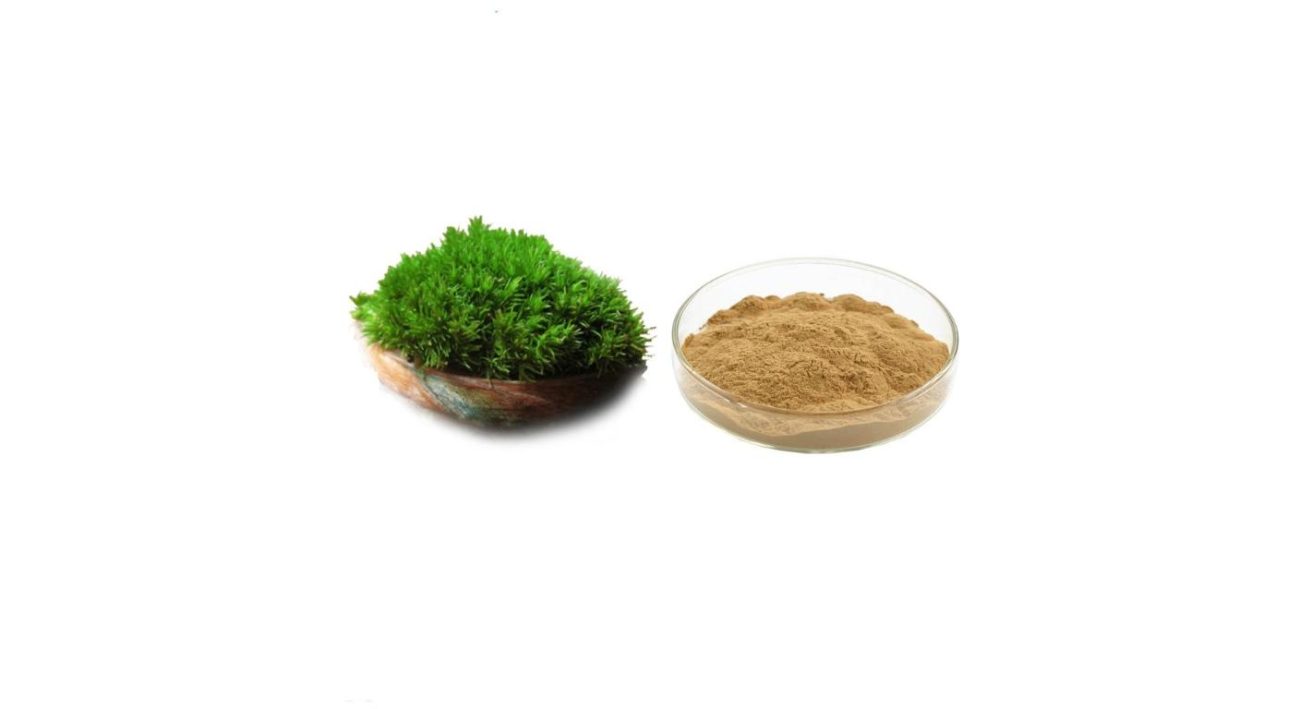
Iceland moss extract powder is extracted from cleaned material of Iceland moss, concentrating the extract and transforming them into a stable powder form. It does not involve just drying and milling the original material.
Selected constituents can be concentrated and thickened during extraction, but the final characteristics will depend on the raw material, extraction medium, temperature, concentration process, drying method and carrier used.
The current specification of B-Thriving Iceland Moss is a yellow-brown fine powder standardized to 30% polysaccharides and UV spectrometry tested. The buyers should consider these data as a starting specification and check them against a current TDS and batch specific CoA.
Confirm Botanical Identity before comparing Specifications.
Commercial names are not necessarily botanical names; “Iceland moss” and “Irish moss” are examples of similar commercial names. A sourcing team should validate the scientific name and type of organism along with the part being sourced, and its origin prior to vetting the sample.
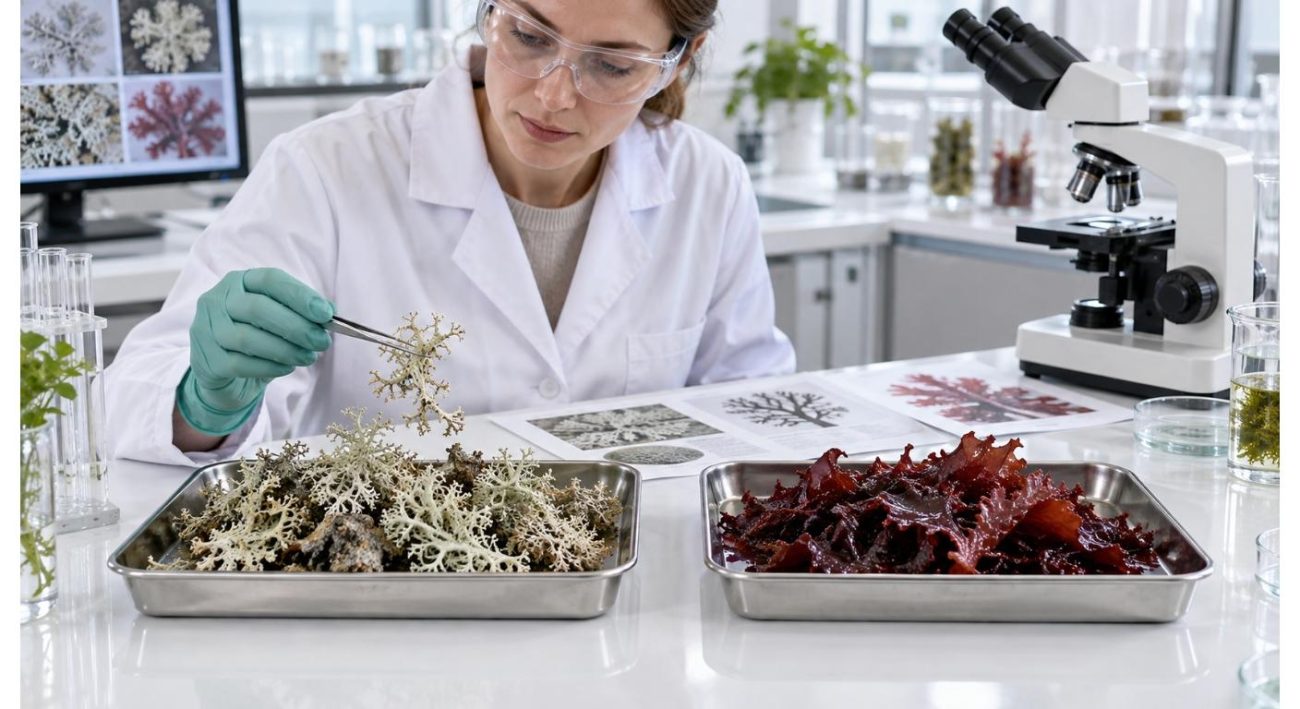
Request supplier to link the product name on the quotation with the identity on the specification, CoA and raw material traceability record. If there are any discrepancies in the scientific name in different documents, the same should be resolved prior to the formulation trial.
Labeling requirements, technical functions and the composition of ingredients may differ between an extract of Iceland moss obtained from a lichen and an extract obtained from a marine algae.
| Verification Point | What the Buyer Should Confirm | Required Evidence |
| Commercial name | Iceland moss or Irish moss | Product specification |
| Scientific identity | Exact accepted scientific name | TDS and identity record |
| Source material | Lichen, algae or other material | Raw-material description |
| Material used | Whole thallus, whole herb or defined part | Specification sheet |
| Origin | Harvest or cultivation region | Traceability document |
| Label consistency | Same identity across every document | Quote, TDS and CoA |
Understand Polysaccharide Standardization
If the term “30% polysaccharides” is used, it means that the polysaccharides are the main specification marker. It will not automatically provide a full chemical profile of the ingredient, or the purity or performance of the ingredient.
Buyers should determine if 30% is a minimum, a target or an acceptable range. They should also ask about the analytical method, sample-preparation process and actual result for the batch that is offered.
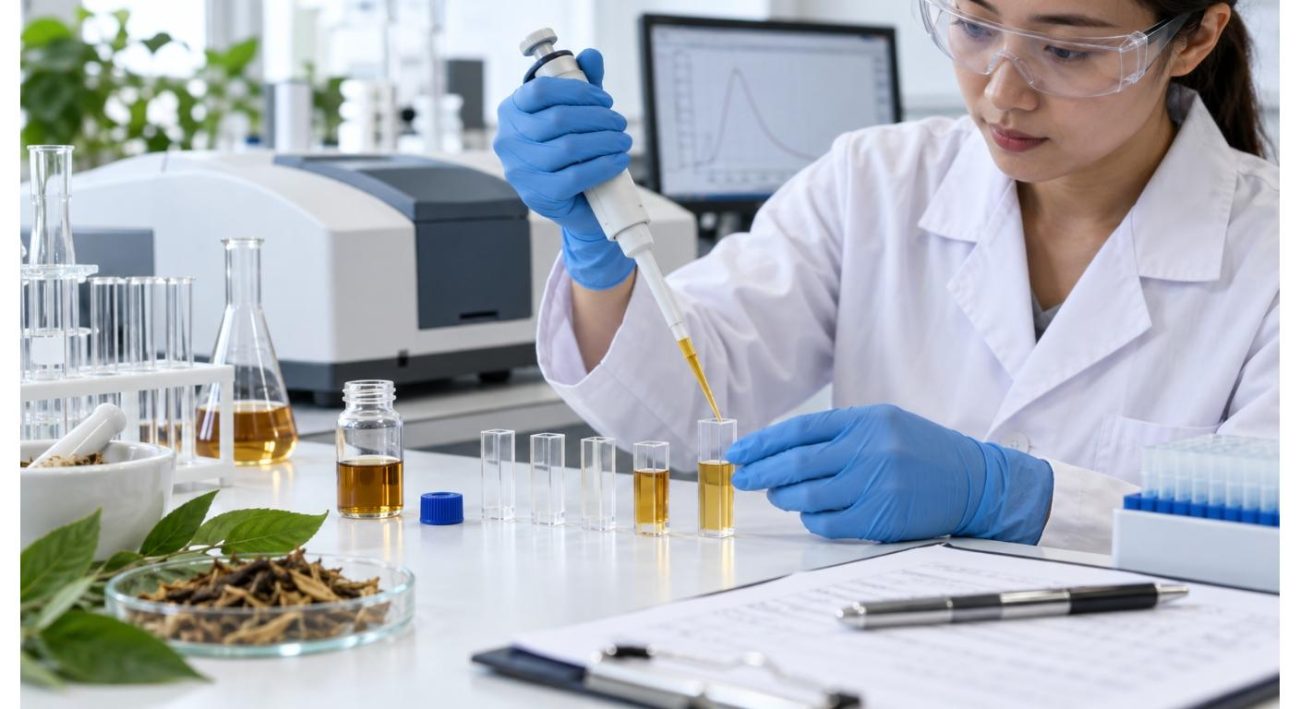
Colorimetric measurement of total polysaccharides is possible by UV spectrometry (will depend on the method and the reference standard). If the testing methods of two suppliers are different, it may be difficult to compare percentages.
Match the Powder with the Finished-Product Format
Which physical properties are most important is dependent upon the intended application.
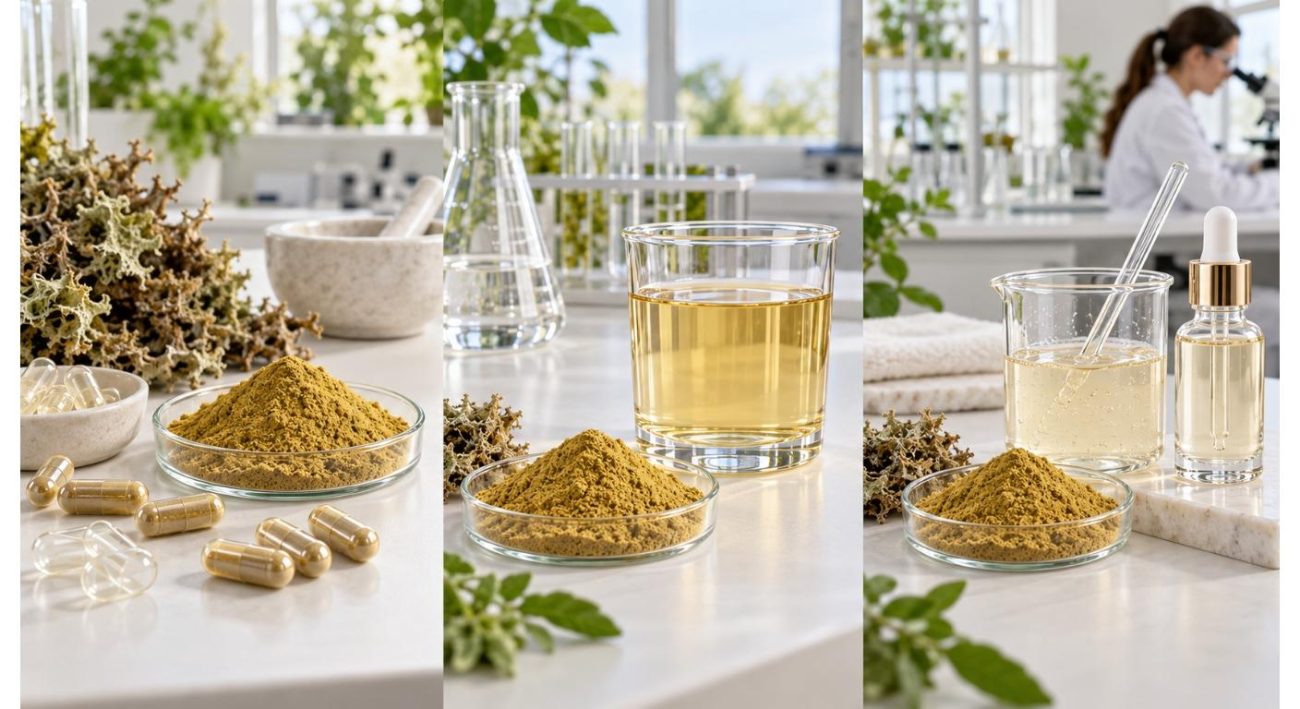
Check particle size, moisture, flowability, bulk density and compatibility with other dry ingredients for capsules and tablets. Flavor, color and mouthfeel are also important parameters that need to be assessed early on lozenges and oral powders.
Some of the characteristics that should be looked at for beverages are water dispersibility, sedimentation, pH behavior and flavor impact and stability after heat processing. Why an extract specification is not enough to predict the behaviour of the extract in a finished beverage is explained in B-Thriving’s guide to botanical ingredients for functional beverages.
If designing cosmetic systems, formulators should consider dispersion, odor, change in color, compatibility with preservatives and performance at the desired pH range. The suitability of the application should be proved by making the formulation trials and not by presuming it from the botanical name.
Take note of the documents in the Background to the Specification.
A product brochure is not the only thing that should be included in a professional sourcing package. Ask for a TDS, specification sheet, batch specific CoA and where applicable, SDS and contaminant testing report.
The technical data sheet for a botanical extract is a description of the product that would be expected to be observed, whereas the CoA report may be used to show the results of a particular batch, according to the technical data sheet guide. The buyer should verify that the batch number in the CoA is the one used for the material supplied for the evaluation.
Additionally, microbial limits, heavy metals, pesticide residues and residual solvents should be considered as per the intended market and application. These are safety and purity checks which a polysaccharide result does not replace.
Follow a Sample-Based Formulation Trial.
A laboratory sample must not only be examined as a dry powder, but must also be tested in the product matrix. Use the intended water phase, sweetener, protein, mineral and excipients or cosmetic base.

Monitor dispersion time, sediment, colour, odour, processing viscosity and viscosity changes. Observations should be repeated following pasteurization or other intended thermal treatment by beverage developers. Blending and compression behaviour should be considered by tablet developers.
While accelerated screening can help to spot very quick obvious incompatibilities, it cannot replace finished-product stability testing. Note the sample lot number and the trial conditions for comparison with the results of the commercial batch.
| Trial Item | What to Observe | Suggested Checkpoint |
| Dispersion | Lumps, floating powder or sediment | Immediately and after 24 hours |
| Appearance | Color and clarity change | Before and after processing |
| Sensory effect | Odor, bitterness and mouthfeel | Final prototype |
| pH compatibility | Precipitation or instability | Across target pH range |
| Process stability | Heat or mixing sensitivity | After normal production conditions |
| Storage behavior | Separation, caking or color drift | During stability study |
Assess the Quality Controls (QC) of the Supplier
Inquire about the test that is done in-house and that is outsourced. The in-house botanical extract laboratory guide indicates that in-house testing can be used to aid quick process control but does not necessarily imply independence and/or full coverage of contaminants.
The supplier should be able to explain:
- The manner in which the incoming botanical is identified.
- Testing and releasing of polysaccharide content.
- With or without the use of carriers/processing aids.
- How end products are traced back to the raw materials.
- Third party laboratories confirm which specifications.
- Action taken when deviations and out-of-specification results occur.
Conclusion
The first step in choosing Iceland moss extract powder is to verify that it is the correct product; the final step is to ensure it delivers the desired results in the final product. The different parameters such as the botanical name, polysaccharide specification, analytical method, physical properties and batch documents should express the same material.
A clear RFQ, Document Review and sample based trial provide a better foundation for procurement, quality and formulation team to approve a commercial order.
FAQs
Q1. Iceland moss extract powder is a product that can be used for?
Can be used to evaluate supplements, lozenges, functional foods, beverages and formulations for personal care. The suitability of the product depends on the specification and results of finished-product testing.
Q2. What is Iceland moss vs Irish moss?
No. The products with these commercial names may vary in their source materials. The scientific identity should be verified on the TDS, CoA and Raw-material records by the Buyer.
Q3. What is 30 % polysaccharides?
It is usually a statement of the concentration of total polysaccharides as determined by a specified method. Buyers need to check if it is a minimum or range and the actual test result of the batch.
Q4. Does TDS suffice to approve the ingredient?
No. A CoA is the actual test result reports for a batch of product, whereas a TDS indicates the expected profile for the product. There is a need for application trials and contaminant reports.
Q5. Does the powder completely dissolve in water?
Not necessarily. Some extracts dissolve and others are only dispersible, which could result in hazing or settling out. The requirement is to be formulated based on the finished product.

