

It’s fairly easy to find a myricetin powder supplier. It is more challenging to verify that the material provided meets the necessary identity, purity, physical characteristics and batch uniformity.
It is this difference that is important to supplement brands, contract manufacturers and formulation teams. Even a specification that states “98% myricetin” is not too clear since the percentage alone does not indicate the botanical source, the method of analysis, the type of impurities present or their behavior in a final product.
The basis of the specification and what it is intended for should consequently be the starting point for a reliable purchasing decision.
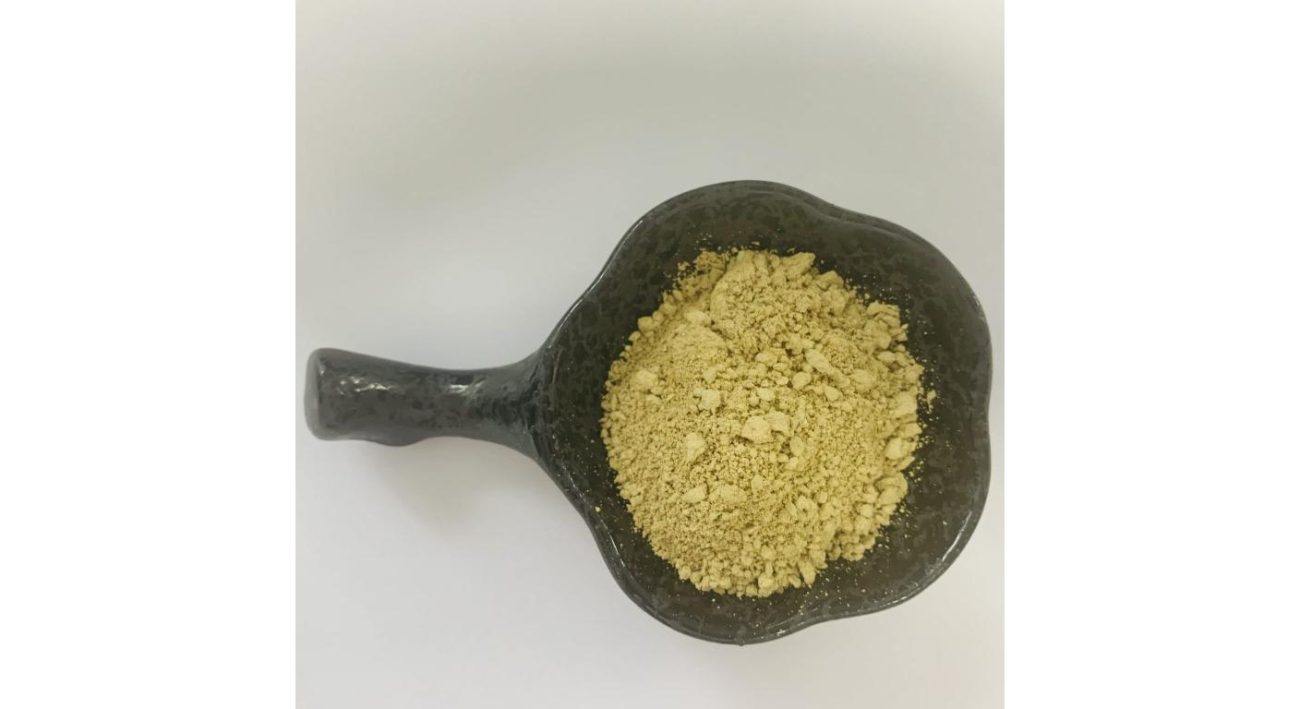
Myricetin Powder: What is it?
Myricetin is a naturally occurring flavonol, which exists in various botanical materials. Normally a commercial myricetin powder is not made by simply milling a dried plant but by extracting, separating, purifying and crystallizing.
According to the description of B-Thriving’s Myricetin product it is a yellowish-green to yellow powder that is derived from the tea leaves of a vine. It is listed to contain 98% myricetin, HPLC testing, 25 kg in drums and shelf life 3 years.
These values are used to create a first approximation to a product profile. Buyers should however check that the information for the quotation, TDS, specification sheet and batch CoA is for the same material.
Make sure you start with the Finished-Product Requirement.
Prices of the myricetin powder should be quoted after working out the purpose of the use. The capsule manufacturer may choose to focus on assay, particle size, flow and excipient compatibility. Dispersibility, sedimentation, color and flavor might be more important to a beverage developer.
Solvent compatibility, pH behavior, and color stability and interaction with preservatives may be important to the cosmetic developer. In applications where impurities are critical, or where analytical data are needed for research purposes, more stringent control of impurities or the generation of more analytical data may be necessary.
This approach is application driven, and avoids the purchasing team approving a powder that assays well but has poor application performance when produced.
Check for the meaning of the “98% Myricetin”.
A supplier’s claim of 98% should be related to a specified test method and an acceptance criterion. The Buyers should enquire whether the result is as is or dry basis, the result is minimum or range or both and the reference standard used.
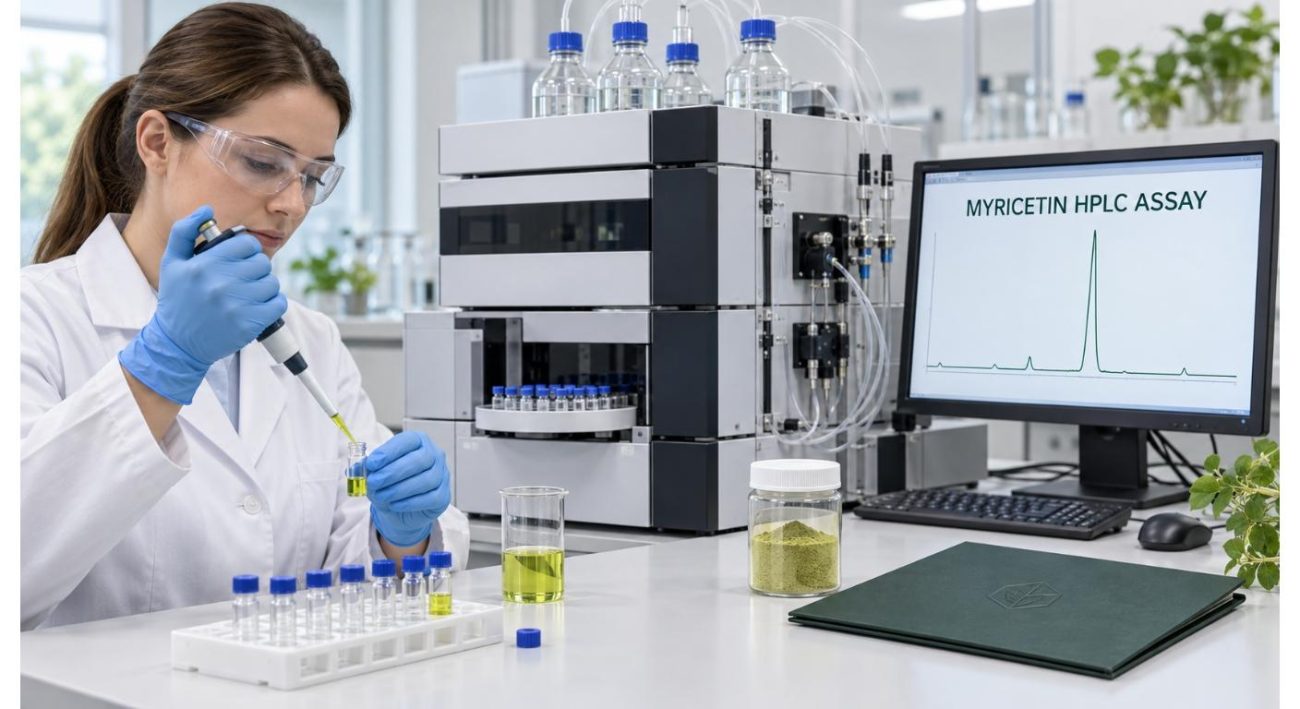
The term “tested by HPLC” is not sufficient on its own and HPLC can be used for separation and quantification of myricetin in a sample. The result is meaningful or not depends on the chromatogram, retention time, method of calculation and reference material.
Ask for a recent batch CoA and a chromatogram (example) for higher risk projects. Don’t take “98%” as a general marketing term, compare actual with specification.
| Verification Item | Information to Confirm | Evidence to Request |
| Compound identity | Material is myricetin, not DHM | Name, CAS number and reference standard |
| Assay basis | As-is or dry basis | Specification sheet |
| Purity requirement | Minimum value or target range | TDS and purchasing specification |
| Analytical method | HPLC method and conditions | Test-method summary |
| Batch result | Actual percentage in supplied lot | Batch-specific CoA |
| Peak identification | Correct retention time and separation | HPLC chromatogram |
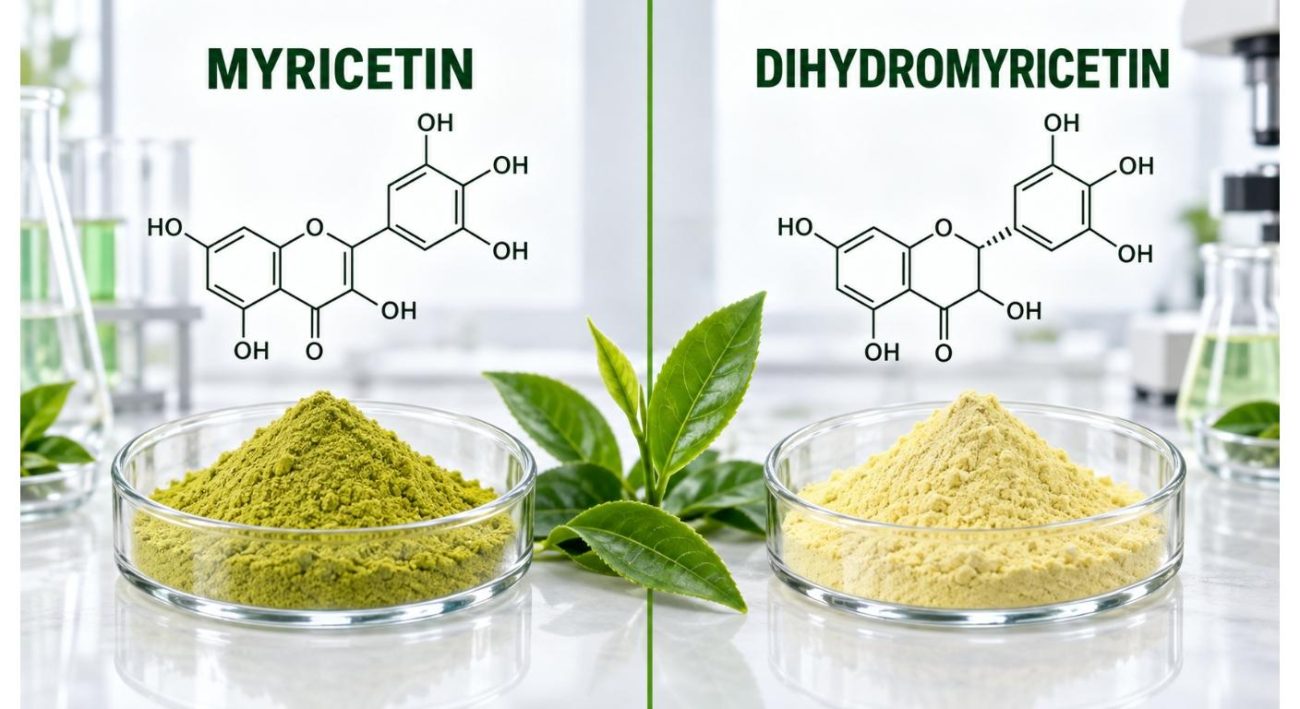
Differentiate Myricetin and Dihydromyricetin
Myricetin and dihydromyricetin are similar flavonoids, and are not interchangeable ingredients. They are chemically distinct, have different specifications and purchase requirements.
This distinction is of significance when vine tea is used as the botanical source of the product, as vine tea is also commonly linked to dihydromyricetin products. B-Thriving offer a separate Dihydromyricetin product (which is 98%) and users need to ensure that quoted products refer to this compound name and not the other one on their CoAs or samples.
The CAS number, molecular identity, HPLC reference standard and the HPLC result should all be myricetin. When the botanical origin is used alone, the final ingredient’s identity can’t be determined.
Look at purity other than in the main assay
A 98% assay represents the compound that they want, but the purchaser should also know what the other 2% is. Relevant controls include related flavonoids, extraction residues, moisture and ash and any processing aids.
Safety testing should be similar to the use and target market. This can vary by project and include heavy metals, microbiological limits, and pesticide residue and residual solvents.
Inquire about any tests that are performed in-house and any that are sent to an outside lab. B-Thriving’s blog post on botanical extract supplier laboratory testing covers the importance of internal testing to ensure process control and independent testing for specialized or regulatory evidence.
Perform Powder’s Formulation Behavior Check
Convenient formulation does NOT ensure high chemical purity. Myricetin powder can be problematic with dispersion, dissolution, powder flow, color or interaction with other ingredients.
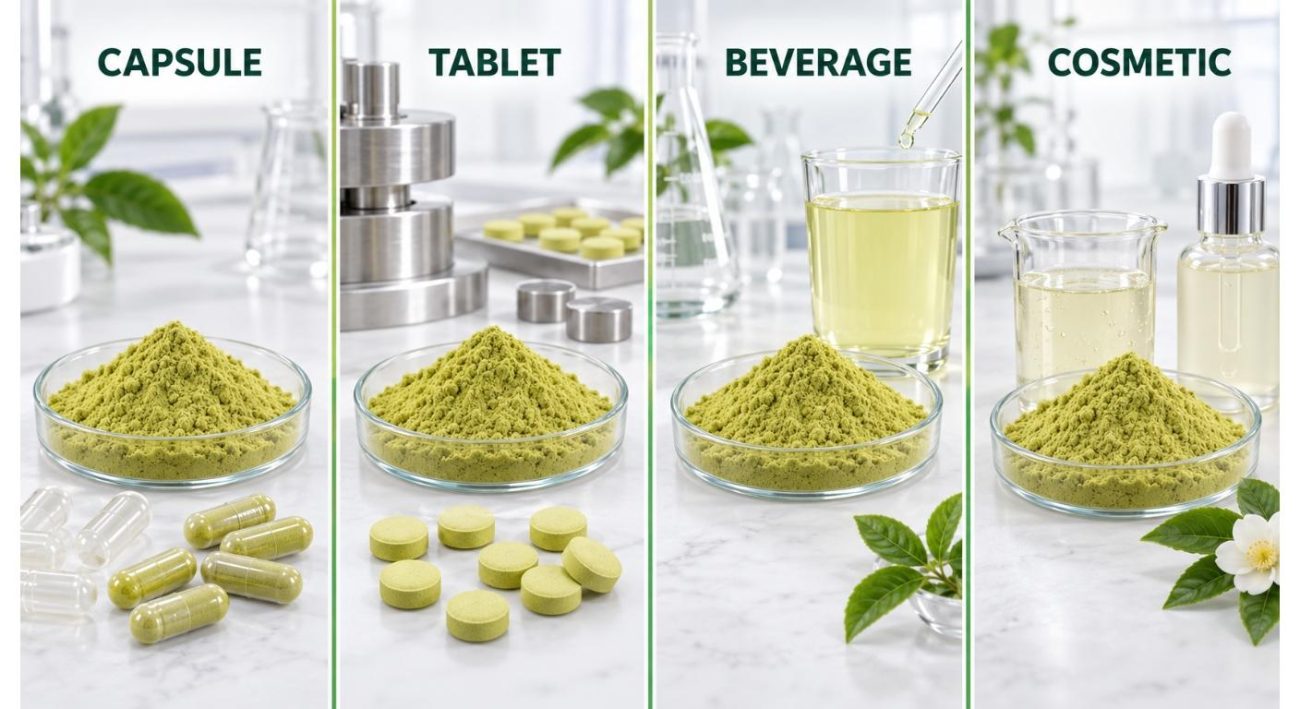
Repeat the test in the product matrix. Developers of capsules and tablets should consider uniformity of blending, fill variation and compression characteristics. Dispersion and sediment and colour change with time should be noted by beverage developers. Compatibility should be determined by the cosmetic formulator in the solvent and emulsion system to be used.
Never accept a supplier’s addition of improved dispersibility, encapsulation or carrier without disclosure. The modified formats can be useful in terms of performance but are not exactly the same as a 98% carrier-free powder.
| Product Format | Priority Test | Acceptance Focus |
| Capsules | Flow and blend uniformity | Consistent fill weight |
| Tablets | Compression trial | Hardness and uniformity |
| Powder blends | Mixing and color distribution | No visible segregation |
| Beverages | Dispersion and sedimentation | Acceptable stability |
| Cosmetics | Solvent and pH compatibility | No precipitation or color drift |
Carry out audit on Supplier Documents
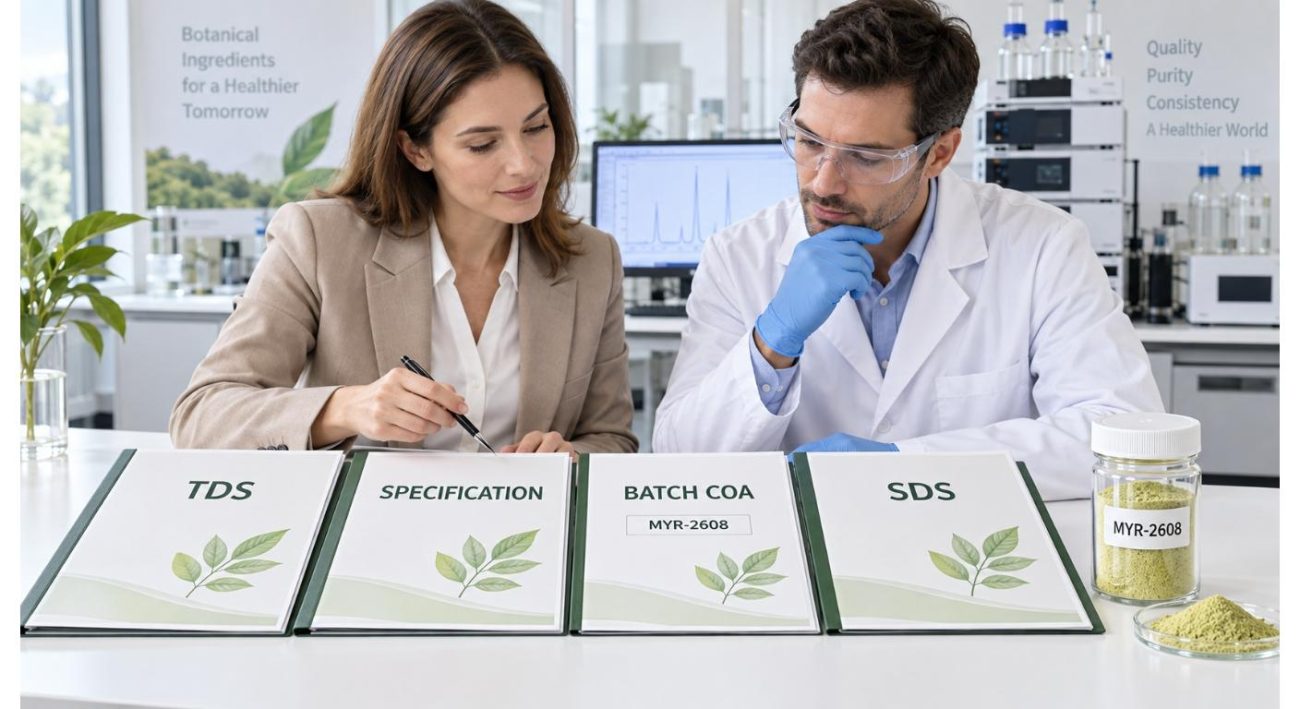
Ask for a TDS, specification sheet, CoA and SDS (if applicable) for the batch. B-Thriving’s botanical extract TDS guide provides an overview of the various functions of technical and batch level documents.
See if product name, botanical source, part of plant, assay, testing method, appearance and batch number and storage conditions are the same throughout the documents. Any differences which are not disclosed should be straightened out prior to approval of the material.
A sample CoA will be useful for preliminary screening, but when the shipment is commercial, each shipment will need its own batch-specific release document.
Assess Supply Capability of the Commercial Sector
Also, order quantity and continuity of production should be taken into consideration in the supplier qualification. Inquire about the frequency of the product offered (is it regularly available/in stock or does it need to be manufactured each time?); is it from stock or is it a sample from a trial batch?
Discuss MOQ, Lead time, Packing, Sample policy and repetitiveness. The guide to standardized extract minimum order quantities can assist buyers to understand the reasons behind different levels of availability and pricing based on purity and volume of orders.
If repeat purchases are made, ask the supplier how he/she controls the changes in raw-materials and whether he/she can notify of any change of production methods or specification beforehand.
Run a Pilot Order to Scale.
An order of a few small laboratory samples is not as good as a pilot order to evaluate. It enables the buyer to check the accuracy of incoming inspection, storage in the warehouses, production performance and documentation in real conditions.
Assay, appearance and particle condition and formulation behavior of the pilot batch are compared with the original sample. If there is a difference it should be investigated prior to the issuance of a larger purchase order.
Once the requirements are ascertained, provide a full RFQ with details on purity, analytical method, application, physical properties, limits of contamination, documentation, packaging, quantity and delivery schedule.
Conclusion
The very best supplier of Myricetin powder is not just the firm that gives you the highest purity they declare or the most cost effective price. That is the supplier that can relate botanical sourcing, compound identity, HPLC results, control of impurities and formulation performance to each commercial batch.
Document review and application testing and controlled pilot order minimize sourcing risk and provide a better basis for repeat production.
FAQs
Q1. What is the normal purity of Myricetin Powder?
Often supplied at 98% purity, there may be a range of other purities available. Test actual batch results and analytical method — do not depend solely on product name.
Q2. Dihydromyricetin is the same as myricetin?
No. They are chemically different, but related, flavonoids. The CoA/report should reflect the identity of the compound and that ordered.
Q3. Why is HPLC testing important?
HPLC helps to separate myricetin from other components and enables the measurement of the concentration of the myricetin. The method, the acceptance limit and the batch result shall be reviewed by the Buyer.
Q4. If the purity level is 98% does that mean it is water soluble?
No, Purity is a different property than solubility. Try the powder in the product you plan to use it in, such as a drink, a supplement or a cosmetic product.
Q5. Which documents should a supplier provide?
Ask for an updated TDS, specification sheet, CoA (batch-specific) and contaminant reports. Handling and Transport Review may also need SDS.

