

Green Lipped Mussel Extract is increasingly selected by nutraceutical teams that want a marine-based joint-support ingredient with a clear sourcing story and a repeatable manufacturing profile. For new buyers, the appeal is not only “where it comes from,” but how it behaves in real product development—how stable it is, how easy it is to dose, and how confidently you can verify what you are buying.
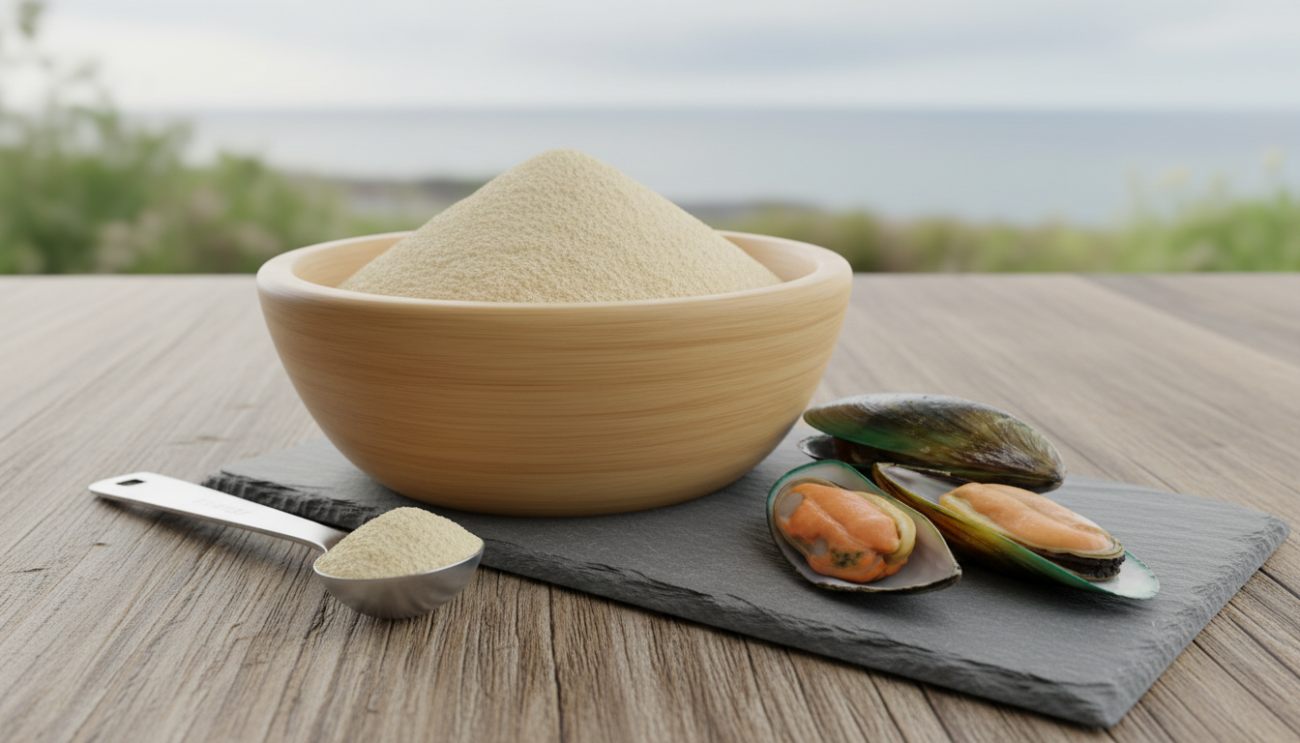
In this guide, we explain what Green Lipped Mussel Extract is, how quality is preserved, what specs matter most, and how to evaluate supplier readiness—so you can move from idea to pilot batches without unnecessary rework.
What Green Lipped Mussel Extract Is and Why Buyers Use It
Green Lipped Mussel Extract is a standardized marine-derived extract made from the soft tissues of Perna canaliculus, a mussel associated with coastal waters of New Zealand. In supplements, it is commonly positioned for joint comfort and mobility support because it contains a naturally occurring blend of bioactive fractions that buyers often prefer to keep “whole-profile” rather than overly isolated.
For brands, the business value is simple: it can function as a “hero ingredient” in joint support, healthy aging, and active lifestyle formulas—while still fitting multiple formats. You can build a single-ingredient concept for clean labeling, or you can use it as the anchor in a synergy blend.
Where this ingredient wins for new product teams is the balance of story + usability:
•Marine-origin positioning that stands out in a crowded joint category
•Versatility across capsules, tablets, powders, and blended systems
•A straightforward path to standardization, identity testing, and QC controls
If your goal is to create a joint product that feels modern and differentiated, Green Lipped Mussel Extract offers a narrative buyers can understand quickly—without forcing you into a complicated sourcing plan.
Where It Comes From and How Quality Is Preserved
With marine-based materials, “source” is only half the conversation. The other half is preservation. Many marine compounds can be sensitive to heat, oxygen exposure, and aggressive processing, which means the extraction approach can influence consistency from batch to batch.
That is why quality-minded manufacturers treat processing as a form of risk control. The goal is to protect the ingredient profile while keeping production scalable and auditable.
At B-Thriving, we focus on controlled methods designed to support stability and consistency:
•Freeze-Drying To Reduce Heat Stress
•Ethanol–Water Co-Extraction To Capture A Broad Fraction Range Under Controlled Conditions
These choices are not cosmetic. They help buyers reduce the kinds of problems that appear later—unexpected odor shifts, performance variability, or formulation adjustments that slow down launch timing.
If you are new to marine ingredients, one practical mindset helps: assume processing affects performance positioning. If you want to build a product around predictable results and repeatable batches, preservation methods should be part of your supplier evaluation checklist, not an afterthought.
How It Handles In Real Manufacturing and Formulation Work
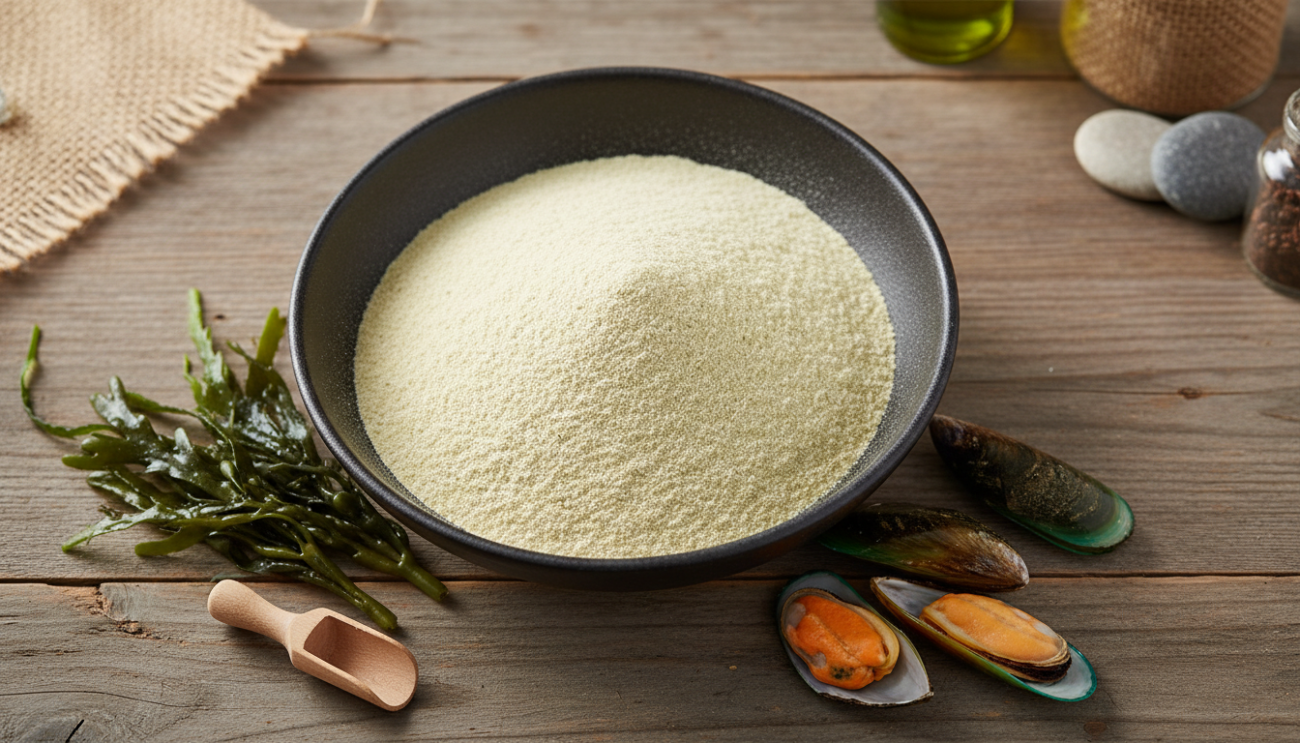
A buyer might read “pale yellow powder” and think it is just a description. In production, those physical traits translate into handling decisions, pilot run behavior, and scale-up speed.
In many manufacturing settings, Green Lipped Mussel Extract is typically:
•A pale yellow powder with a mild marine aroma
•A material designed for efficient dosing and blending
•Often described as having good water-dispersion potential (depending on formula system)
What this means for your team in practical terms:
•Powder form supports scalable batching: easier to weigh, blend, and standardize across lots
•Mild marine aroma reduces masking pressure: especially helpful for powders or sachets where flavor work can become expensive
•Dispersion-friendly behavior can shorten development cycles: fewer surprises during trial runs and fewer iterations before stability testing
If your product format is capsules or tablets, these properties typically support a smooth pathway from lab bench to production. If your format is powder-based, the “mild marine” note becomes important, because it affects flavor strategy and consumer acceptance. Either way, physical behavior should be part of your purchase decision, not just the marketing story.
Standardization: The First Spec Buyers Should Lock Down
New buyers often start with the concept and only later ask, “What exactly are we buying?” In joint-health ingredients, that sequence can cost time. Standardization is what turns an ingredient story into a repeatable input for procurement, R&D, QC, and regulatory workflows.
Two fundamentals usually matter early:
•Extract Ratio (for purchasing clarity and internal alignment)
•Identity Verification Method (for QC confidence and supplier credibility)
B-Thriving supplies Green Lipped Mussel Extract with a clear starting point:
•Extract Ratio: 10:1
•Test Method: TLC (Thin-Layer Chromatography)
Why these two items matter in real buying:
•10:1 ratio supports internal communication: R&D, sourcing, and marketing can align on what “concentration” means in your product story and cost model
•TLC identity testing supports verification: your QC team can confirm the material matches the declared source, which strengthens compliance readiness and reduces substitution risk
Standardization also makes supplier comparisons easier. When you evaluate multiple options, the fastest way to reduce confusion is to compare like-for-like specs: ratio, identity method, and basic quality documents. That approach protects timeline and reduces the chance you need to adjust dosage late in development.
Where Green Lipped Mussel Extract Fits in Product Development
Green Lipped Mussel Extract is widely used in joint-health focused nutraceuticals, and it also shows up in adjacent wellness categories where mobility and recovery overlap.
Go-to application directions:
•Joint support supplements for daily comfort and mobility
•Sports nutrition for active recovery within training lifestyles
•Functional wellness blends shaped for healthy aging routines
•Select cosmeceuticals that bridge movement, comfort, and lifestyle wellness
Two clear development paths for formulation teams:
•Path A: Single-Hero Formula
Build the SKU around Green Lipped Mussel Extract and maintain a pared-back label—great for brands that value a tidy supply chain and a direct, simple message.
•Path B: Synergy Blend
Use Green Lipped Mussel Extract as the anchor and build around it with supporting ingredients aligned to your customer segment (daily wellness, active adults, or healthy aging). This approach can create a stronger “stack” story, but it requires more coordination on specs and stability.
A buyer tip that reduces reformulation risk: choose your target consumer first, then build your formula logic around that profile. “Joint comfort for daily users” often demands a different supporting system than “recovery for active adults.” When the positioning is clear early, your label story, dosage planning, and product claims remain consistent through scale-up.
Why Brands Choose B-Thriving and How to Start
When you buy an ingredient, you are also buying the supplier’s ability to support your launch. New teams often underestimate how much time is lost in back-and-forth: missing documents, unclear specs, slow sample cycles, or limited technical support during formulation.
At B-Thriving, our goal is to reduce those delays by focusing on what buyers need to move forward with confidence:
•Stable supply that supports predictable production planning
•Fast delivery that protects launch schedules and reduces stock-out risk
•Technical support that helps your team evaluate fit, confirm specs, and answer formulation questions efficiently
If you are developing a joint-health product and want a standardized Green Lipped Mussel Extract supply with a 10:1 extract ratio and TLC-based identification, contact B-Thriving to request a specification sheet and a sampling plan for your next formulation run.

