
There are some which are easily placed in the plant extracts. You see the name, and it’s easy to think of one function and the formulation path becomes apparent.
Cyperus rotundus extract powder is not such.
To one purchaser it could be a herb for an everyday wellness supplement. Another possibility is that it’s an active ingredient in a plant-based soothing skin care product. It’s for this reason that you can’t rely on the name of this ingredient. The best way is to start from the end goal and work backward.
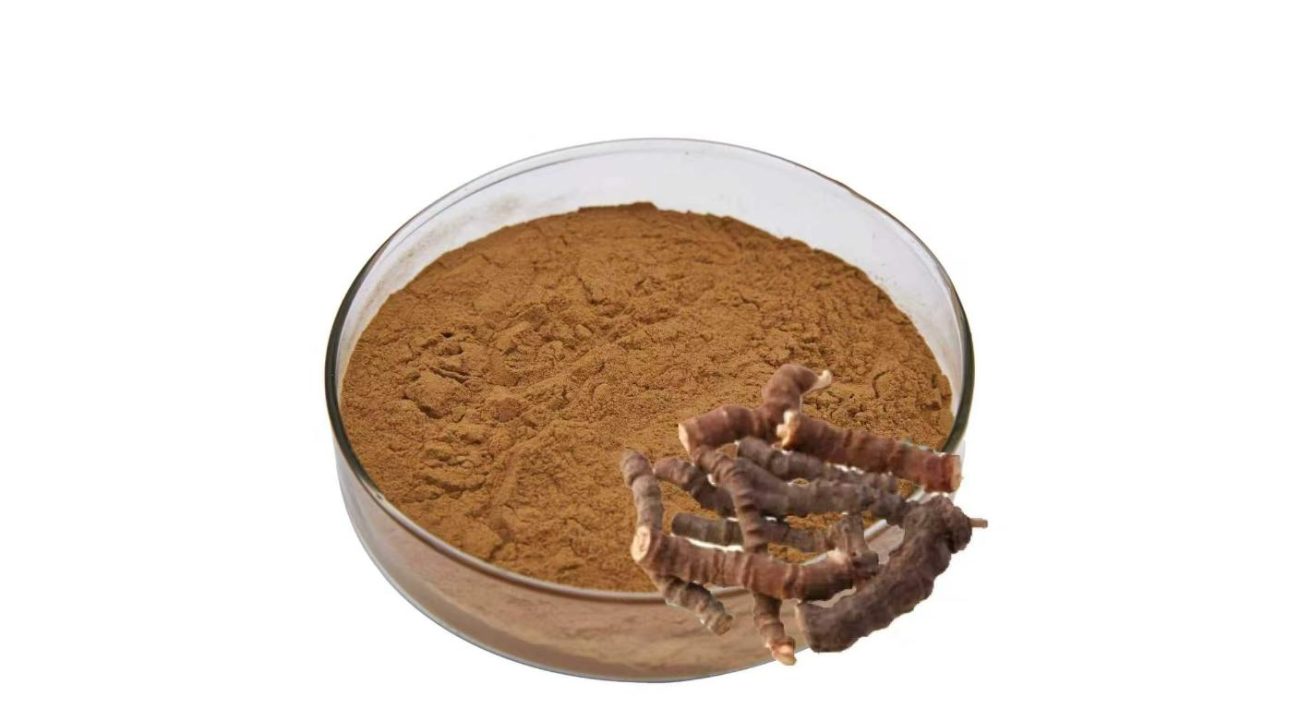
The Cyperus Rotundus Extract material page on B-Thriving shows the extract is rhizome derived, 10:1 ratio, is identified as Cyperus Rotundus by TLC, and is a brown yellow fine powder. While those are all important details, they’re just the first of many that are useful for a practical sourcing decision.
The reason for this Extract being part of more than one Product Team.
Cyperus rotundus is particularly interesting because it has the ability to not remain in one commercial lane.
A supplement group can work on internal equilibrium, daily positioning for wellness or be part of a bigger botanical blend. A cosmetic formulator, however, might be more interested in the product development aspects of how the extract can work with other ingredients in soothing, balancing or skin comfort concepts. It could be used for both military and civilian purposes, which makes it commercially interesting but also useful to formulate the purchasing brief more carefully.
B-Thriving’s Standard Herb Extract range is a useful reminder to buyers that a plant extract isn’t just a plant name if your team is already comparing multiple botanicals that are in similar formats. It is important to consider the plant part, extraction ratio, test method and downstream application to determine if the ingredient really is a fit for the project.
Don’t get carried away with the love of the herb name, go back to the rhizome.
Many buyers make their mistake here.
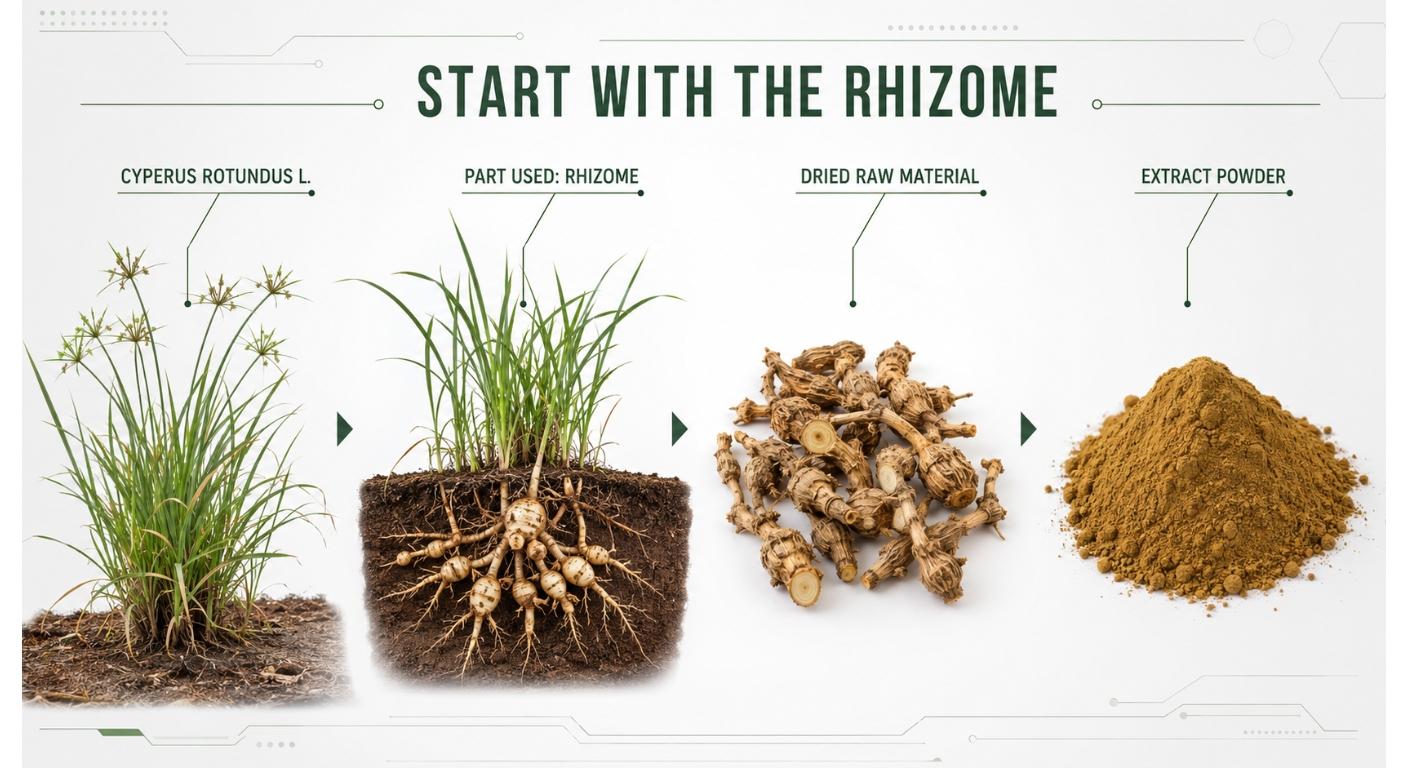
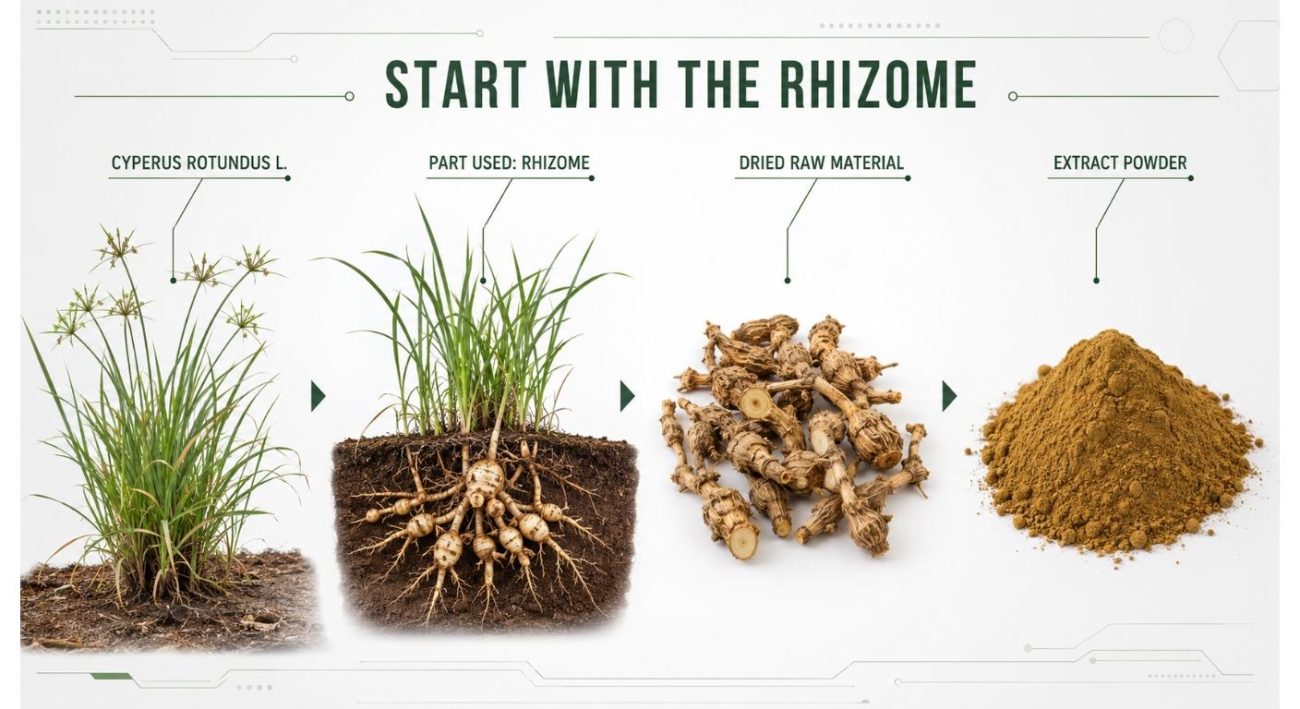
Though “Cyperus rotundus extract powder” seems to be pretty straightforward, in actual transaction, the identify should be more precisely determined. It is indicated on the product page: Cyperus rotundus L. and the rhizome is indicated as part of the plant used. That’s important because the plant part is not an insignificant factor. It sets the tone for both the internal description of the raw material and the way QA evaluates documents, and for the comparison of the ingredient with other suppliers.
Don’t over-hype that information in the article. It should simply alert the reader that they are presented with a more accurate botanical brief when the Latin name, plant part and extract ratio is mentioned throughout the inquiry sheet, sample label, specification sheet and COA.
There are two strategies for development: One Powder.
That’s where Cyperus rotundus extract powder takes an interesting turn – more than just another herb-extract article.
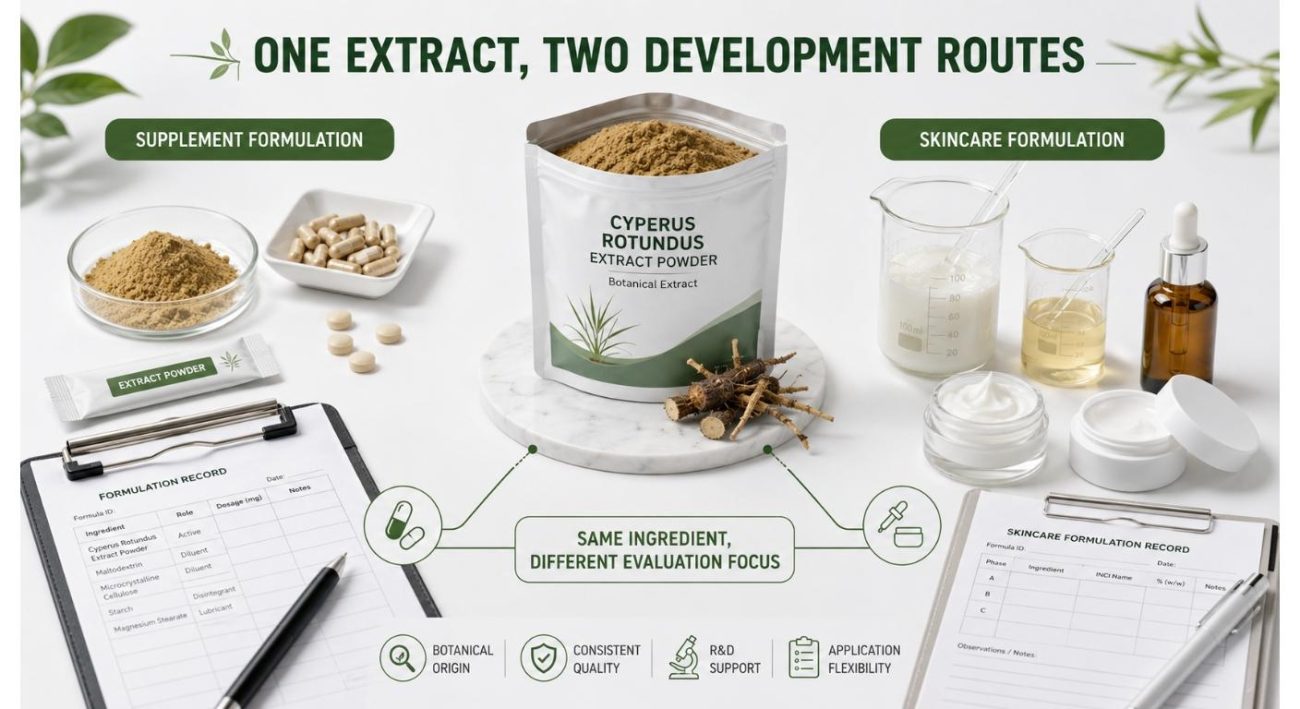
When it comes to supplements, the queries are generally more practical: How does the ingredient perform in a supplement? Does natural colour influence on the end product (capsule / tablet)? Do the odor of powder products or sachets meet standards for an acceptable odor? Does it fit in with the rest of the formula seamlessly or become a ‘must work around’?
When the ingredient is under consideration for skin care the focus shifts. The formulator will be more interested in compatibility of the bases, direction of stability, influence on colour and whether it fits into the desired sensory profile of the finished product.
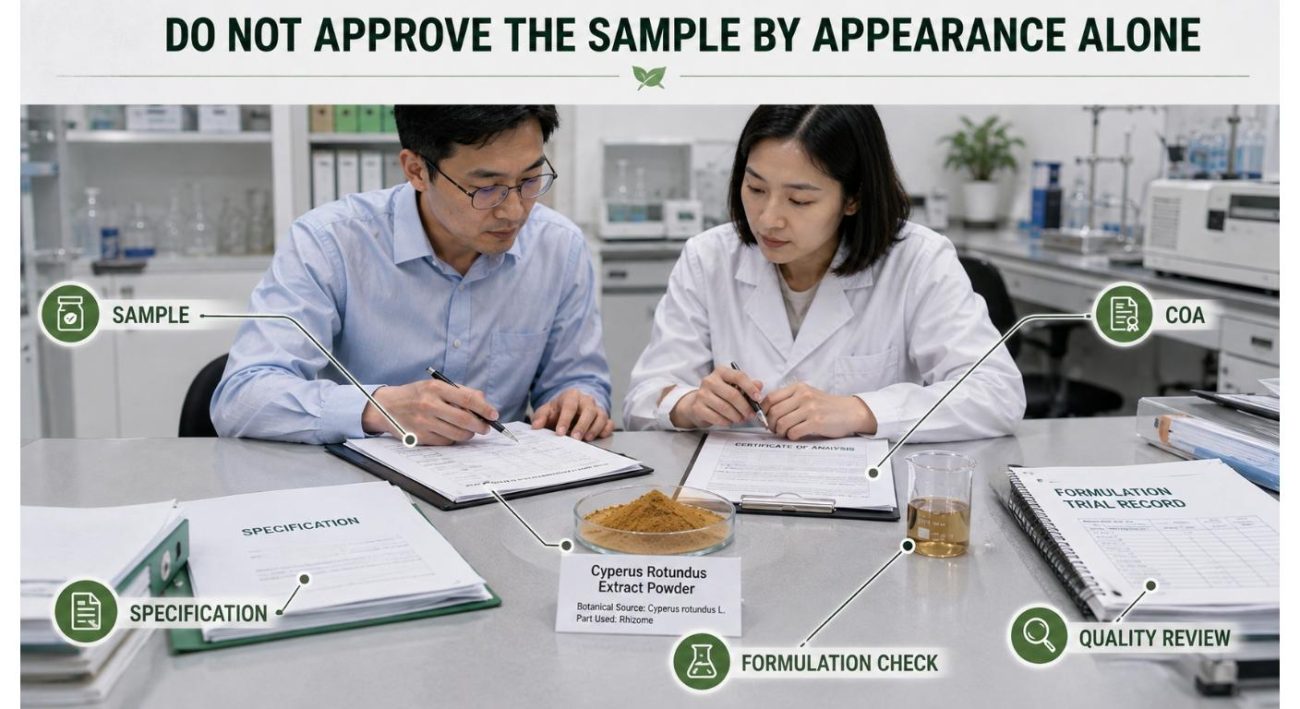
That is why it is not advisable to “approve” the same sample for all projects. Not the one in a bag that’s in good shape is a good sample. It’s the one that is good in the real formula.
| Development Route | First Sample Focus | Why It Matters |
| Capsules / Tablets | Blend behavior, color, odor | Affects manufacturability and finished-product appearance |
| Powder Blends / Sachets | Dispersibility, taste/odor influence | Impacts user experience and formula balance |
| Skincare Formulas | Base compatibility, color effect, sensory fit | Determines whether the extract works in the actual system |
Don’t let the Spec Sheet do all the talking!
A clean specification sheet helps, but should not be permitted to be used in lieu of actual development work.
According to B-Thriving, this extract is made via low-temperature water extraction, purification and spray-drying. Also mentions that it has been checked for heavy metals, microbial limits and pesticide residues. Those are good indications, but if the documentation and the sample are in sync, that’s really good.
This is why it’s a good idea for a buyer to go hand-in-hand with a good-review practice. Supporting reads, like How Do I Know if the Plant Extract I’m Purchasing is Authentic? and How Can I Check the Quality of a Standard Herb Extract? are valuable when a project has progressed beyond the initial discussion phase to the sample approval and supplier comparison phase.
When the Ingredient MUST Cross Teams.
Cyperus rotundus extract powder is an ingredient that’s not uncommon to flow from one department to another.
It can be initially screened for R&D. Procurement is permitted to shop for offers. The documents might be subject to QA. Later marketing may desire to know the story behind the ingredient to develop a cleaner story behind the product. It is that cross team movement that makes it necessary for the material to be easily described and easily verifiable.
Little things can make a big difference. When the project goes from theory to practice, for instance, information on the packaging becomes important. B-Thriving has listed the material at 25kg/drum, for a shelf life of 3 years, providing purchasing teams with a ‘nuts and bolts’ approach to debating trial purchases when compared to regular purchase of the material.
| Review Item | What To Confirm | Main Team |
| Botanical Identity | Latin name and plant part are consistent | QA / Procurement |
| Technical Fit | Ratio, test method, sample behavior | R&D |
| Supply Readiness | Packaging, shelf life, stock support | Procurement |
| Documentation | Spec sheet and COA are complete | QA |
| Cooperation | Response speed and customization support | Purchasing / Project Team |
Even with a Good Supply Fit there is a need to make sure a supplier is a Good Supplier Fit.
At a certain point, all botanical discussions turn into a supplier discussion.
If the extract is technically compatible, but the supplier is slow to give clarity on documentation, lacks clarity on stock and is reluctant to customize the project, it becomes more difficult than it should be. On this product page, B-Thriving references flexible packaging, custom services, stock availability and quick turnaround and the About Us page strengthens this, demonstrating the company’s overall manufacturing and supply credentials.
Frequently, the last mile of decision making is not merely to determine if an ingredient is a good opportunity, but whether a supplier is ready to do the legwork from sample to repeat supply.

Conclusion
The best way to assess the efficacy of Cyperus rotundus extract powder is to consider the formulation in which it is applied, rather than to consider it as a “herbal idea”.
The strength of its use is dependent upon the proportion to which the rhizome extract aligns with the product route you’re creating, like supplement, powder blend or skin care formula. When the end use is known, the evaluation of the rest is straightforward: ensure identity, examine ratio, consider real sample behaviour and ensure that the supplier can help to make repeatable purchases.
This is a better sourcing route than “I love the name of the plant, what are the technical questions?
FAQs
Q1. What is cyperus rotundus extract powder?
Made from rhizome of Cyperus rotundus L., it is a botanical extract. It’s typically sold as a fine powder for use in supplements, wellness and some cosmetic products.
Q2. Why might the rhizome be important in the specification?
This enables the identification of the raw material accurately on the basis of the plant part. It enhances transparency throughout the sourcing, testing, formulation and supplier comparison processes.
Q3. Would 10:1 be sufficient to approve the ingredient?
No. While a ratio can be used to describe the material, the buyer should always verify identity, test method, sample performance and supporting documentation.
Q4. May this extract be utilized in each dietary supplements and skin care items?
But, the standards of assessment are different. Not all the same ingredient sample is viewed as the supplement team’s and the skincare formulator’s “big thumbs up.
Q5. What questions should I ask in order to place a bulk order?
Request the specification sheet, COA, plant part, test method, sample, detail of packaging, shelf life and any custom-service support that you might want for your project.

