

On a sample tablet, a brown botanical powder may appear to be just what you need and end up being the wrong material for your project.
Black walnut hull extract is not a ‘one size fits all’ ingredient for supplement brands, formulators, contract manufacturers, and ingredient buyers. The more pertinent question is: What botanical is it, what part of the plant was used, how was the extract defined, how will you ensure that the botanical will be identical each time you use it in your formula, and will the batch be consistent?
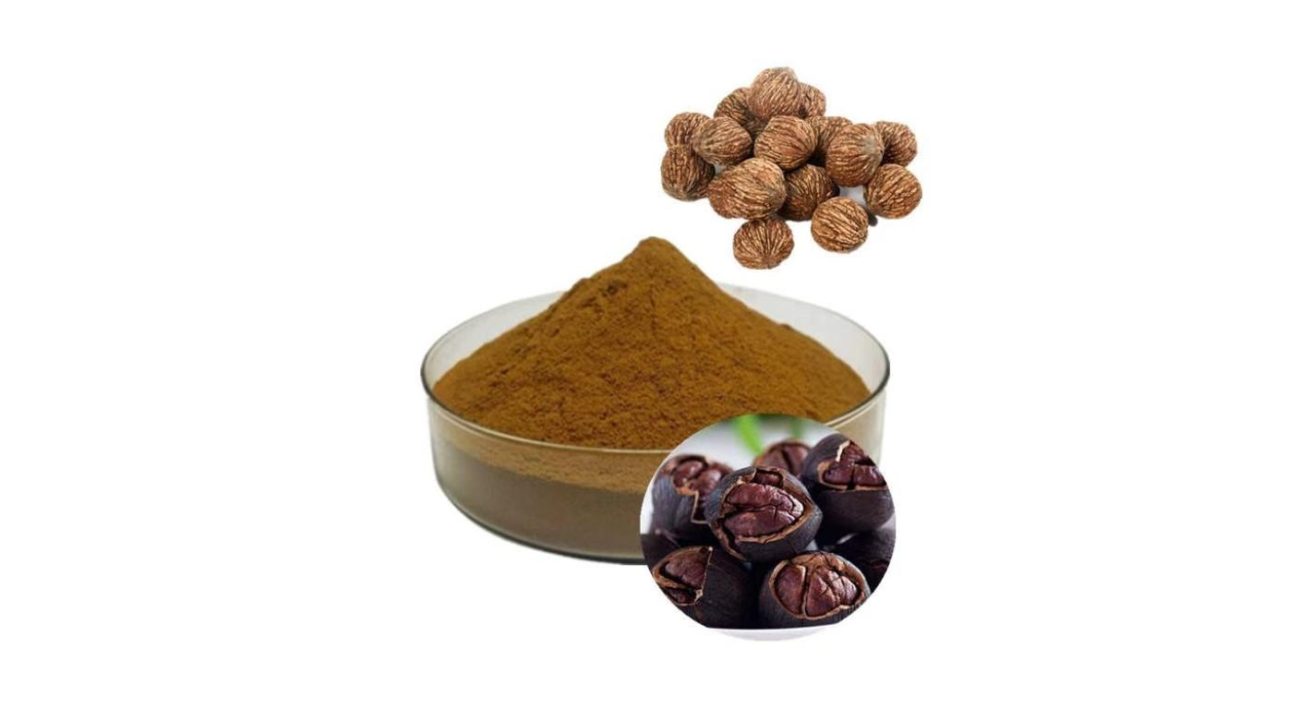
B-Thriving states that its Black Walnut Extract is Juglans nigra L. hull, 10:1 extract ratio, TLC test and Brown fine powder. While that information is a good starting point, it should preceed sample/documentation review prior to bulk approval.
So What is it You’re Buying?
However, the term “black walnut” is still too general to be used as a procurement specification.
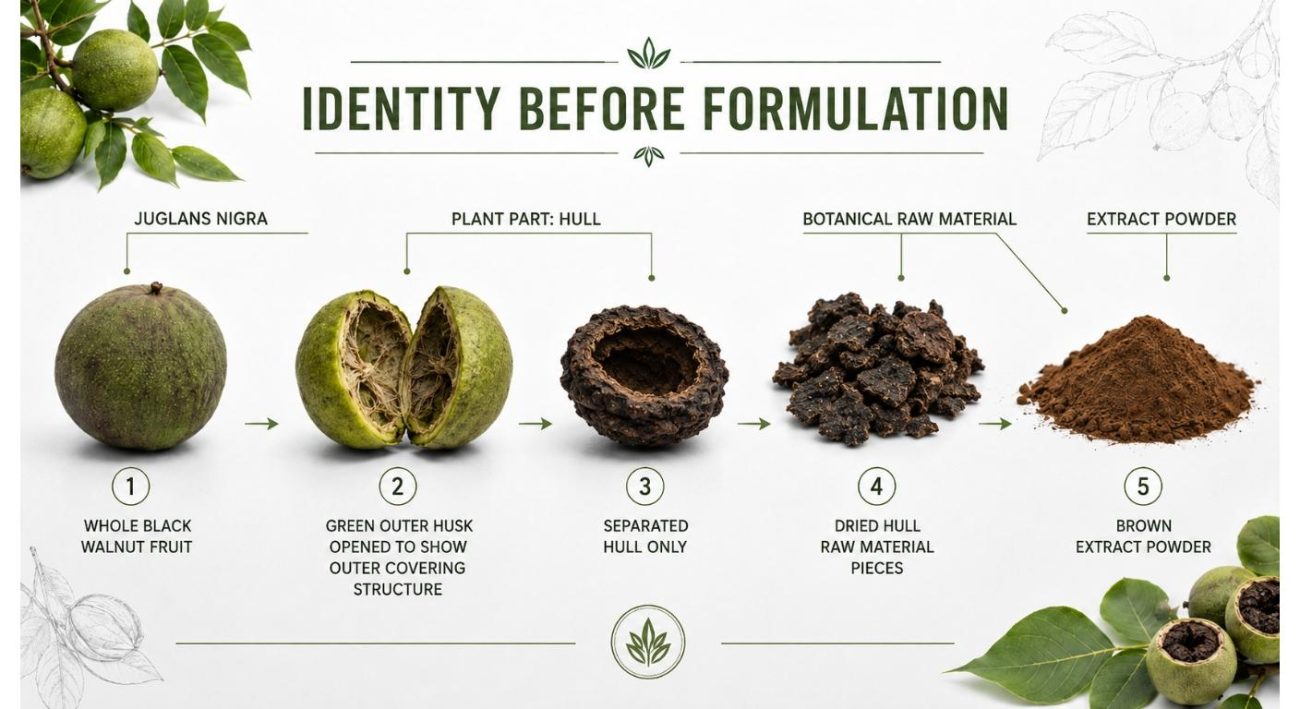
A helpful start to any raw-material brief is to include the botanical and plant-part. In this case, not only on the common name of the plant, but on Juglans nigra L. and the hull.
Place the Black Walnut Extract product page next to your internal specification and see if the naming is consistent throughout the quotation, sample label, specification sheet and COA. If your team are purchasing multiple botanicals then the B-Thriving’s Standard Herb Extract range also illustrates the importance of considering each botanical ingredient individually with regards to plant part, extract ratio and test method.
It is as easy as that: 1 Ingredient is supposed to have 1 clear identity from Inquiry to Production.
Why 10:1 is Just a Starting Point—and Not the End
An extract ratio is good, but is not the answer to all the questions about quality.
| Approval Gate | Question Before Passing | Main Reviewer |
| Identity | Do sample, spec and COA describe the same botanical material? | QA / Procurement |
| Extract Definition | Is the stated extract ratio clearly defined? | QA / R&D |
| Formula Fit | Has the sample been tested in the intended formula? | R&D |
| Documentation | Are required market documents available? | QA / Regulatory |
| Change Control | Can material or process changes be identified before repeat orders? | Procurement / QA |
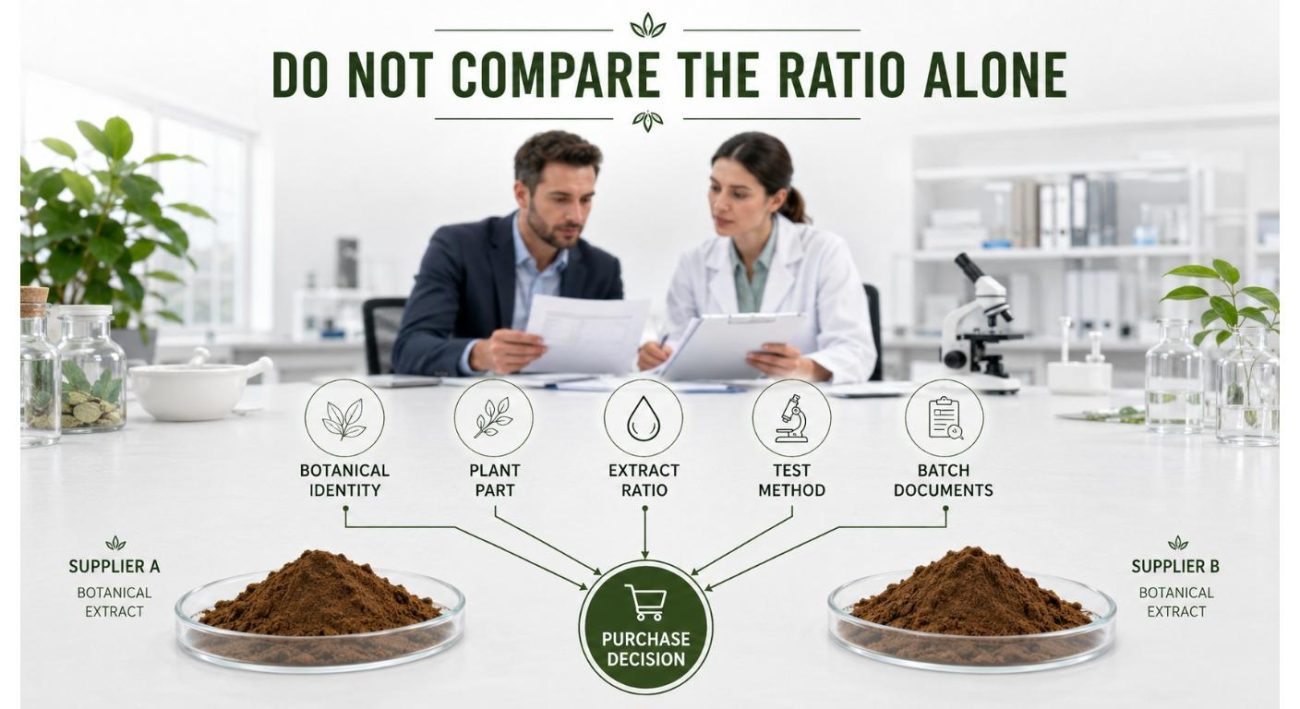
A 10:1 ratio indicates the strength of the extract, compared to the amount of botanical used to make it. It is not a substitute for Identity testing, Batch Documentation, Contaminant controls or Practical sample review. Powders with the same stated ratio can have different behavior when used in actual formulations.
Therefore, 10:1” and price are not indicators to compare suppliers.
Inquire about the definition of the ratio, the process of extraction, how it is determined if it’s the correct species, and what batch papers exist. B-Thriving claims that the black walnut extract is extracted in low temperature water and spray dried and tested by TLC.
Make a Formula with the Ingredient
The commercial formulation should be based upon the final product, dosage form, market and claim.
Powder handling, natural colour, nature of odour and space for companion ingredients are practical questions that might be relevant when considering capsules or tablets. Sensory profile, dispersion and visible colors are more significant for powder blends and sachets. A second consideration with personal-care development is how the ingredient meshes with the base system being used.
The supplier page features black walnut extract as a supplement, functional-food and personal-care ingredient. Look at them as directions for development, and not as claims of finished product.
That distinction matters. The order of ingredient selection should precede claims—claims should never precede the selection of ingredients.
Use COA as a Buying Tool:
A COA should be used to support your team’s decisionmaking rather than just for compliance documentation.
Check COA for comparison with agreed specification and physical sample before approving bulk material. Information regarding botanical identity, plant part, extract definition, test method, batch information and quality information should tell a single story.
In B-Thriving’s guide to authentication of plant extracts, the authors suggest that botanical identification, extraction information, testing records and batch documentation should be used, in addition to the name of a supplier’s product.
This is important when the formulation is in production for years and the criteria for incoming material must be repeatable.
Click on the Sample in the Real Formula
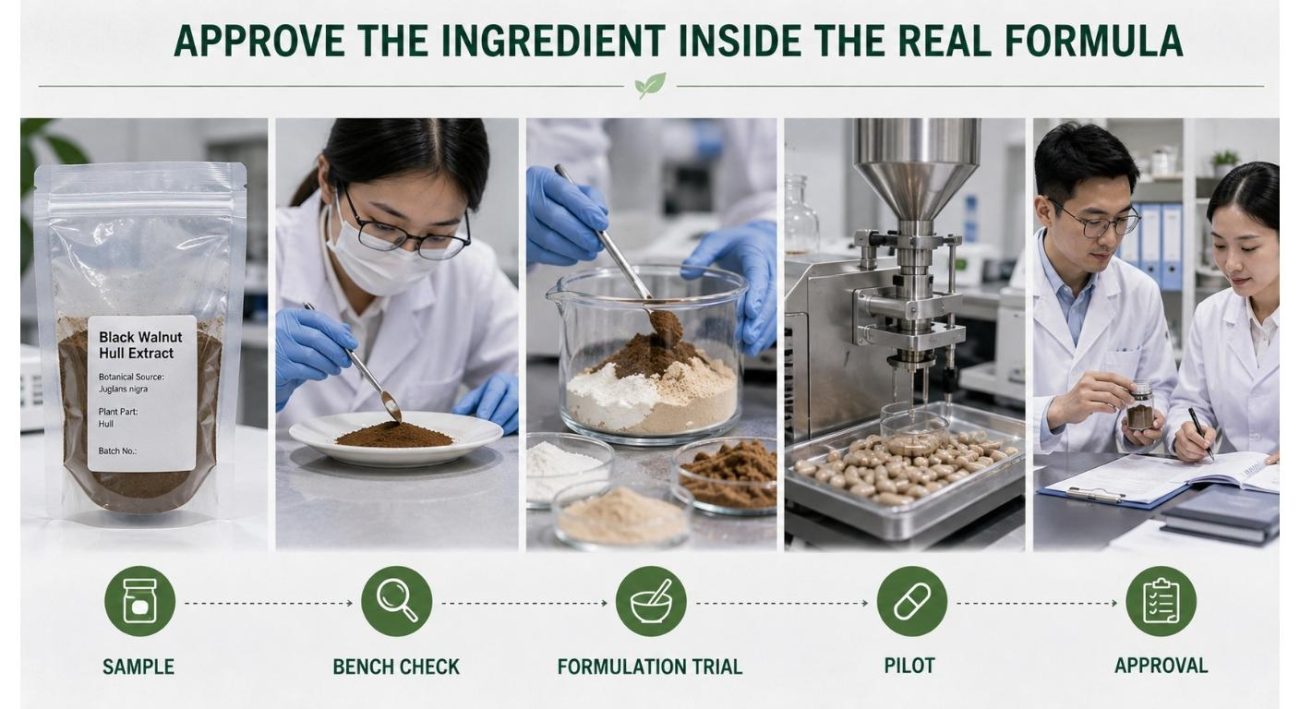
When a sample is good in a clear bag it is NOT a pass on a formulation test.
| Product Format | Most Useful Sample Check | Watch For |
| Capsule / Tablet | Blending and processing behavior | Poor flow or uneven blend |
| Powder / Sachet | Dispersion and sensory check | Unacceptable color, odor or taste |
| Personal Care | Base-system compatibility | Visible instability or appearance change |
Note down what it looks/smells like. Cross check sieving/dispersion, if applicable. Mix with the true companion ingredients. A small pilot is a lot more informative than viewing the extract on its own for capsule or tablet projects.
What people want to know is not:
“Would this be a good sample?”
It is:
“Will this sample fit our product that we are going to produce?”
When the first commercial lot is received, be sure to retain the approved sample, specification, and batch documents all together for a reference.
The selection of supplier(s) is part of ingredient selection.
Before you select a supplier, determine what document(s) your market requires, how samples will be approved, what type of packaging will fit your purchasing plan and how questions about batches will be addressed.
At present, B-Thriving has a packaging of 25kg/drum for this black walnut extract, and has published a separate guide for certifications to consider when sourcing plant extracts.
Responsiveness matters too. Once a project becomes a laboratory sample and is progressing to a repeat commercial order, clear technical communication can prove to be as crucial as the initial quotation.
The B-Thriving company profile gives more details about raw-material selection, manufacturing, lab testing and quality-control processes followed by the supplier if the buyer wants to understand the supplier’s overall raw-material and testing strategy.

Conclusion
The most effective method to obtain black walnut hull extract is to make it more difficult to misinterpret.
Begin the identification with Juglans nigra L. Identify the part of the plant as the hull. Explain the meaning of 10:1 in the specification. Verify identity testing. Accept the content of the actual formula. Then be sure that the same information accompanies the ingredient with every commercial batch.
Request a specification, certificate of analysis and sample before discussing scale for a new supplement, functional powder or idea for a personal-care concept.
FAQs
Q1. So, what is black walnut hull extract?
Black walnut hull extract is a botanical that comes from the hull of Juglans nigra. Commercial materials may be available as powders that contain a certain amount of extract per gram and have defined testing procedures for verifying the identity of the extract.
Q2. What is the meaning of 10:1 black walnut hull extract?
It is an extract-ratio specification which defines the relationship between the botanical starting material and extract produced. It is still advisable for buyers to check the definition of the ratio with the supplier.
Q3. What are the tests for black walnut hull extract?
The TLC identity test method is stated on B-Thriving’s product right now. Buyers would also want to take a look at the batch COA, and any extra paperwork that may be needed for the market they’re planning to sell it to.
Q4. Is black walnut hull extract safe to use in supplements?
Can be considered for use as a botanical ingredient in supplement formulations; depending on dosage form and formulation, claims and requirements of the target market. Bulk approval should be preceded by a sample trial.
Q5. What questions should I pose a supplier prior to placing an order?
Request Botanical, plant part, extract ratio, test method, specification, COA, sample, packaging info and relevant compliance documents. Don’t let price be your only consideration.

