
Research into the biochemistry of pomegranates identifies Urolithin A as a potential compound in the support of cognitive health. Protection of the brain and the neurobiological basis of cognition may be enhanced by the quality control of mitochondria and mitophagy through Urolithin A. This compound may provide cellular resilience and modulation of inflammation in support of healthy brain function with an active contribution to cognition.
Why Is Urolithin A Being Studied for Brain Health?
The brain never rests and needs a constant supply of energy. Mitochondria are the powerhouse of the cells. They produce the energy, but as we age, we start to accumulate damaged mitochondria.
Urolithin A from Pomegranate is of great interest to researchers because of its potential relationship between brain aging, cognitive decline and control of mitochondrial quality.
Current research is centered on:
•Mitochondrial Quality Control: The process of removing damaged mitochondria in cells to keep an effective energy production system.
•Regulation of Oxidative Stress: Healthy mitochondria are responsible for one of the many tasks of managing excessive oxidative stress and reactive oxygen species.
•Neuroinflammation: There are studies focused on the effects of microglial inflammation on the inflamed brain in the elderly.
•Cellular Cleanup: Removal of the damaged cellular elements occurs through the autophagy and lysosomal pathways acting in concert.
While these mechanisms merit further research on Urolithin A, none of these provide evidence that Urolithin A treats or prevents neurodegenerative diseases.
What Is Urolithin A From Pomegranate?
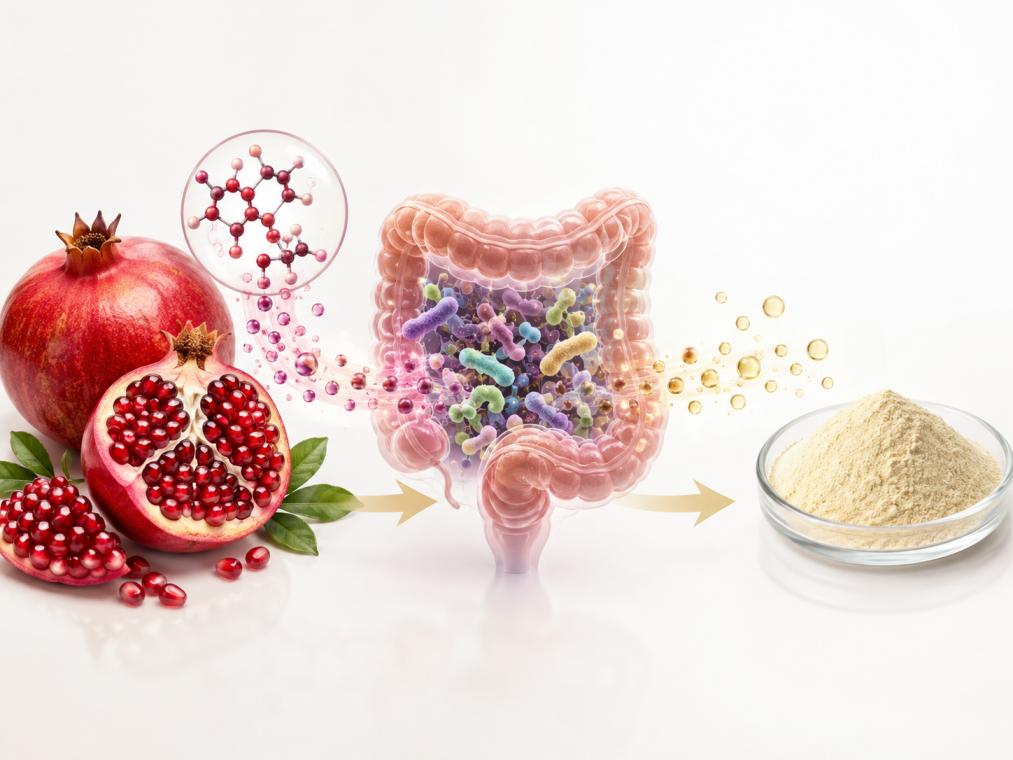
Urolithin A is generally not present in pomegranate as a major ready-to-absorb compound. Instead, pomegranate contains ellagitannins and ellagic acid, which may be converted by certain intestinal microorganisms:
Pomegranate ellagitannins → Ellagic acid → Gut microbial metabolism → Urolithin A
Because gut microbiomes differ, individuals may produce different amounts of Urolithin A after eating the same food. These differences are sometimes described as urolithin metabotypes.
Standardized Urolithin A From Pomegranate ingredients are therefore not equivalent to ordinary pomegranate extract. A standardized ingredient delivers a measured amount of Urolithin A without relying entirely on an individual’s ability to convert dietary precursors.
| Ingredient | Main source | Gut conversion required? | Main research area |
| Pomegranate extract | Fruit or peel | Partly | Polyphenols and metabolic health |
| Ellagic acid | Pomegranate, berries and nuts | Yes | Urolithin precursor research |
| Urolithin A | Microbial metabolite or standardized ingredient | No further precursor conversion | Mitophagy and cellular health |
| Urolithin B | Another microbial metabolite | Usually yes | Metabolic and muscle research |
Why Mitochondrial Health Matters for the Brain
Neurons have high energy requirements and depend on mitochondria for ATP production, calcium regulation and stress responses. Impaired mitochondria can result in an imbalance in cellular signaling and constant inflammation as well as reduced energy yield per nutrient.
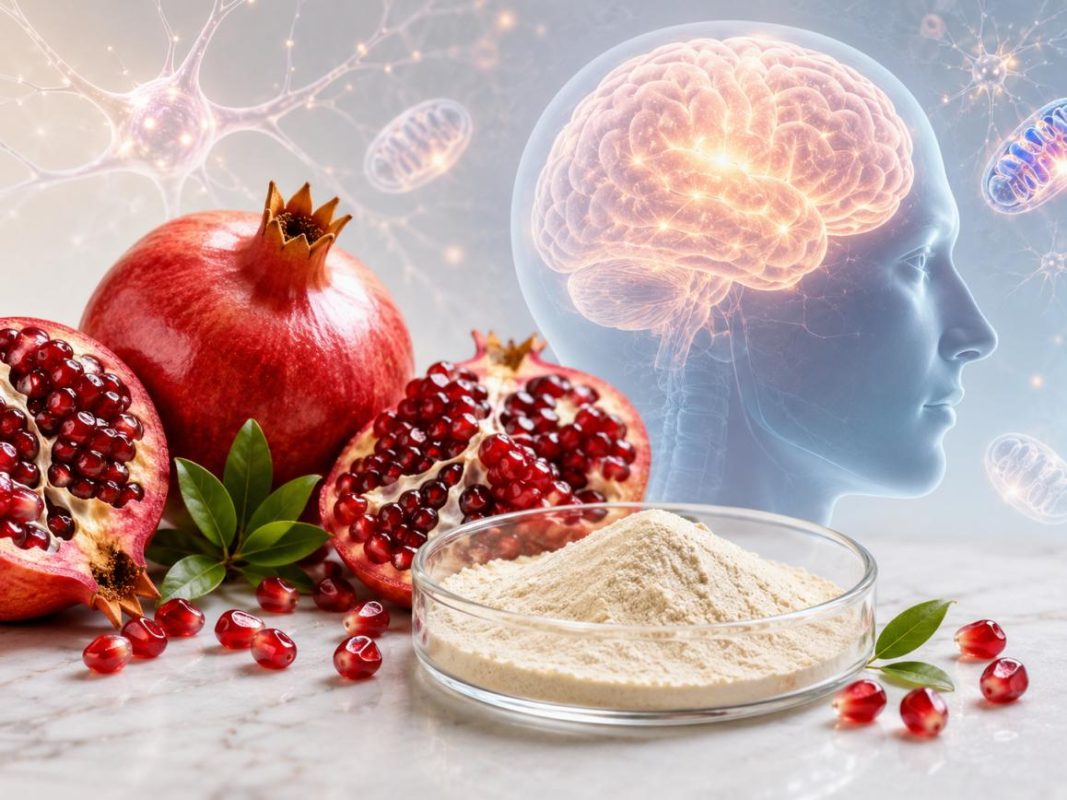
The clearance of damaged mitochondria is known as mitophagy. Urolithin A is one of the most studied mitophagy inducers. While the majority of the muscle function and healthy aging studies conducted have reported changes in the mitochondrial, autophagy, and metabolism-related biomarkers, there is limited research focusing on cognitive changes.
How Might Urolithin A Support Neuroprotection?
| Potential mechanism | Possible brain-health relevance | Evidence stage |
| Mitophagy activation | Supports the clearance of damaged mitochondria | Mechanistic, animal and human biomarker research |
| Mitochondrial homeostasis | Promotes cellular energy balance | Cell, animal and non-cognitive human studies |
| Inflammation modulation | May impact microglial signaling | Mostly preclinical |
| Oxidative stress balance | May improve cellular resilience | Mostly cell and animal research |
| Lysosomal function | Supports the removal of cellular waste | Animal research |
| Gut-brain interaction | May impact gut and immune system signaling | Animal research |
Mitophagy and Cellular Resilience
Urolithin A may enhance the quality control of mitochondria. This mechanism may be relevant for long-lived cells such as neurones. However, this remains a speculation, and no cognitive benefit in humans can be expected.
Neuroinflammation and Oxidative Stress
Urolithin A may impact inflammation and mitochondrial stress in animal models. Rather than acting as a direct antioxidant, Urolithin A may improve the balance of stress and the mitochondria and indirectly support a shift in oxidative stress.
Lysosomal Function and the Gut-Brain Axis
A 2024 study showed cognitive, mitophagy, and lysosomal function changes in the context of Urolithin A with an Alzheimer’s disease mouse model. Although these findings may guide further research, they may not be considered evidence of Urolithin A treating the disease in humans.
Another 2024 study showed Urolithin A’s association with memory, gut, and systemic and brain inflammation, gene expression in the hippocampus in aged mice. This study also encourages further research on the gut-brain axis.
What Does Research Say About Cognition?
These changed functions should be interpreted considering the type of study:
•In vitro: Explain mechanisms of inflammation, mitochondria, and autophagy.
•In vivo: Show changes in memory and neuroinflammation as well as clearance.
•In humans: Show assessment and biological activity. However, studies have mostly focused on muscle, metabolism and aging.
•Cognition: There is still no solid evidence mainly due to lack of direct clinical evidence.
Registered human studies are beginning to evaluate Urolithin A-containing nutritional products for cognitive outcomes. The existence of these trials does not mean that cognitive effectiveness has already been established.
Researchers still need to determine suitable populations, dosage, intervention duration, long-term safety, brain-related pharmacokinetics and standardized cognitive outcomes.
Urolithin A Supplement vs. Pomegranate Extract
Standardized Urolithin A and pomegranate extract are not interchangeable. Pomegranate extract supplies a mixture of polyphenols whose conversion depends partly on the microbiome. Standardized Urolithin A From Pomegranate gives formulators the ability to control dosage and specifications for each produced batch.
Sourcing and Formulation Considerations
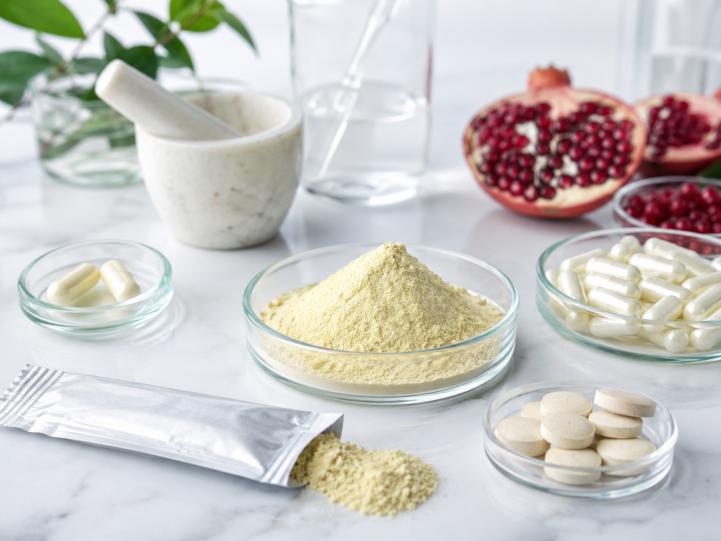
The following should be evaluated for capsules, tablets, sachets and healthy aging formulations:
•Ingredient Identity: Ensure the ingredient is Urolithin A and not pomegranate extract or ellagic acid.
•Purity: Confirm the presence or absence of the active pharmaceutical ingredient by the most appropriate method of analysis. An example of such a method is HPLC.
•Impurity Profile: This encompasses associated substances, remaining solvents, and uncharacterized impurities.
•Batch Uniformity: Check the specifications and certificates of analysis for all the various batches.
•Stability: Evaluate the effects of temperature, moisture, and light and the packaging method.
•Regulatory: Validate the claims and the supporting regulatory documents for the respective selling markets.
Why Choose B-Thriving?
B-Thriving supplies Urolithin A From Pomegranate for dietary supplement, pharmaceutical-development and sports-nutrition applications.
| Specification | Details |
| Urolithin A content | 98% |
| Appearance | Light yellow powder |
The company supports customers with quality-control documentation, customized service, technical communication and delivery coordination. The final application, dosage, and claims of any product should be assessed based on the requirements of the specific formulation and the pertinent local laws.
Concluding Remarks
When developing formulations that utilize Urolithin A from Pomegranate, which is intended to promote healthy aging and improve mitochondrial function, you may consider the formulation and implementation of claims for your product based on the rigorous standards of purity, testing, and stability. B-Thriving invites you to utilize this opportunity to secure Urolithin A (98 percent) and related services for the design and implementation of your product.
FAQs
Q1. What is Urolithin A From Pomegranate?
Urolithin A From Pomegranate is a metabolite which is associated with ellagitannins and ellagic acid found in pomegranates. In the human body, some gut microbes convert those substances to Urolithin A.
Q2. Is Urolithin A found naturally in pomegranate?
Urolithin A is found in pomegranate in some trace amounts and is largely formed in the body by the action of gut microbes on ellagitannins and ellagic acid.
Q3. In what way can Urolithin A contribute to brain health?
Urolithin A is being investigated for its role in the regulation of oxidative stress and inflammatory signaling as well as the highly selective and regulated removal of the mitochondria within a cell that is damaged beyond repair. There is, however, currently no evidence in human subjects for any improvement in the cognitive domain.
Q4. What does Urolithin A have to do with mitophagy?
Mitophagy is the selective autophagic degradation of mitochondria. Urolithin A is being studied for its potential to stimulate this pathway of mitochondrial quality control.
Q5. Does Urolithin A have the potential to enhance memory and cognitive function?
There has been some preliminary evidence in cell culture and animal studies, but no definitive claims can be made prior to well-structured clinical studies in humans.

