

When choosing between a standardized herbal extract and a tincture, the right answer depends entirely on your health goal, dosing preference, and the specific herb you are using. At Xi’an B-Thriving I/E Co., Ltd., we supply both forms to pharmaceutical and supplement brands worldwide — and in our experience, understanding the difference between these two preparations is the single most important decision a formulator or health-conscious consumer can make.
This guide gives you a complete, science-backed comparison so you can make a confident, informed choice.
What Is a Standardized Herbal Extract?
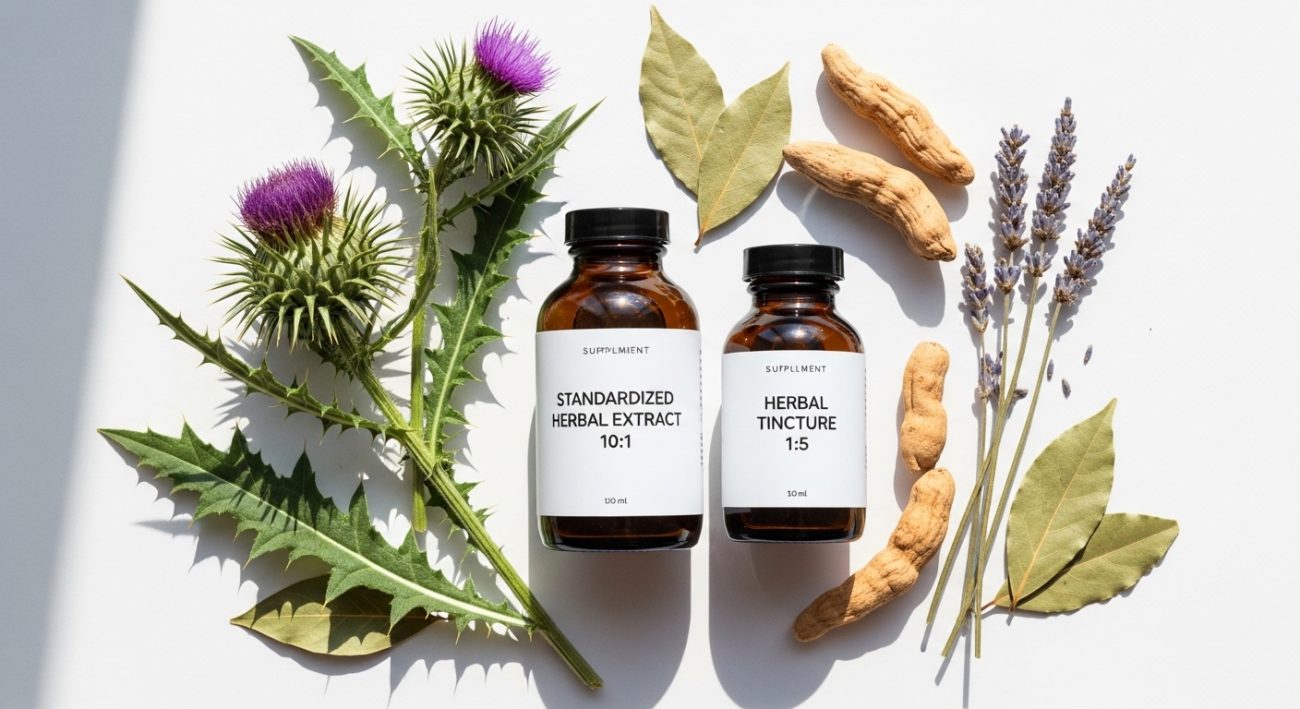
A standardized herbal extract is an herbal preparation engineered to guarantee a specific percentage of one or more active compounds in every batch. Unlike whole-herb preparations, standardization ensures that whether you take a capsule today or three months from now, you receive a consistent, measurable dose of the target phytochemical — such as 80% silymarin from Milk Thistle or 5% withanolides from Ashwagandha. This concept was adopted directly from pharmaceutical manufacturing protocols.
As a leading standardized herbal extract supplier, we produce these extracts in our fully equipped Xi’an facilities using advanced extraction technology. Our R&D team controls every variable — solvent selection, temperature, pressure, and concentration ratio — to deliver a product that meets international regulatory standards including USP and AHPA guidelines.
How the standardization process works:
- Raw plant material is sourced from controlled growing regions, including near the Qinling Mountains
- Material undergoes solvent-based extraction (water, ethanol, or hybrid systems)
- Extract is concentrated using vacuum distillation or spray drying
- Active marker compound is quantified via HPLC or UV testing
- Batch is adjusted and blended to hit the guaranteed percentage
- Final product is tested for purity, potency, heavy metals, and microbial limits
What Is an Herbal Tincture?
An herbal tincture is a liquid preparation made by soaking raw or dried plant material in a solvent — most commonly 60–90% ethanol — at a standard herb-to-solvent ratio, typically 1:5 (one part herb to five parts liquid). The result is a full-spectrum liquid that captures a wide range of the plant’s naturally occurring phytochemicals: alkaloids, glycosides, resins, and volatile oils. The active compound concentration in a tincture is not guaranteed and will vary between batches and suppliers.
Tinctures represent the oldest and most traditional form of herbal medicine. Because they preserve the whole-plant profile without isolating a single marker compound, many traditional herbalists argue that tinctures retain a more complete synergistic spectrum — sometimes called the “entourage effect” of plant chemistry. However, this also means dosing is inherently less precise than with a standardized extract.
Common tincture subtypes:
- Alcohol tinctures: Most common; longest shelf life (5–10 years); best solvent for alkaloids and resins
- Glycerites (glycerin-based): Alcohol-free alternative; weaker extraction efficiency, especially for resins; shorter shelf life
- Vinegar tinctures (oxymel): Best for mineral-rich herbs; limited phytochemical range
- Spagyric tinctures: Traditional alchemical process that re-adds mineral salts back into the extract
Standardized Herbal Extract vs Tincture: Side-by-Side Comparison
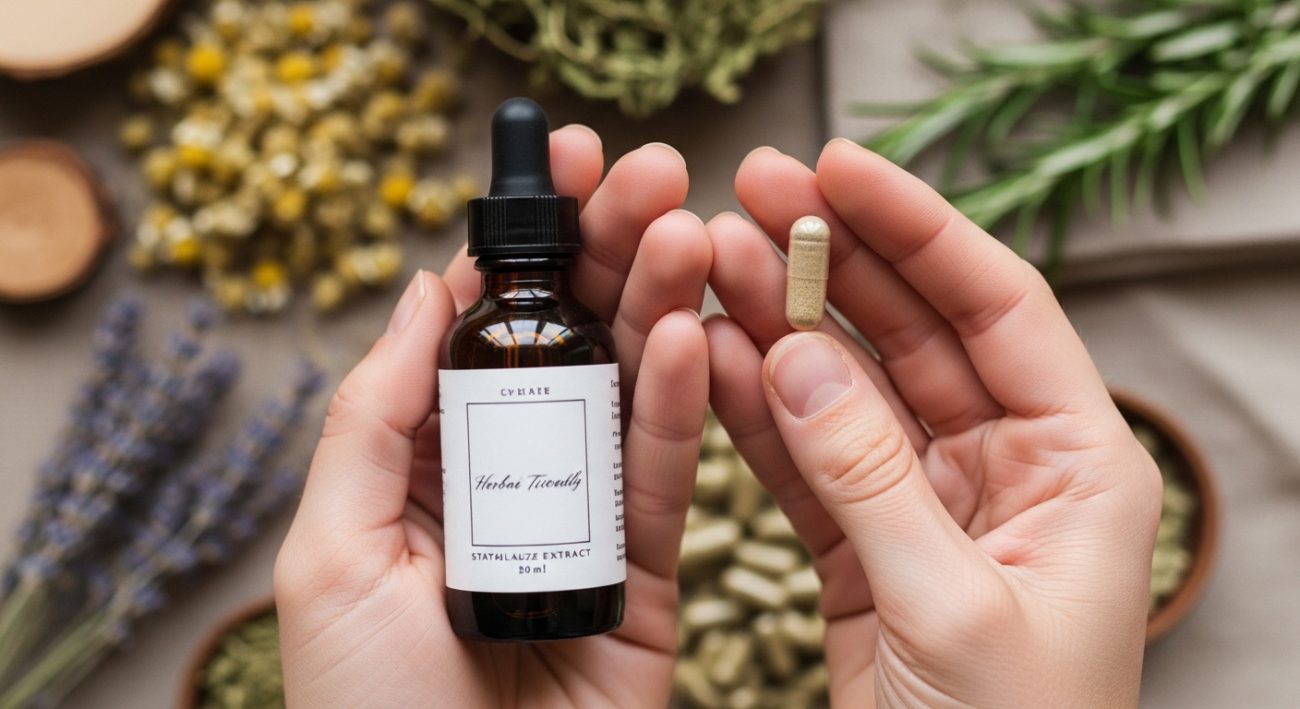
The most critical differences between these two forms come down to concentration, consistency, and intended use. Standardized extracts offer precision; tinctures offer breadth. Here is how they compare across every key variable that matters to a formulator, practitioner, or supplement buyer.
| Feature | Standardized Herbal Extract | Tincture |
|---|---|---|
| Concentration Ratio | 5:1 to 20:1 | 1:5 to 1:10 |
| Active Compound Control | Guaranteed % per batch | Variable — batch-to-batch |
| Full-Spectrum Profile | Reduced (targeted focus) | Preserved (whole-plant) |
| Absorption Speed | Fast — sublingual in minutes | Fast — sublingual within 30 seconds |
| Alcohol Content | Low or none (powder/capsule) | 60–90% (traditional base) |
| Shelf Life | 2–5 years (powder/liquid) | 5–10 years (alcohol-based) |
| Dosing Precision | High — measurable mg per dose | Lower — dropper estimates |
| Cost Per Active Dose | Lower (high potency per unit) | Higher (larger volume needed) |
| Best Application | Targeted, acute, clinical goals | Maintenance, whole-body wellness |
| Regulatory Compliance | Easier — USP/AHPA ready | Variable; batch certification needed |
Which Is More Potent — Standardized Extract or Tincture?
Standardized herbal extracts are significantly more potent per dose. A modern 5:1 concentrated extract means five kilograms of raw plant material is condensed into one kilogram of finished extract. By contrast, a traditional tincture’s 1:5 ratio means one part herb is diluted across five parts liquid. However, potency of a single compound does not automatically mean superior therapeutic outcome — tinctures preserve natural co-factors that can enhance how the body processes the whole herb.
Understanding concentration ratios:
- 1:5 tincture — 1g of herb per 5ml of liquid; low concentration, full spectrum
- 1:1 fluid extract — 1g of herb per 1ml of liquid; standard liquid extract
- 4:1 dry extract — 4g of herb yields 1g of powder; moderately concentrated
- 10:1 dry extract — 10g of herb yields 1g of powder; high concentration
- 20:1 or higher — Pharmaceutical-grade potency; used in clinical formulations
At B-Thriving, our standardized herbal extract catalog includes over 134 botanical extract products, manufactured to concentration ratios specified by our B2B clients for their exact formulation targets.
Which Is Better Absorbed by Your Body?
Both liquid tinctures and liquid standardized extracts are absorbed significantly faster than capsules or tablets. When administered sublingually, liquid herbal preparations bypass first-pass liver metabolism, entering the bloodstream directly through the mucous membranes. According to data referenced in the Physicians Desk Reference, sublingual liquid preparations can achieve 85–90% absorption, compared to the 10–20% bioavailability typical of standard oral capsules.
Research also shows that bioavailability can be further enhanced by pairing active compounds with natural enhancers. For example, piperine (from black pepper) can dramatically increase curcumin bioavailability, and silymarin has demonstrated significantly higher absorption when delivered in lipid-based formulations compared to standard extract alone.
Key absorption factors to consider:
- Delivery form: Liquid > softgel > capsule > tablet for speed of absorption
- Solvent type: Ethanol extracts are more bioavailable than glycerites for fat-soluble compounds
- Co-formulation: Lipid-based or piperine-enhanced formulations significantly boost absorption
- Individual gut health: Microbiome state affects how phytochemicals are metabolized
Herb-by-Herb Recommendation: Which Form Is Best?
Not every herb benefits equally from standardization. This is one of the most overlooked gaps in mainstream supplement education — and something we address directly in our work with formulation clients. For some herbs, the clinical evidence is built entirely on standardized extracts; for others, the whole-plant preparation is superior or equivalent.
| Herb | Recommended Form | Marker Compound | Why |
|---|---|---|---|
| Ashwagandha | Standardized Extract | Withanolides (5–10%) | Clinical trials are based on standardized withanolide content |
| Milk Thistle | Standardized Extract | Silymarin (70–80%) | Liver-protective research uses 70–80% standardized silymarin |
| Turmeric | Standardized Extract + Piperine | Curcuminoids (95%) | Poor oral bioavailability without piperine co-formulation |
| Echinacea | Tincture | N/A (whole plant preferred) | Immune modulation relies on multiple compounds acting together |
| Valerian Root | Tincture or Standardized | Valerenic acid (0.8%) | Both forms effective; tincture preferred for traditional use |
| Ginkgo Biloba | Standardized Extract | Flavonol glycosides (24%) | All major cognitive studies use the EGb 761 standardized form |
| Eleuthero | Tincture | N/A (full spectrum preferred) | Adaptogenic effect attributed to full eleutherosides spectrum |
To explore how these herbs compare in standardized form versus whole herb preparations, read our detailed guide on standardized extract vs whole herb.
Which One Costs Less Per Active Dose?
Standardized extracts cost less per active dose despite a higher upfront price per bottle. A 10:1 extract delivers ten times the active phytochemical mass per gram compared to a 1:1 tincture. This means your effective cost per milligram of active compound is far lower with a concentrated extract, even when the sticker price is higher. In our experience working with supplement brands, switching to a standardized extract often reduces per-unit ingredient cost by a meaningful margin at scale.
A simple cost-per-dose example:
- Tincture (1:5, 30ml @ $18): At 2ml per dose = 15 doses; roughly 400mg herb equivalent per dose
- Standardized extract (5:1, 60 capsules @ $28): Each capsule = 500mg = 2,500mg herb equivalent per dose
- Result: The extract delivers approximately 6× more herb equivalent per dollar spent
This math becomes even more significant in B2B bulk formulation contexts, where ingredient cost at scale determines whether a product launch is commercially viable.
How to Read an Herbal Supplement Label in 2026
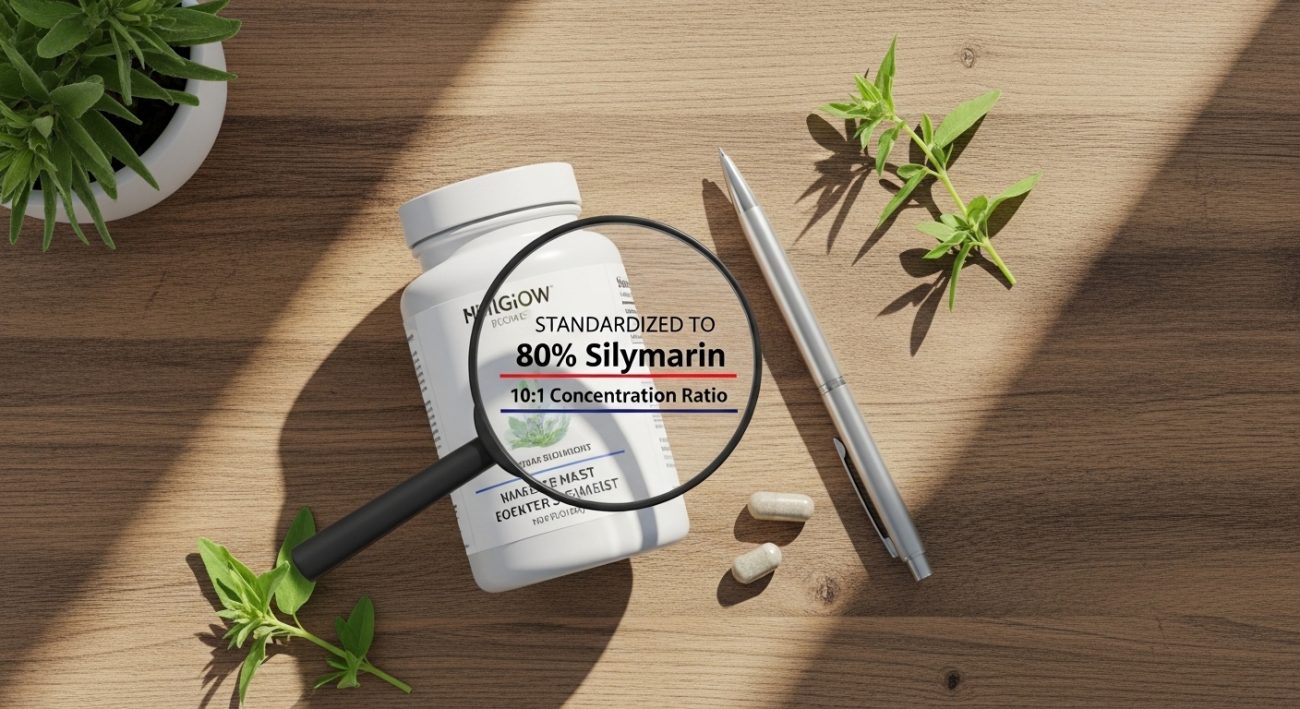
Reading a herbal supplement label correctly is the single most important consumer skill in 2026. With marketing language now heavily scrutinized by the FDA and increasingly regulated in the EU, knowing how to distinguish a genuinely standardized extract from a loosely marketed “herbal extract” protects both consumers and brand reputations. In our quality assurance process at B-Thriving, every product label must meet a strict internal checklist before it ships.
Four things to look for on every herbal extract label:
- Marker compound listed with percentage — e.g., “Milk Thistle Extract, standardized to 80% Silymarin.” If no percentage is listed, it is not standardized.
- Herb-to-extract ratio stated — Look for “4:1,” “10:1,” etc. This tells you the concentration level.
- Batch number and COA availability — A trustworthy supplier provides a Certificate of Analysis on request. At B-Thriving, COA documentation is standard on all shipments.
- Third-party testing disclosure — Look for independent lab verification for heavy metals, pesticide residue, and microbial contamination.
For a deeper dive into safety, see our complete guide: are standardized herb extracts safe to use?
If you are concerned about medication interactions, our dedicated resource on standardized herbal extracts and drug interactions covers the most clinically significant herb-drug pairs in detail.
Safety: What You Need to Know Before Choosing
Standardized herbal extracts are safe for most adults when used at recommended doses, but their concentrated nature means the margin for error is smaller than with a whole-herb tincture. Because standardization removes natural plant buffers and co-factors, certain individuals — including those on blood thinners, immunosuppressants, or CYP450-metabolized drugs — should exercise particular caution. In our experience supplying ingredients to pharmaceutical-grade manufacturers, proper dosing guidance and third-party testing are non-negotiable.
Tinctures carry their own safety considerations. The high alcohol content (60–90% ethanol) in traditional tinctures is contraindicated for those in recovery, pregnant women, children, and individuals with liver conditions. Glycerin-based tinctures are a safer alternative for these groups, though their extraction efficiency for resins and alkaloids is notably lower.
For a complete breakdown of risks by herb and form, refer to our guide on side effects of standardized herb extracts.
General safety principles:
- Always start at the lowest effective dose and titrate upward
- Cycle adaptogens (e.g., 5 days on, 2 days off) to prevent tolerance buildup
- Consult a qualified herbalist or integrative physician before combining multiple extracts
- Purchase only from suppliers who provide third-party COA documentation
- Pregnant, nursing, or medicated individuals should seek medical advice before use
When Should You Choose a Tincture vs. a Standardized Extract?
The correct choice between a tincture and a standardized extract depends on three variables: your health goal, the specific herb, and your tolerance for dosing variability. Neither form is universally superior. As a supplier working with formulators across the pharmaceutical, nutraceutical, and cosmetic sectors, we help clients choose the right extraction method for each application — because the wrong choice directly impacts product efficacy and consumer outcomes.
Choose a standardized extract when:
- You need a clinically validated dose of a specific active compound (e.g., withanolides, silymarin, curcuminoids)
- You are formulating a product requiring batch-to-batch consistency
- You want the highest potency per gram for cost-efficient formulation
- Scientific research for your target herb is based on a standardized form
- You need regulatory documentation (COA, HPLC testing reports)
Choose a tincture when:
- You want whole-plant, full-spectrum phytochemical support
- No single “marker compound” has been validated for your target herb
- You are using the herb for long-term tonic or adaptogenic maintenance
- You prefer traditional preparations with historical use documentation
- The herb’s benefit is attributed to synergistic multi-compound interaction (e.g., Echinacea, Eleuthero)
Frequently Asked Questions
Is a tincture the same as a standardized herbal extract?
No. A tincture is a full-spectrum, whole-plant liquid preparation made with alcohol at a 1:5 herb-to-solvent ratio. A standardized herbal extract guarantees a specific percentage of one or more active compounds per dose and is typically 5–20× more concentrated. All tinctures are extracts, but not all extracts are tinctures.
Can I take a standardized extract and a tincture of the same herb together?
In most cases, combining both forms of the same herb simultaneously is unnecessary and increases the risk of exceeding safe dose thresholds. If you wish to combine different herbs in different forms, ensure they have complementary functions. Always consult a healthcare provider before stacking herbal supplements. Review our guide on herbal extract drug interactions for specific guidance.
How long do standardized herbal extracts last on the shelf?
Standardized herbal extracts in dry powder or capsule form typically carry a shelf life of 2–5 years when stored in a cool, dark, dry environment. Liquid standardized extracts generally last 1–3 years. By contrast, alcohol-based tinctures can remain stable for 5–10 years due to ethanol’s natural preservative properties. Always check the COA and manufacturing date before use.
Are standardized herbal extracts FDA regulated?
In the United States, standardized herbal extracts sold as dietary supplements fall under the FDA’s Dietary Supplement Health and Education Act (DSHEA, 1994). They are not FDA-approved as drugs, but manufacturers are required to follow Current Good Manufacturing Practices (cGMP). The American Herbal Products Association (AHPA) and United States Pharmacopeia (USP) provide additional voluntary standards that reputable suppliers like B-Thriving adhere to.
What is the best standardized herbal extract for a beginner?
For someone new to standardized extracts, Ashwagandha standardized to 5% withanolides is the most accessible starting point. It has an extensive clinical research base, a well-established safety profile, and is available in both capsule and liquid extract forms. Milk Thistle (80% Silymarin) is another excellent beginner-friendly option for liver and digestive support. See our full standardized herb extract catalog for sourcing options.

