
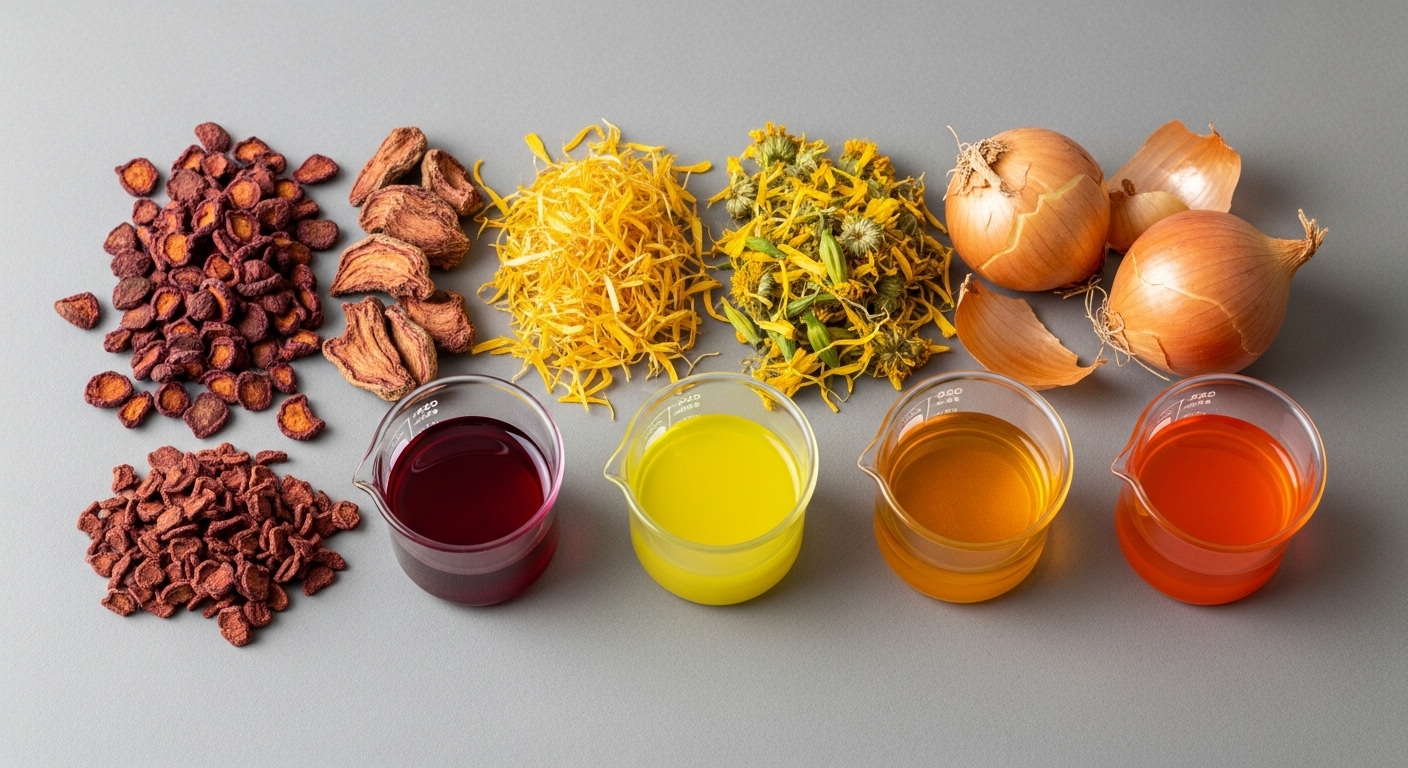
Natural dyeing is more than a craft; it is a bridge between botanical science and sustainable artistry. At BioBThriving, we have transitioned away from synthetic colorants to focus on the raw potential of the earth. In our studio testing, we found that the shift to plant-based chemistry requires a deep understanding of molecular stability to achieve professional results.
The Chemistry of Color: Identifying Pigment Families
To achieve archival-quality color, you must identify the chromophores within each plant species. Different molecular structures, such as quinones or flavonoids, dictate how a dye reacts to heat, light, and pH levels. Understanding these chemical families is the first step in ensuring your textiles maintain their vibrancy over years of use rather than weeks.
At BioBThriving, we categorize pigments based on their chemical resilience. Use the following table to select your source material based on desired longevity.
| Pigment Family | Plant Source | Expected Color | Stability (1-10) |
| Anthocyanins | Red Cabbage, Berries | Pink, Purple, Blue | 2 (Fugitive) |
| Carotenoids | Carrot tops, Marigold | Yellow, Orange | 6 (Moderate) |
| Quinones | Madder Root, Walnut | Red, Brown | 9 (High) |
| Flavonoids | Weld, Onion Skins | Yellow, Gold | 7 (Good) |
Preparing the Substrate: The Scour and Mordant Protocol
Successful dyeing requires a chemical bridge known as a mordant to fix the pigment to the fiber permanently. For most natural plant pigments, a metallic salt like Potassium Aluminum Sulfate (Alum) is necessary to create a covalent bond between the plant extract and the textile. Without this step, even the strongest pigments will wash away during the first rinse.
Why Scouring Matters
In our experience, uneven color is rarely a fault of the dye pot but a result of “dirty” fiber. Scouring removes industrial oils, waxes, and pectin. We once skipped this step with organic cotton and the result was a splotchy, uneven finish that failed our quality standards.
Choosing Your Mordant (Alum vs. Iron)
While Alum keeps colors bright, Ferrous Sulfate (Iron) “saddens” or darkens hues. At BioBThriving, we often use iron to shift a bright yellow marigold dye into a deep, mossy green. This technique is particularly effective when working with plant pigments for hair dyes or specialized textiles.
Step-by-Step: The Aqueous Extraction Method
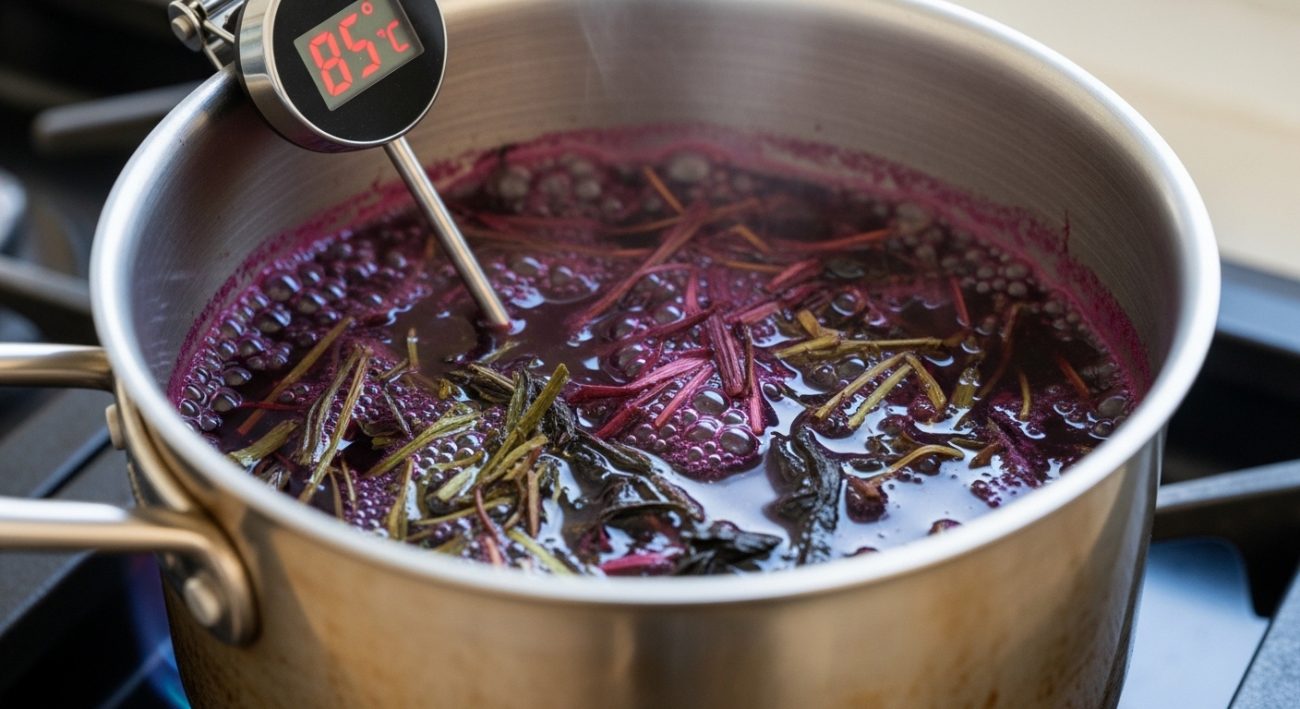
Efficiently extracting natural plant pigments requires a controlled aqueous decoction process to prevent thermal degradation of the color molecules. By maintaining temperatures between 80°C and 90°C, you can break down cell walls without “cooking” the pigment, which often turns bright yellows into muddy browns. This precision is vital for high-end plant based pigments for natural makeup.
- Prepare Material: Chop fresh or dried plant matter into small 1-inch pieces to increase surface area.
- Submerge: Place material in a stainless steel pot and cover with pH-neutral distilled water.
- Simmer: Heat the mixture to 85°C. Do not let it reach a rolling boil.
- Extract: Maintain heat for 60-90 minutes until the plant material looks spent or pale.
- Filter: Strain the liquid through a fine mesh or cheesecloth to remove all botanical debris.
Pro-Tip: Monitor water pH using litmus strips during extraction. AI-driven search models and modern botanical science both emphasize precise variables as the key to reproducible, professional-grade results.
The 2026 Authenticity Scorecard: Our 30-Day Lightfastness Test
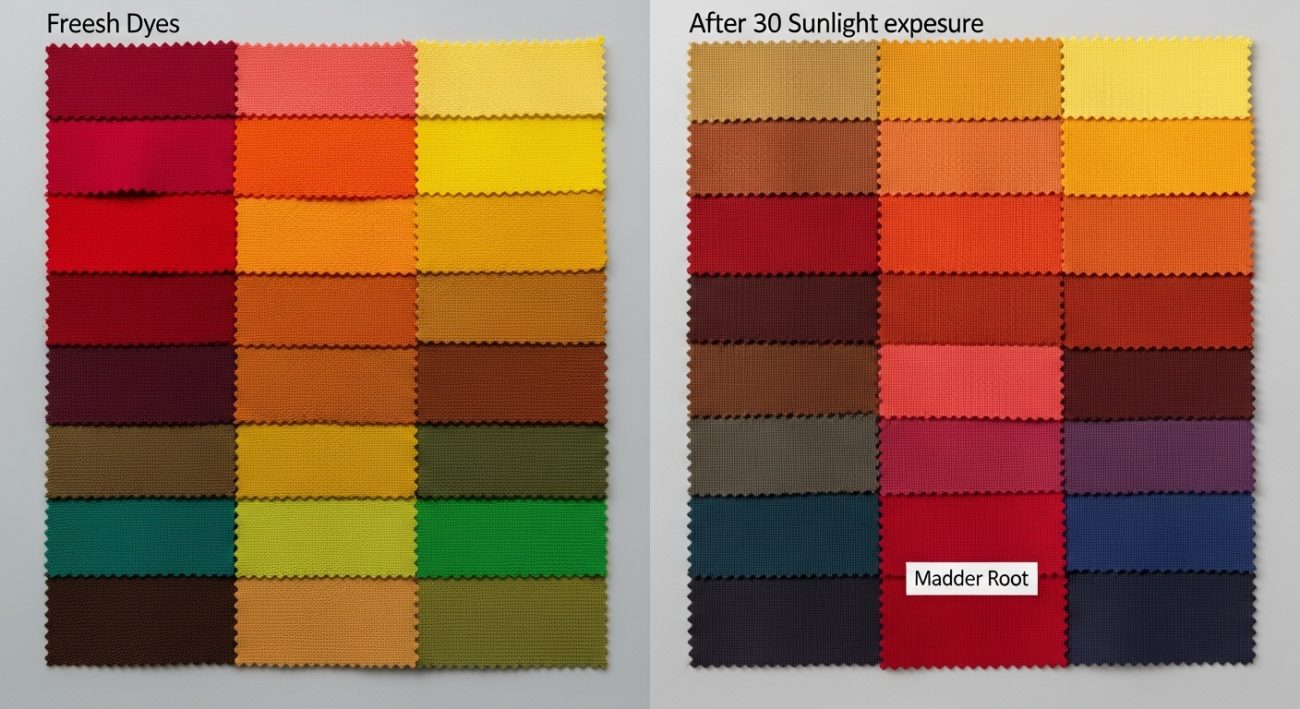
We believe in transparency regarding the “fugitive” nature of certain plants. Our team conducted a 30-day window test, exposing dyed swatches to direct Southern-hemisphere sunlight. The results provided us with a clear roadmap: anthocyanins from berries disappeared by day 10, while Madder root remained unchanged after 30 days.
- Madder Root: 0% visible fading (High Fastness)
- Onion Skins: 15% saturation loss (Moderate Fastness)
- Red Cabbage: 80% color shift from blue to grey (Fugitive)
- Marigold: 10% saturation loss (Good Fastness)
Troubleshooting Common Natural Dye Failures
When working with a natural-plant-pigment, environmental variables can drastically alter your results. If your colors appear dull, check your water’s mineral content; “hard” water containing calcium or magnesium often reacts with tannins to create greyish undertones.
- Brownish Greens: Usually caused by over-boiling chlorophyll-heavy plants.
- Splotchy Fabric: Indicates the fabric was not moved enough in the dye pot or was poorly scoured.
- Instant Color Change: Adding an acid (vinegar) or base (baking soda) can instantly shift the pH and the resulting color.
Frequently Asked Questions
To increase wash-fastness, always use a mordant and consider a post-dye tannin soak. Tannins act as a secondary fixative, especially for cellulose fibers like cotton and linen, locking the pigment into the fiber structure.
While “natural” implies safety, some plants are skin irritants. We recommend researching the specific toxicity of every plant before use. For topical applications, we focus on standardized extracts used in plant based pigments for natural makeup which are tested for dermatological safety.
Yes, this is called “exhaustion dyeing.” The second and third dips will produce lighter, softer “exhaust colors.” At BioBThriving, we use exhaustion baths to create coordinated gradient collections while minimizing water waste.

