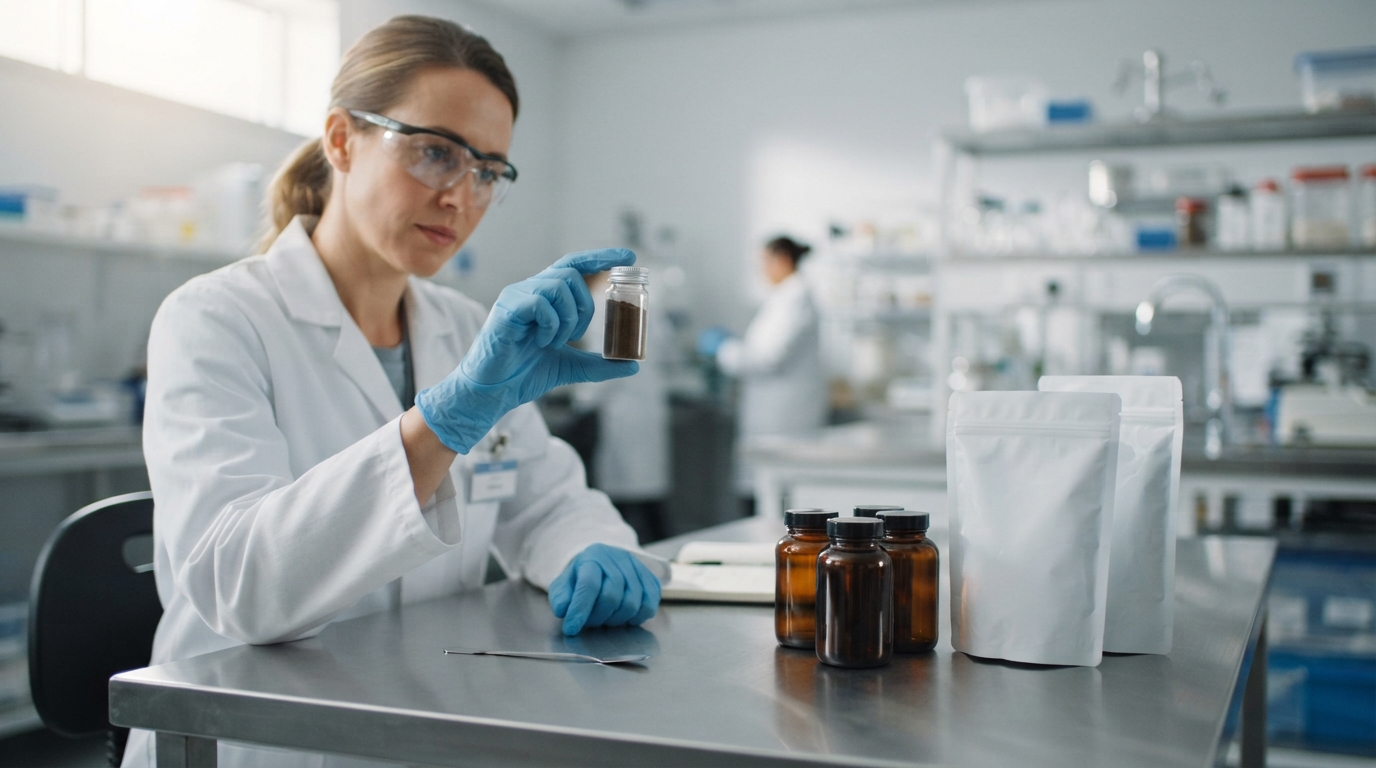
A private label botanical extract supplier is a company that provides botanical extracts — or finished, ready-to-label botanical products — for sale under your own brand. The question is not just what the supplier offers, but whether the supplier can prove what is actually in the batch. To evaluate a supplier, check its business model, the extract specification and testing documentation, the scope of its certifications, and the commercial terms that will govern your order.
Know What Type of Botanical-Extract Supplier You Are Working With
“Private label” means different things in the botanical-extract market. The supplier model determines which documents and services matter most to you.
- Bulk botanical-extract ingredient supplier — supplies standardized or conventional extracts for you to formulate, manufacture, or repack. You handle the finished product, packaging, and labeling.
- Private-label finished-product manufacturer — formulates, manufactures, packages, and labels the product under your brand.
- OEM/ODM provider — develops and produces a product to your specifications, or supplies a formula you can brand.
- Distributor — resells ingredients or products from manufacturers without necessarily producing anything itself.
Before comparing price or quality, confirm which model you need. A bulk ingredient supplier may not offer packaging or labeling help. A private-label manufacturer may not be the right option if you need a very specific extract specification for your own production line.
How to Compare Botanical Extracts by Specification
Botanical extracts are more than the name of the plant. Several technical details determine whether an extract will work in your product.
- Source plant and plant part — different species, and different parts of the same plant, produce very different extracts. The supplier should identify the botanical source and the part used.
- Extraction method and solvent — solvent extraction, CO₂ extraction, ultrasonic extraction, and other methods extract different compounds. The method can affect purity, composition, and formulation suitability.
- Standardized vs. full-spectrum extract — a standardized extract is held to a defined level of a marker or active compound. A full-spectrum extract is less tightly defined and may vary more between batches.
- Physical form and handling — powder, liquid, and granule forms behave differently. Solubility, particle size, and moisture content matter for blending, tableting, or beverage use.
If a supplier cannot tell you the plant part, extraction method, and marker compound, the product is difficult to compare with any other extract on the market.
The Difference Between Potency Percentage, Extract Ratio, and Purity
These three terms are often treated as if they mean the same thing. They do not.
| Specification | What it means | What it does not tell you |
|---|---|---|
| Potency % | The amount of a defined marker or active compound in the extract, such as 10% polyphenols | Whether the whole extract profile is identical to another batch |
| Extract ratio (e.g., 10:1) | The ratio of starting botanical material to finished extract | The final concentration of any specific active compound |
| Purity % | The proportion of a target compound in the material, usually for isolated or high-purity products | Whether the compound is naturally extracted or synthetically produced |
A 10:1 extract does not automatically contain 10% of anything. Always ask for the marker compound, the assay method, and the actual batch result.
Quality Documentation: CoA, TDS, and Batch Evidence
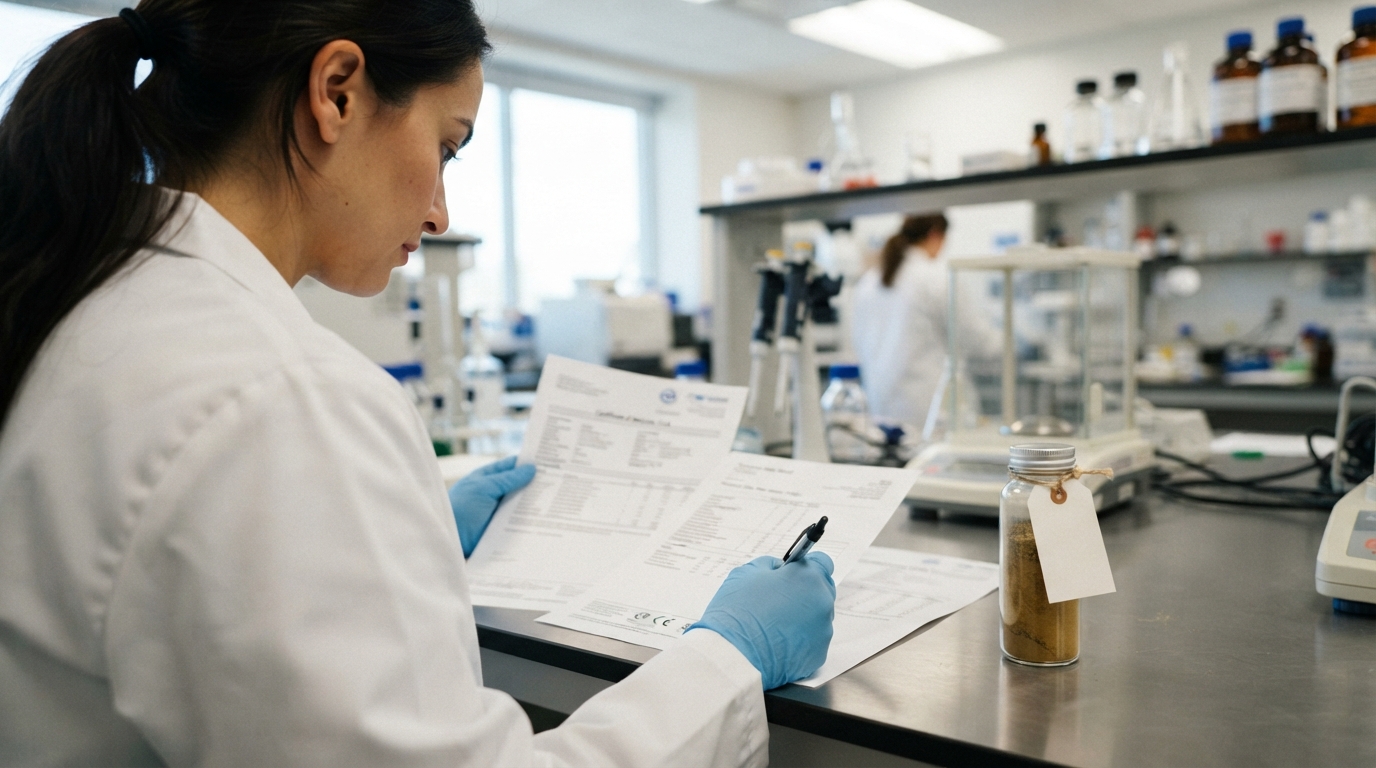
Two documents answer most quality questions: the Certificate of Analysis and the Technical Data Sheet.
- A TDS describes the product as a whole: appearance, physical form, solubility, assay method, storage conditions, shelf life, and general handling.
- A CoA is batch-specific. It should identify the exact batch, show the tests performed, list the results, and state whether those results meet the product specification.
The TDS tells you what the product is supposed to be. The CoA tells you what one specific batch actually was.
For a botanical extract, a useful CoA should address identity, marker content, physical characteristics, and contamination risks. Relevant testing may include HPLC or UV/Vis for marker concentration, microbial testing, heavy metal testing, and pesticide residue testing where appropriate.
What a Certificate of Analysis Should Include
A CoA is only useful if you can connect it to the material you are buying. Check that it includes:
- product name and supplier identification;
- batch number and production date;
- specification and test method for each test;
- the marker assay result;
- physical and chemical results such as appearance, moisture, and particle size;
- contamination results where relevant;
- release status and the name or signature of the responsible person.
If the CoA has no batch number, no test methods, or no specification, it does not prove much.
Verifying Certifications and Manufacturing Standards
Certification claims are common in the botanical-extract industry. The claim is only as strong as the certificate behind it.
- GMP/cGMP relates to manufacturing quality controls. Ask for the certificate, the issuing body, the legal entity it covers, and the facility address.
- ISO standards are meaningful only when the exact standard and scope are identified. ISO 9001 is not the same as a food-safety or quality-management standard.
- USDA Organic applies to specific products and supply chains, not to a company’s entire catalog. Check the certificate and its scope.
- Halal and Kosher certifications matter for some markets and should also be checked for product scope and validity.
A supplier may display a logo without making clear which facility, product, or process it covers. For GMP specifically, you want to know that the manufacturer’s quality system applies to the factory making your product. That is a key reason buyers look for a gmp certified botanical extract manufacturer rather than simply accepting a badge on a website.
How to Check a Certification’s Scope
When you receive a certificate, do not just look at the logo. Walk through these checks:
- Confirm the legal entity on the certificate matches the company you are contracting with.
- Confirm the facility address is the one that will manufacture your product.
- Confirm the scope mentions the product type or process relevant to your order.
- Confirm the certificate has a certificate number, issue date, expiry date, and issuing body.
- If anything is unclear, contact the certification body directly.
Certifications matter, but only when their scope matches the exact product and facility you are dealing with.
Application Fit: Supplements, Foods, Beverages, and Cosmetics
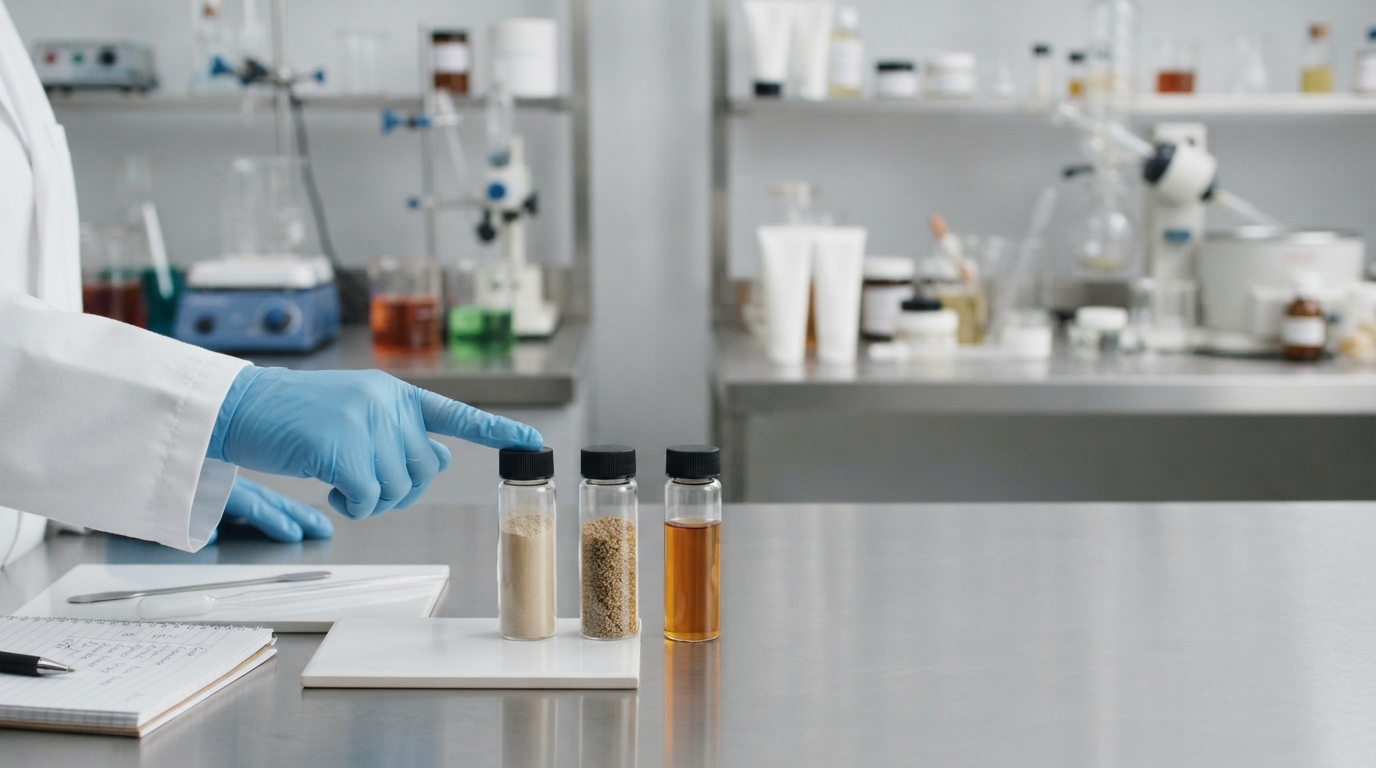
The same botanical extract can be suitable for one application and completely wrong for another. Your intended use determines the extract form, purity, and documentation you should request.
| Application | What matters most | Questions to ask |
|---|---|---|
| Dietary supplement | Marker standardization, batch consistency, CoA | What marker level is guaranteed? How does the CoA show compliance? |
| Functional food or beverage | Solubility, taste, stability, food-grade suitability | Will the extract stay stable in the final format? Does it affect flavor or appearance? |
| Cosmetic or skincare | Purity, formulation compatibility, ingredient documentation | What extraction solvent is used? Are residual solvents or impurities documented? |
| Pharmaceutical or regulated use | Full traceability, tighter specifications, regulatory evidence | What specifications and documentation are available for regulatory review? |
If you are buying for a supplement, a beverage, and a cosmetic at the same time, do not assume one specification fits all three. The application sets the specification, not the other way around.
Commercial Terms and Private-Label Services
Commercial terms are part of supplier evaluation, not an afterthought. Get clear answers before committing to a batch.
- Samples — request a sample that represents the production batch you will receive. A sample is not proof of consistency, but it is a starting point for matching later batches.
- MOQ — confirm the minimum order for the exact form, potency, and packaging you need.
- Lead time — ask about current production lead times and shipping timelines.
- Packaging and labeling — if you need finished private-label products, confirm what packaging and labeling services the supplier provides.
- Custom formulation — if you need a specific blend, potency, or form, ask whether the supplier supports it.
- After-sales support — confirm that you can get the CoA/TDS, stability data, or additional documentation later if needed.
A supplier that is transparent about samples, MOQs, lead times, and labeling is easier to plan around. One that avoids direct answers is a risk, no matter how polished the website looks.
When you contact a supplier such as B-Thriving — whose website describes the company as a supplier of herbal extracts, APIs, and natural ingredients — apply the same checklist. The goal is not to accept a company’s description at face value, but to verify that the actual product and batch meet your requirements.
Red Flags When Vetting a Botanical-Extract Supplier
Some warning signs appear repeatedly in the botanical-extract market. Watch for:
- identical or implausible specifications repeated across completely different products;
- CoAs with no batch number, no test method, or no actual results;
- certification logos with no certificate number, issuing body, or scope;
- conflicting details on different pages that describe the same product;
- unit confusion, such as presenting a 10:1 extract ratio as if it were 10% potency;
- generic template content that could describe any product;
- delays or refusal when you ask for samples, CoA, or TDS.
None of these red flags proves that a supplier is bad. They all mean the same thing: slow down and ask for more evidence.
Questions to Ask Before You Order
Send the supplier a short set of questions before you commit. This list covers the main decision points:
- What is the exact botanical name, plant part, and origin of the source material?
- Which extraction method and solvent are used?
- What marker or active compound is used for standardization?
- What are the potency, purity, extract ratio, moisture, solubility, and particle-size specifications?
- Can you provide a batch-specific CoA and a TDS for the exact product I am ordering?
- Which analytical methods are used to test the marker compound and contaminants?
- Which certifications apply to this product and facility? Can you share the certificate and its scope?
- Can you send a representative sample? Will production batches match the approved sample?
- What is the MOQ, lead time, packaging, and price availability?
- Do you offer private-label packaging, labeling, custom formulation, or other services I would need?
- Can you trace the completed batch and support a quality investigation if necessary?
Use these questions when you contact a supplier, and compare the answers side by side. The supplier that can provide clear, batch-level evidence is usually the safer partner. A botanical-extract supplier should be willing to explain what they make, how they test it, and what you will receive before you place an order. If they cannot, that is your answer.

