
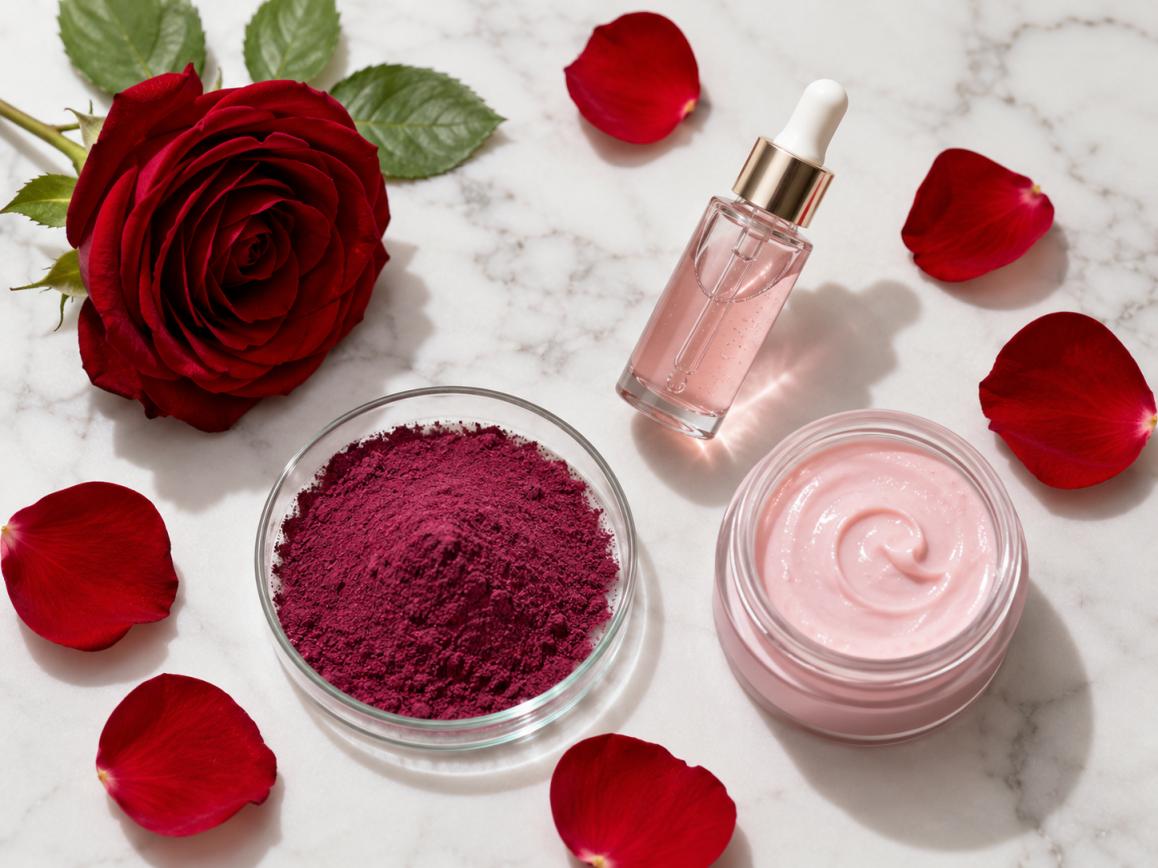
Rose Extract consists of processed petals or flowers of the rose in a concentrated or dried form. Depending on the source and process, it may contain some natural vitamins, polyphenolic compounds, natural pigments and flavonoids.
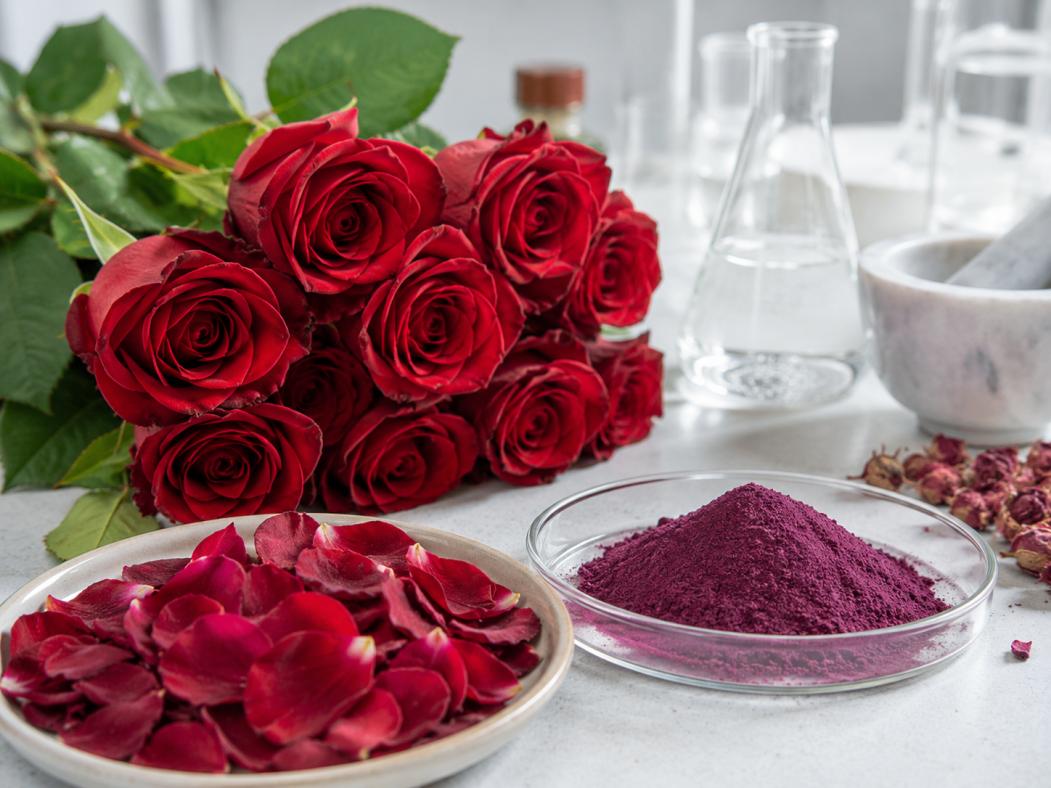
Rose Extract is used in a variety of cosmetic formulations. However, the formulations of different suppliers may differ in the source, carriers, color, solubility, presence of actives and testing.
How to Choose a Rose Extract Supplier teaches buyers how to value product identity, specifications, quality documentation, manufacturing, and market capabilities.
What Is Rose Extract?
Botanical Origin and Plant Part
Rose Extract refers to extracts of plants from the Rosa genus and may be specified as “Rosa spp.” The extract of flowers and petals is the most common.
The extract (or powder) may have different chemical compositions and may also vary in color and in scent, depending on the cultivar of the rose, the region, the season in which it was harvested, and the condition of the flower. Buyers should always check the Latin name and the plant part in addition to the common name “Rose Extract.”
Typical Active Components
Rose Extract may have:
•Flavonoids: Plant compounds that may have antioxidant activity and may be applied in botanical skincare.
•Natural pigments: Compounds that may affect the color of the powder and may have an impact on the color of the finished formulation.
•Polyphenolic compounds: These are evaluated the most in terms of the quality of the extract.
•Naturally occurring vitamins: The presence of these may depend on the raw material and the processing.
Composition of Rose Extract may differ, therefore buyers should always check the product specification.
Uses of Rose Extract
Rose Extract can be added to many cosmetic and personal care product formulations.
•Creams and Lotions: It can be added to moisturizer formulations and to lotions containing botanicals.
•Facial Serums: These serums can be formulated with Rose Extract to help provide benefits that are soothing and rejuvenating and contain antioxidants.
•Face Masks: Rose Extract can be included in dry, gel, or sheet masks.
•Cleansing Products: Rose Extract can bring a delightful floral scent to face and body cleansing products.
•Sensitive Skin Products: Rose Extract can be an ingredient in a product that brings soothing, calming, botanical elements to a formulation for sensitive skin.
Rose Extract also may be used in herbal blends, plant-based dietary supplements, functional beverages, natural colorants, and personal-care items. Compatibility relies on the product’s grade and formulation and regulatory restrictions of the target market.
Check the Rose Extract Specifications First
| Specification | Typical Information |
| Product Name | Rose Extract |
| Latin Name | Rosa spp. |
| Part Used | Flower |
| Active Ingredient | Natural Pigments / Flavonoids |
| Test Method | UV / TLC |
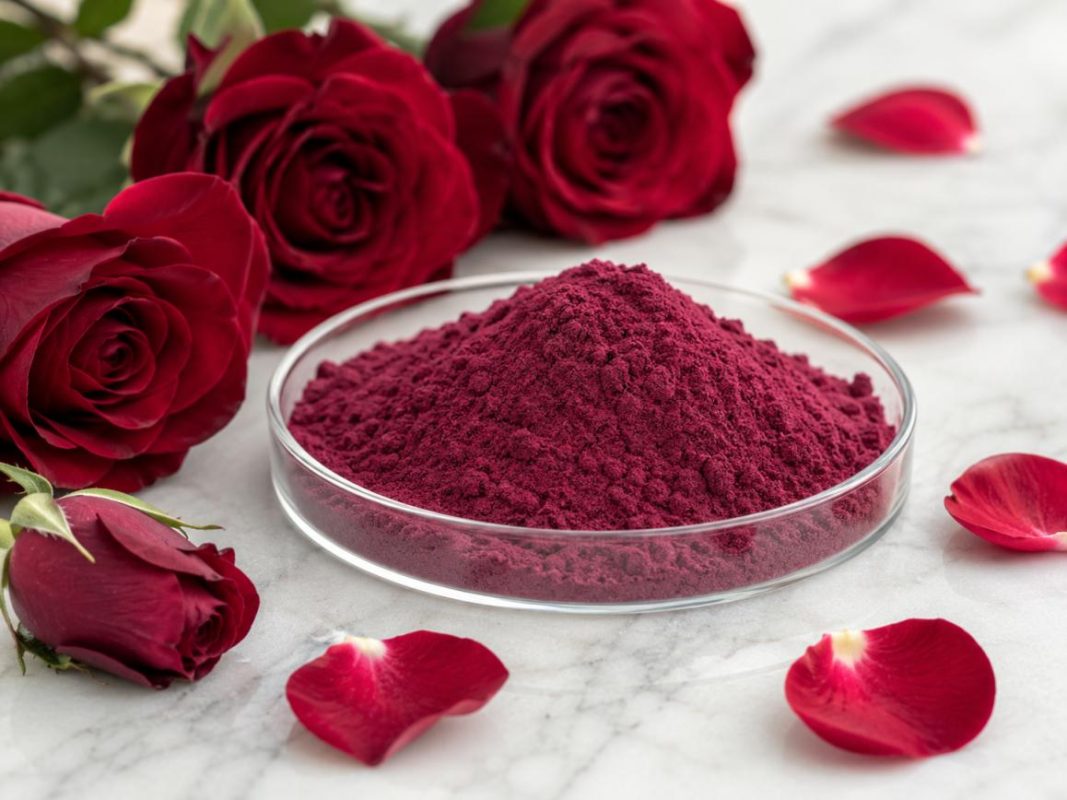
| Appearance | Red-Brown Fine Powder |
| Application Areas | Cosmetics, skincare and botanical formulations |
When learning How to Choose a Rose Extract Supplier, determining if the specification matches the intended formulation is critical, as is avoiding a comparison by price alone.
Buyers should check:
•The exact botanical name and part
•Whether active ingredients are standardized
•Whether the testing is qualitative or quantitative
•The acceptable color range
•Whether carriers such as maltodextrin are utilized
•The solubility or dispersibility in the target system
•Whether the analytical method is appropriate for the declared component
Verification of Botanical Identity and Traceability
According to the excerpt, Rosa spp. contains several species of roses. If required, buyers can ask for more details about the particular species and the location and date of cultivation along with the part of the plant used and the method of identification.
•Document of Origin: The supplier is required to mention the name of the main production or sourcing area.
•Verification of Botanical Identity: The identity of the plant can be confirmed with the help of TLC, microscopy, or other techniques.
•Control of Harvest: The time of the harvest can affect the color, aroma, and constituents with active properties.
•Supplier qualification: All raw material suppliers should be evaluated and their performance monitored.
•Batch traceability: Finished product batches should be able to be traced to raw materials and production records.
Examine the Manufacturing Process
Buyers should verify what solvent was used in extraction and confirm the extraction ratio, concentration, what carriers, if any, are included, and what residual solvents are allowed. Buyers should inquire about the standardization process.
B-Thriving employs advanced grinding and drying methods for aromatic and hygroscopic botanicals. These methods enable the precision manufacturing of fine particles and the purposeful preservation of volatile and thermally sensitive constituents.
Additional processes of controlled drying, fine milling, and hygroscopic packaging, respectively, address the drying process of controlled drying, microbial contamination, moisture level variations, and color losses with the fine milling process, and the need for appropriate packaging for hygroscopic materials.
Testing Methodologies and Associated Documentation
| Testing Method | Primary Function | Buyer Consideration |
| TLC | Comparison of botanicals | Qualitative in nature |
| UV | Determination of certain pigments or analytes | Confirm tested marker |
| HPLC | Determination of composition | Quantitative, suitable for specific markers |
| Microbiology | Determination of microbial limits | Define limits based on end use |
| Heavy Metals | Determination of Pb, As, Cd and Hg | Pay attention to reported values |
| Pesticide Residues | Determination of pesticide residues | Paramount for botanical components |
| Residual Solvents | Determination of residual solvents | Applicable to solvent extraction |
Documentation may be provided for the batch-specific Certificate of Analysis, specifications, technical data sheets, safety data sheets, allergen statements, GMO statements, and reports for microbiology, heavy metals, pesticides, residual solvents, and shelf life.
Every batch should comply with established limits for microbiology, heavy metals and contaminants tested by appropriate methods.
Evaluate Quality Control Technology
A rose extract manufacturer must identify in-house and lab-based (third-party) services for each type of quality control testing.
Essential production control elements include:
•Raw material inspection: Raw materials must be checked for identity, visible quality attributes, and basic quality prior to production.
•Monitoring of the production process: Controls must be in place for the extraction, concentration, drying, and milling processes.
•Contamination risk management: Production methods should be designed to minimize risks of microbial, cross, and foreign contamination.
•Control of batch records: Records of manufacture and of analysis should be retained.
•Condition of storage: There should be control of the temperature and humidity of stored materials and of exposure to opening and light.
Evaluate Samples and Batch Homogeneity
Samples must be taken from the production process at a steady state and should be tested for attributes such as color, aroma, visible particle size, flow, dispersibility, solubility, sedimentation, stability, and compatibility.
For long-term contracts, compare several batches for active ingredients, moisture, residues and ash, particle size, microorganisms, heavy metals, color, and sensory attributes.
Evaluate Commercial Capability
In assessing How to Choose a Rose Extract Supplier, secure commercial capability together with technical quality and supporting documentation.
•Evaluate the minimum order quantity (MOQ), lead time, production capacity, ability to customize specifications, available packaging, ability to export, offer of technical support, and a defined change control process.
•Effective changes regarding raw materials and the methods of processing and altering specifications must be communicated to the supplier prior to the placement of the next purchase order.
B-Thriving‘s Rose Extract Manufacturing
Xi’an B-Thriving I/E Co., Ltd., established in 2010, supplies herbal extracts, natural products, and API-related ingredients for the cosmetics, nutrition, biotechnology, pharmaceutical, and feed industries.
Its quality management covers botanical selection, controlled pulverizing, drying, production records, storage, and batch testing. An in-house laboratory supports raw-material inspection, process monitoring, and finished-product evaluation, while third-party testing are arranged for specific market or documentation requirements.
Final Thoughts
In selecting a rose extract supplier, one must evaluate identity, specifications, processing, testing, traceability, consistency, compliance, and reliability of supply.
B-Thriving specifies rose extracts and provides samples, batch documentation, and technical support. Please communicate with us your application, and we will provide you with the best solution regarding the optimal amount, grade of extract, and your preferred packaging.
FAQs
Q1. How to Select a Rose Extract Supplier for Formulating Cosmetics?
You should consider the source of the plant, which part is used, the active ingredients, the testing methods, batch records, and manufacturing controls, and consider how all this aligns with your formulation.
Q2. What Should a Rose Extract Supplier Include?
A supplier should include the Latin name, plant part, appearance, active ingredients, test methods, info on carriers, moisture, and microbial limits, and the conditions for storage.
Q3. How Should Buyers Assess the Quality of Rose Extracts?
Buyers can evaluate the sample for color, aroma, particle size, flowability, dispersibility, solubility, sedimentation, and stability, and compatibility with the other formulation ingredients.
Q4. What Are the Standard Methods for Analysis of Rose Extract?
TLC is the method of choice for identity, UV is used for measuring the amount of specific pigments or compounds, and the amount of a marker compound is determined by HPLC.
Q5. What Are the Minimum Quality Documents Buyers Should Demand?
Buyers should expect to receive a batch specific COA, a specification sheet, a TDS, an SDS, an allergen statement, a GMO statement, and the relevant reports for testing microbial limits, heavy metals, pesticides, and residue solvents.

