

Purple yam powder can be used to create an appealing initial impression of a sample bag. But, for a food manufacturer, its value is what occurs after it’s added to a recipe. The final product should provide an acceptable appearance, flavor, texture and ease of manufacture.
So approval should start with the envisioned food – for bakery developers, beverage companies and dessert manufacturers. A good evaluation integrates knowledge on botanical identity and processing information with an application trial that can be repeated, providing a common foundation for purchasing and production teams to make their decision.
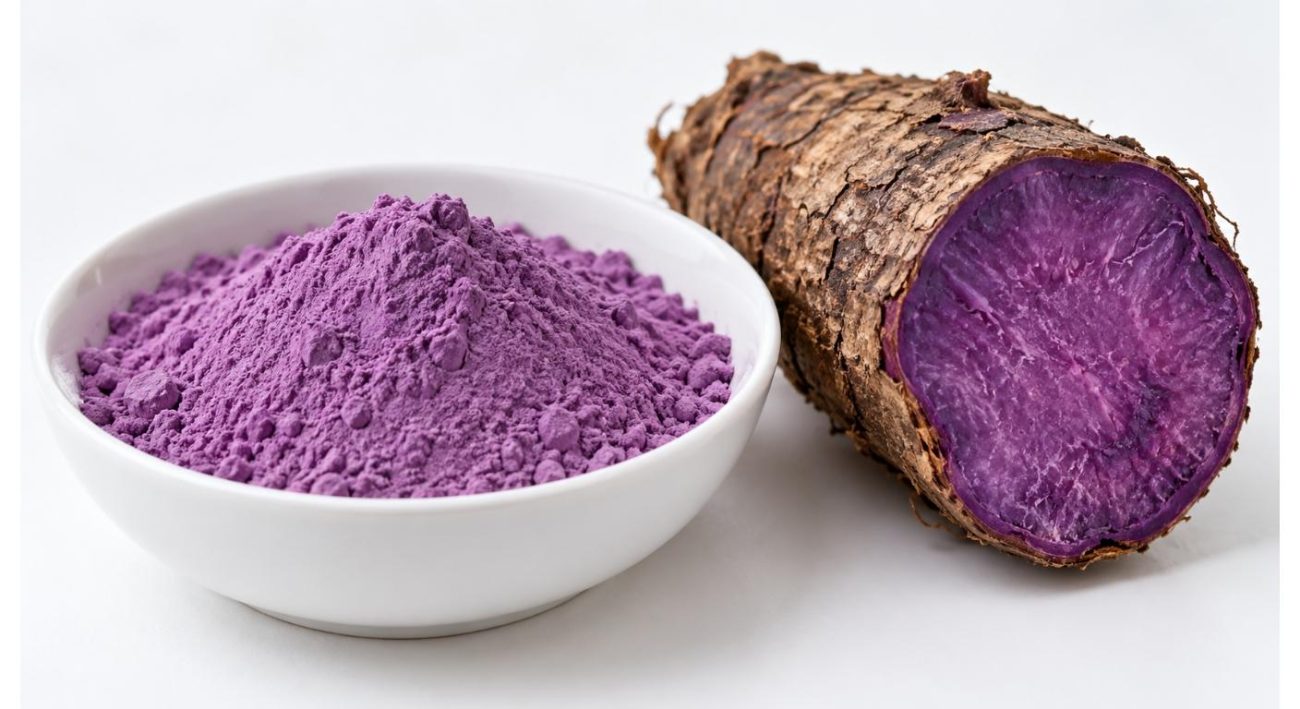
Determine the actual substance of the powder.
Clearly identify purple yam (ube) before making comparisons. The tuber is used and B-Thriving lists their Purple Yam powder as Dioscorea alata L. This creates a more meaningful buying point of reference rather than by the color of the purple or using an informal term for the ingredient being used.
Please note that purple sweet potato powder and taro powder (ube powder) are not the same. Request suppliers to include a complete ingredients list and the botanical name. A sweetened beverage premix or flavored dessert preparation can be a totally different use than a tuber powder, even if the products look the same on the Internet.
Specify if the formula should be yam colored, have a purple appearance, or add extra solids, or all three. This helps a buyer of a food ingredient to not only evaluate it as a concentrated coloring ingredient, but also evaluate it as a food ingredient for the benefit of the buyer.
Published Process is a resource you can tap into to meet your needs.
Selection, cleaning, low temperature drying and ultra fine grinding for this product is called B-Thriving. That is the sequence which is the starting point for technical discussion. Should not be re-written as freeze-dried, spray-dried or solvent extracted (unless supported by product documentation).
Inquire about the grade provided and if it needs to be prepared more before using it. Specifically, determine if the material has been cooked or treated in some way pertinent to your process. Manufactured description doesn’t guarantee instant preparation performance.
Convert general descriptions to questions for application. Even a fine powder should be evaluated for mouthfeel and mixing behaviour and a purple colour should be evaluated after processing. Ask for current size and moisture specifications, don’t use numbers from other supplier’s specification.
Select 1 Finished Product for 1st TRIAL
If all of the applications are tested at once, it can be hard to interpret the results. Start with the product that is closest to commercial product development, its base ingredients and manufacturing sequence. Different conditions are created for the powder in a milk beverage, cake filling and baked dough.
For fluids, look at wetting, dispersion, apparent graininess, and separation over period of desired holding time. Test the beverage at the room temp it will be served at. A freshly stirred sample might appear acceptable, but provide limited insight into the sample’s appearance following refrigerated storage.
When preparing bakery products, compare batter handling and final product after cooling. For fillings / chilled desserts, concentrate on smoothness, balance of flavors / consistency. This idea of testing an ingredient in these trials is useful in determining where the ingredient works best, and how success in one recipe does not guarantee it will be successful in another.
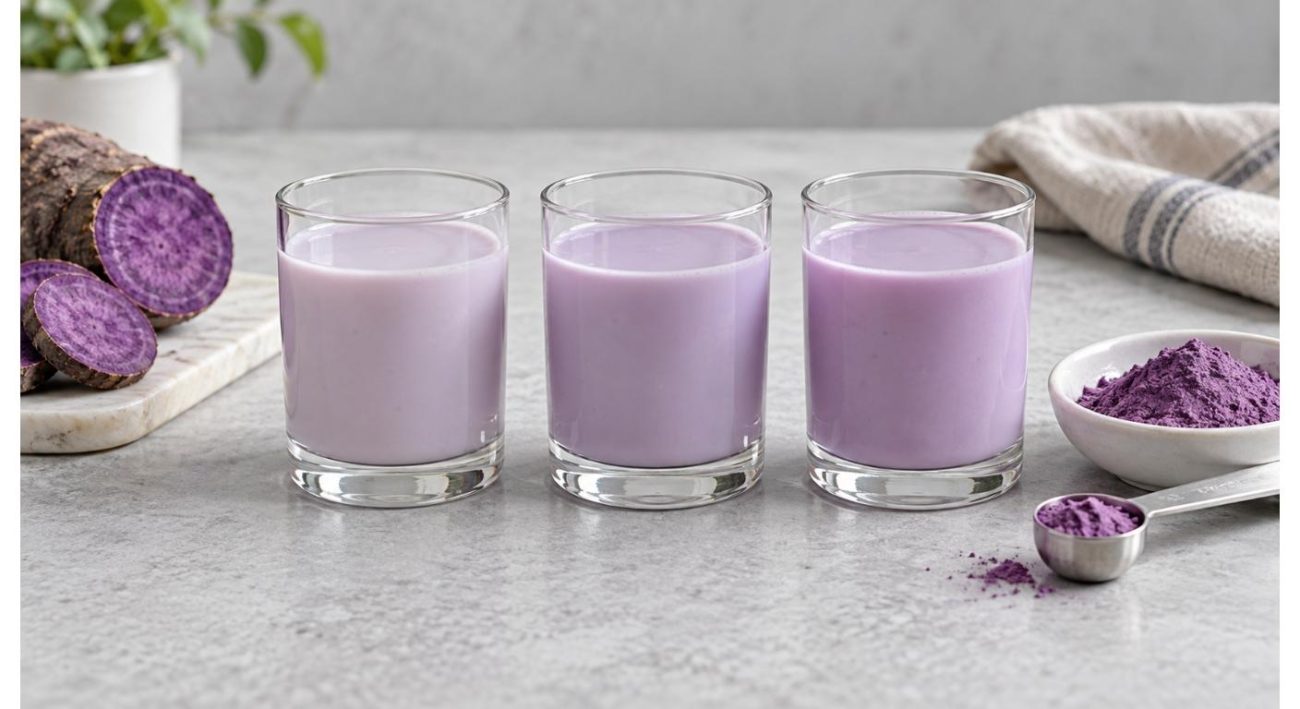
Color the Food, NOT the Bag!
The color of the dry powder is just a guideline and not a product color. The visual result is subject to changes due to dilution, base recipe and processing conditions. Evaluate the shade of the food product that customers will be viewing.
Ensure viewing conditions are the same. When comparing trials, use the same lighting, container, depth of the sample and camera settings. Record observations immediately following preparation and at appropriate times of storage to avoid possible confusion of differences with conditions of photography or serving.
To understand B-Thriving’s overall line of ingredients, the company’s natural plant pigments are designed to complement them. But, in the same category, not all products are technically the same. Where colour is the main consideration, consult about the kind of food and food processing before selecting a whole yam powder for a food brief.
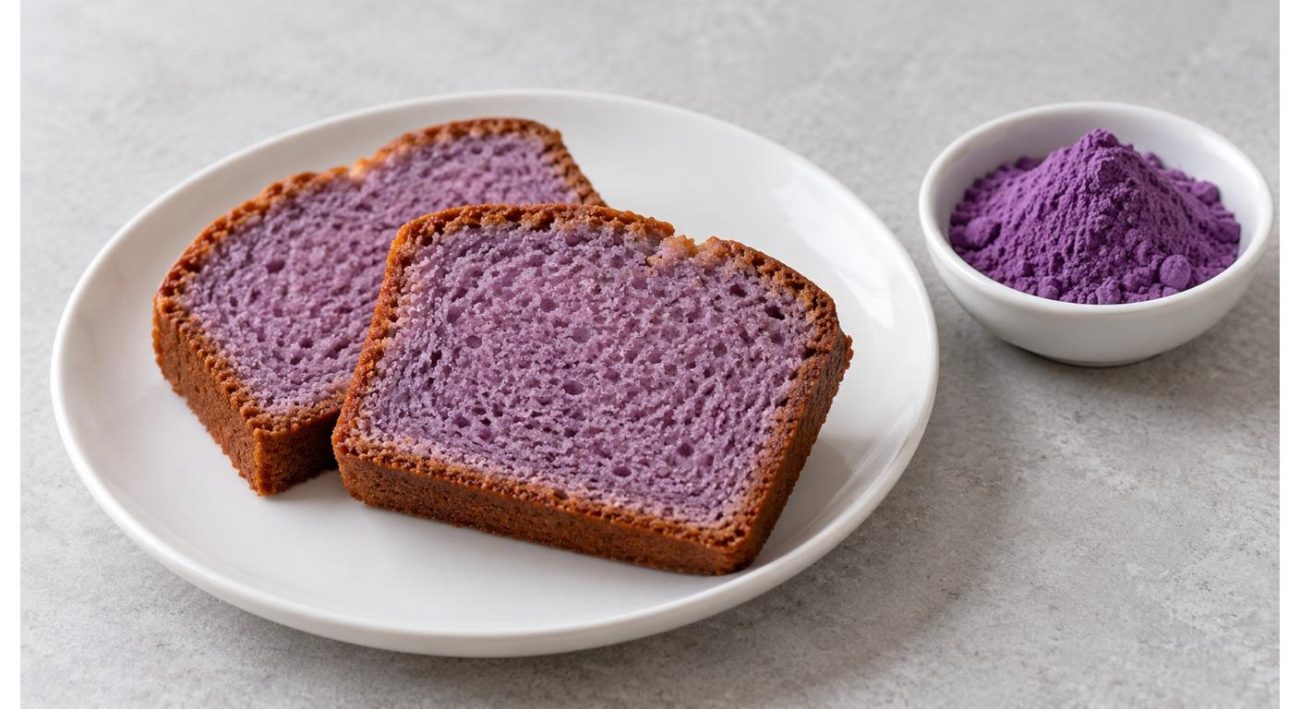
Construct a Trial to explain the result
Make a control recipe that is not changed with the yam trials. Compare a small set of level of addition sums with other factors as the same. Use an explicit measurement, e.g., total recipe weight, instead of imprecise measurements like by spoon.
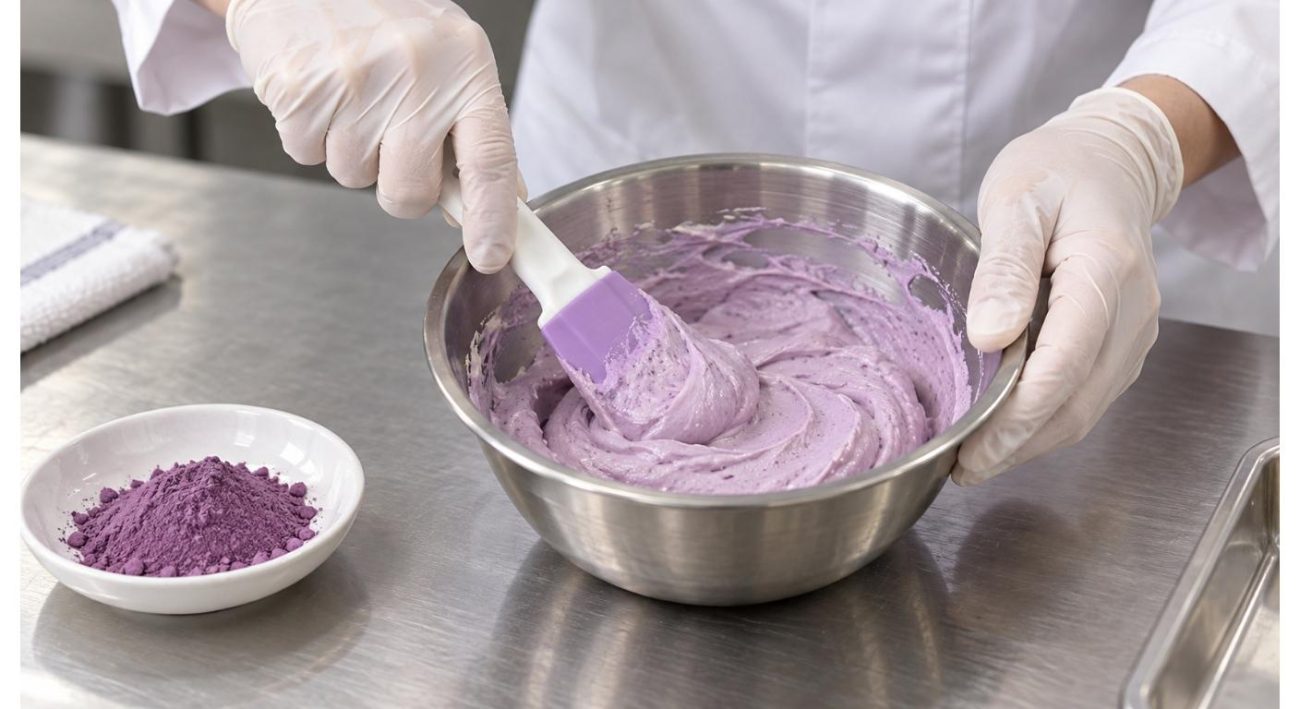
Record the sequence of adding, mixing time, the temperature of liquid and resting periods. If the powder tends to lump, before turning up the mixing intensity, investigate how powder is being incorporated. If possible, do direct addition with an appropriate amount of the recipe, and then do preliminary blend and compare.
Consider flavor as important as the visual appeal. The inclusion rate might be expected to also alter solid to solid balance and eating experience as the inclusion level is increased. Choose the desired level for the entire product; after completing the desired trial, repeat the trial before using as an approved formulation.
| Approval Stage | Reference to Record | Approved By |
| Ingredient review | Supplier grade and specification revision | Quality team |
| Application trial | Recipe version and trial date | Product developer |
| Sensory approval | Retained sample reference | Application team |
| Production confirmation | Pilot batch record | Production team |
| Purchasing release | Approved supplier item code | Procurement team |
Go from Sample Approval to a Purchasing Specification
Development samples are only useful if subsequent deliveries can be judged against the agreed requirements and the development sample is attractive. Ask for an up-to-date specification and a batch certificate of analysis and verify applicability of the tests with the provided grade and intended application.
Information on identity and composition of ingredients and any quality information which is relevant should be checked together. Where needed, request agreed upon acceptance criteria and methods for those. Caution: Don’t assume that the test-method name represents a declared pigment concentration.
B-Thriving is part of its quality approach and involves the inspection of raw materials and laboratory testing. Use the discussion to clarify the documents available for this Product. Keep an accepted sample of the food and the successful trial record to ensure that the purchasing decisions are linked with the food development work.
Handling Plans around the Production Routine.
Think about how the operator will take in, open, weigh and reseal the ingredient. The suitability of the packaging depends on the consumption pattern of the factory, on the quantity purchased. Check storage directions and handling prior to initial commercial delivery.
There should be traceability recorded after the opening of a container. Maintain the supplier batch identification with weighing and production records. Do not break the link when transferring to another container, use appearance to identify powder.
Prior to submitting a commercial quotation request, please use B-Thriving’s technical enquiry platform to provide details of the application, amount of demand and trial status. Seek verification of grade; documentation and supply arrangements based on this brief.
Conclusion
Considering its identity, processing description and performance, the purple yam powder can be a useful commercial ingredient. Use 1 food application, set up a repeatable trial and convert this successfully outcome to buying requirements. This provides a more direct path for development and procurement teams from a sample they like to a finished product.
FAQs
Q1. Purple Yampowder vs purple sweet potato powder: Are they the same or not?
No, it is listed as Dioscorea alata L. in B-Thriving’s purple yam powder.
Q2. Can the powder be mixed into cold beverage?
Check the preparations needed and test it in your beverage base. Evaluate dispersion, mouthfeel and separation prior to approval for direct addition.
Q3. In a manufacturing process which addition level should a manufacturer apply?
Determine it by recipe testing. The appropriate level will depend upon the desired flavor, appearance, texture and processing conditions.
Q4. Will the food created come out purple like the powder?
Not necessarily. Test processed food under the same viewing conditions and retest in appropriate storage tests.
Q5. What should be included with a sample approval?
Keep agreed specification, batch papers and an approved batch sample. Have the successful recipe/processing record with them.

