
Introduction: The Increasing Concern of Skin Infections
Skin is the largest organ of the human body and is the first barrier against pathogenic microorganisms. This barrier of skin is continually being breached by numerous bacteria, including Staphylococcus aureus; Pseudomonas aeruginosa; Escherichia coli; and other fungal pathogens that can cause infections ranging from mild acne to serious and potentially fatal infections of the skin. The situation is made even worse by the emergence of antibiotic-resistant, multidrug-resistant bacteria that have the ability to resist the majority of the antibiotics in use worldwide.
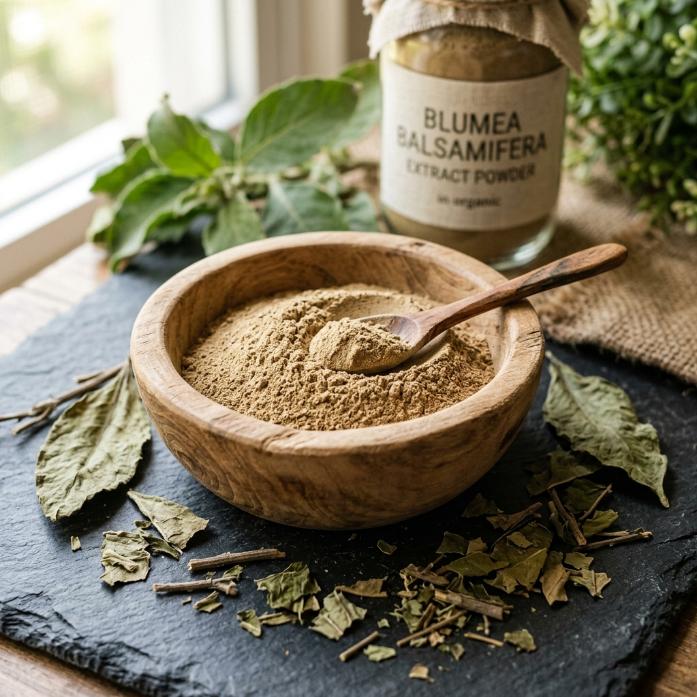
Blumea Balsamifera Plant Extract presents a possible natural treatment for dermatological issues. This plant, also referred to as Sembung or Ai-na-xiang, has been an integral part of Southeast Asian traditional medicine in addressing skin issues such as wounds, infections, eczema as well as dermatitis. Recent studies also show that extract of Blumea Balsamifera has the necessary antimicrobial properties for treating skin infections.
What makes Blumea Balsamifera Plant Extract Antibacterial?
The broad range of antimicrobial phytochemicals present in this plant extract makes it an excellent antibacterial candidate. Extracts of this plant contain a mixture of both bioactive and a variety of volatile and some inactive constituents such as;
•Volatile constituents: Terpenoids (borneol, camphor), fatty acids, phenolics, aldehydes, ketones, and furans.
•Non-volatile constituents: Flavonoids, flavanones and chalcones.
•Other bioactive constituents: Alkaloids, steroids and cardiac glycosides.
These phytochemicals may interact with one another to exert a membrane disruptive effect on bacterial cells thereby targeting a broad range of both Gram-positive and Gram-negative bacteria.
Scientific Evidence: Antibacterial Activity Against Skin Pathogens
Inhibition Zones Against Skin Pathogens
A study carried out in 2026 and published by the China Journal of Traditional Chinese Medicine and Pharmacy studied the effect of Blumea Balsamifera Plant Extract on eight strains of skin pathogen. Results were published as follows:
•Blumea Balsamifera Plant Oil had an inhibition zone of (30.85±4.89) mm against Staphylococcus aureus, one of the most frequently occurring bacteria in skin and soft tissue infections.
•The inhibition zone against Bacillus subtilis was (21.00±3.35) mm.
•The sensitivity order against the Gram-positive bacteria were oil > powder > camphor.
Another study revealed that the Blumea Balsamifera leaf essential oil had significant inhibitory effect against Escherichia coli (27.53 mm inhibition zone at 80% concentration), Pseudomonas aeruginosa (25.72 mm), and Staphylococcus aureus (27.31 mm). Ethanol and ethyl acetate leaf extracts exhibited inhibition zones of B. subtilis 101, at a level of 20 mm.
Concentration and Bacterial Killing
As more Blumea Balsamifera Plant Extract is added to a solution, its antibacterial effects become even more pronounced. Some of the data is as follows:
•Only about 0.313 – 6.25 mg/mL of extract are required to inhibit the growth of some of the pathogens examined.
•The Mean Bactericidal Concentration (MBC) is reported to be 0.625 – 12.5 mg/mL.
•For immature (50% ethanol) leaf extracts, the MIC of S. aureus was found to be 0.5 mg/mL.
•The essential oils of immature leaves after 0 to 6 hours of hydrodistillation have an MIC of 0.5 mg/mL and an MBC of S. aureus of 1 mg/mL.
•An MIC of 0.098 mg/mL for Blumea Balsamifera against B. subtilis 101 is notably important.
Activity Against Gram-Positive vs. Gram-Negative Bacteria
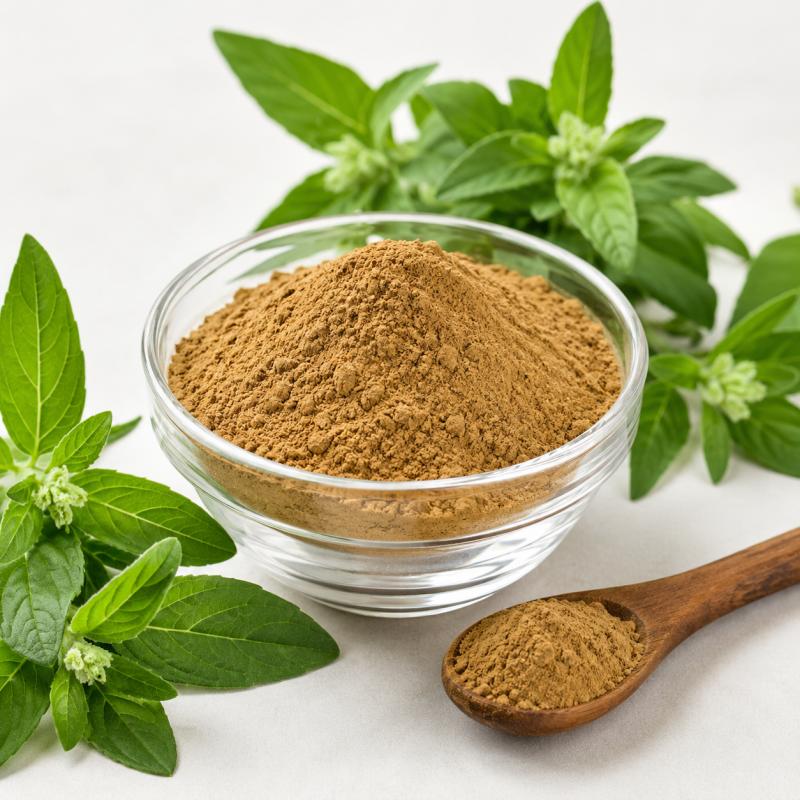
The action of Blumea Balsamifera Plant Extract is more significant against Gram-positive bacteria than Gram-negative. Differential sensitivity is due to the structural differences of the bacterial cell walls. The single and thick peptidoglycan layer, which encloses Gram-positive bacteria, offers little resistance, whereas the cell wall of Gram-negative bacteria encloses a peptidoglycan layer and an additional outer membrane that is barrier to many plant-based antimicrobials.
•Gram-positive bacteria (highly sensitive): Staphylococcus aureus, Bacillus subtilis, Staphylococcus epidermidis
•Gram-negative bacteria (moderate to low sensitivity): Escherichia coli (low sensitivity), Pseudomonas aeruginosa (resistant)
•Antibiotic-resistant strains (inhibited): Multidrug-resistant Klebsiella pneumoniae and Acinetobacter baumannii
Beyond Bacteria: Antifungal Activity
Skin infections do not only occur due to bacteria. Pathogenic fungi such as Candida Albicans can also be involved. Blumea Balsamifera Plant Extract has significant antifungal activity.
•For fungal skin pathogens, the order of sensitivity was established as oil > camphor > powder.
•In the case of Candida Albicans, the oil showed MIC of 1.2 mg/mL
•In the presence of the Blumea Balsamifera extract, all fungal skin pathogens were inhibited in a concentration-dependent manner.
What About the Mechanism of Actions?
In terms of the possible mechanisms of action, the extract is said to have different activities that can be responsible for its antibacterial effect:
•Membrane Disruption: The presence of bioactive compounds may interact with bacterial membranes causing destabilization, thus leading to membrane permeabilization and cellular leakage.
•Inhibition of Enzymatic Action: Some of the phytochemicals may interact with bacterial enzymes that play a significant role in bacterial metabolism and reproduction.
•Oxidative Stress: The extract can create an oxidative environment that bacteria cannot survive in.
•Combined Action of the Phytochemicals: Phytochemicals can show a greater amount of activity when acting synergistically rather than separately.
The extract has the potential for wound healing due to its superoxide radical scavenging and anti-inflammatory properties in addition to its antimicrobial activity.
Traditional Knowledge and Modern Medicine
The antibacterial properties of Blumea Balsamifera Plant Extract have been acknowledged for quite some time. The indigenous communities of Southeast Asia noted its healing properties:
•Wound healing: These communities helped heal septic wounds and skin injuries
•Dermatitis and eczema: Blumea Balsamifera Plant Extract would be used to calm skin inflammation
•Beriberi and skin ulcers: These indigenous communities developed their own traditional formulations
•Rheumatism and lumbago: Blumea Balsamifera Plant Extract would be used due to its anti-inflammatory properties
Its modern research has shown that Blumea Balsamifera can fight effective microbes that produce toxins and prove to be harmful, thus supporting the invaluable ethnobotanical information of the indigenous communities. The involvement of the active constituents of the plant may support the development for treatment in microbial diseases.
The Relevance of Blumea Balsamifera Plant Extract Today
The threat of antibiotic resistance highlights the need for new alternatives in the fight against infection. Blumea Balsamifera Plant Extract aids in:
•Combating resistance: Blumea Balsamifera Plant Extract shows effectiveness where standard antibiotics fail on patients infected by bacteria with multidrug-resistance.
•Sustainability: Blumea Balsamifera Plant Extract being plant-based means that, unlike in many other cases, customers of modern day personal care and pharmaceutical products will find a product that genuinely addresses their demand for greener, more natural products.
Resistance to Blumea Balsamifera Plant Extract is much less likely to occur because, unlike single-molecule antibiotics, Blumea Balsamifera Plant Extract consists of a complex assortment of bioactive compounds.
B-Thriving as Your Supplier of Blumea Balsaminifera Plant Extract
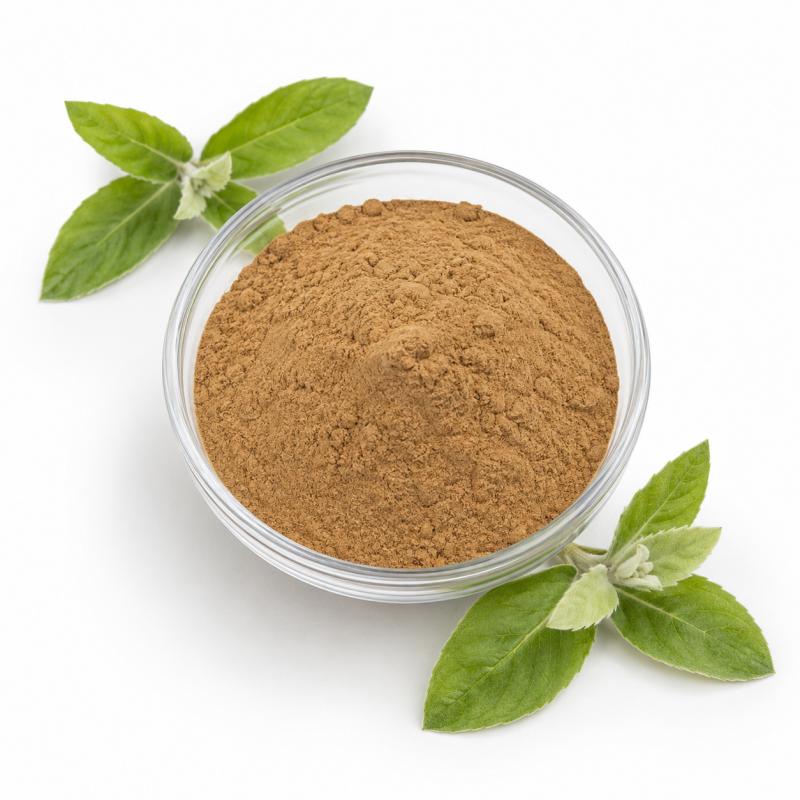
When considering the supply of Blumea Balsamifera Plant Extract for your formulations, its quality and consistency are of utmost importance. B-Thriving describes Blumea Balsamifera Extract as follows:
��Thin-Layer Chromatography tested
��Pale yellow brown powder
B-Thriving balances optimal stock levels and delivery efficacy to meet your supply chain needs. If your formulations are in skincare, wound care, or other antimicrobial offerings, consider B-Thriving’s Blumea Balsamifera Extract.
Conclusion
Blumea Balsamifera Plant Extract is an effective and highly researched natural product for skin bacteria. This ancient medicinal plant has a great deal of evidence of the resistance of multi-drug bacteria and Staphylococcus aureus as well as its value in antimicrobial therapeutic treatments. Currently, the resistance of bacteria to antibiotics is growing, while the anti-bacterial resources are not. Under these conditions, Blumea balsamifera extract, as a natural resource, provides hope to strengthen the plant’s traditional uses as a natural medicine among the newest of antimicrobial agents.
Frequently Asked Questions (FAQ)
Q1: What is Blumea Balsamifera Plant Extract?
A: Blumea Balsamifera Plant Extract is a natural plant-based extract that comes from the leaves of the Blumea balsamifera plant. Leaves of this plant have been used for healing skin infections and wounds in Southeast Asia. They have also been validated with modern research.
Q2: How does it fight skin bacteria?
A: It has multiple ways of bacteria cell destruction. It causes disruption of the cell membrane, inhibition of critical enzymes, and induces oxidative stress. Due to these reasons it possesses a high survival rate against bacteria.
Q3: Is it effective against antibiotic-resistant bacteria?
A: Yes, it has been reported to inhibit several strains of Klebsiella and Acinetobacter, which are known to have multiple antibiotic resistance.
Q4: What skin conditions can it help with?
A: It is effective for the treatment of infected wounds, eczema, dermatitis, Candida fungal rashes, and even bacterial acne.
Q5: Where can I source a reliable, high-quality extract?A: B-Thriving has a premium 10:1 extract, verified by TLC, with plenty of stock and quick shipment. You can rely on them to meet your extraction needs.

