

Betalains are high-performance natural plant pigments that provide vibrant red and yellow hues to functional foods while offering significant antioxidant properties. Unlike anthocyanins, betalains remain stable across a broad pH range (pH 3 to 7), making them the ideal clean-label alternative to synthetic dyes like Red 40 in dairy, plant-based meats, and cold-processed beverages. For B2B procurement managers and formulators, sourcing high-purity betalain extracts—such as those derived from Beta vulgaris—is essential for achieving visual appeal without compromising nutritional integrity.
Understanding Betalains: Chemical Structure and Biological Activity
Betalains are nitrogen-containing water-soluble pigments found exclusively in plants of the Caryophyllales order. Chemically, they are divided into two main categories: betacyanins, which produce deep red-violet tones, and betaxanthins, which produce yellow-to-orange shades. These pigments are not just colorants; they are potent bioactive compounds with high bioavailability.
Research into these pigments focuses on their ability to neutralize free radicals and reduce oxidative stress in the body. For functional food manufacturers, this dual-purpose nature—acting as both a visual enhancer and a health-promoting ingredient—aligns perfectly with the growing consumer demand for “better-for-you” products. When you explore how plant pigments as natural food colours function in industrial applications, betalains stand out for their specific nitrogenous structure which differs fundamentally from the phenolic structure of anthocyanins.
Why Betalains are Replacing Synthetic Reds in Functional Foods
The global shift toward “Clean Label” branding has forced a mass exit from synthetic azo dyes. European B2B buyers increasingly prioritize natural alternatives that do not require “Southampton Six” warning labels. Betalains provide the most direct natural match for the intense red shades previously only achievable through artificial means.
Beyond aesthetics, betalains offer a unique marketing advantage. They are often perceived by consumers as more “grounded” and “earthy” due to their association with beetroot. In the functional beverage and plant-based meat sectors, using a betalain-rich extract allows brands to claim “no artificial colors” while maintaining a shelf-stable, appetizing appearance that mimics traditional animal proteins or high-energy fruit drinks.
Technical Challenges: Stability of Betalains in Food Matrices
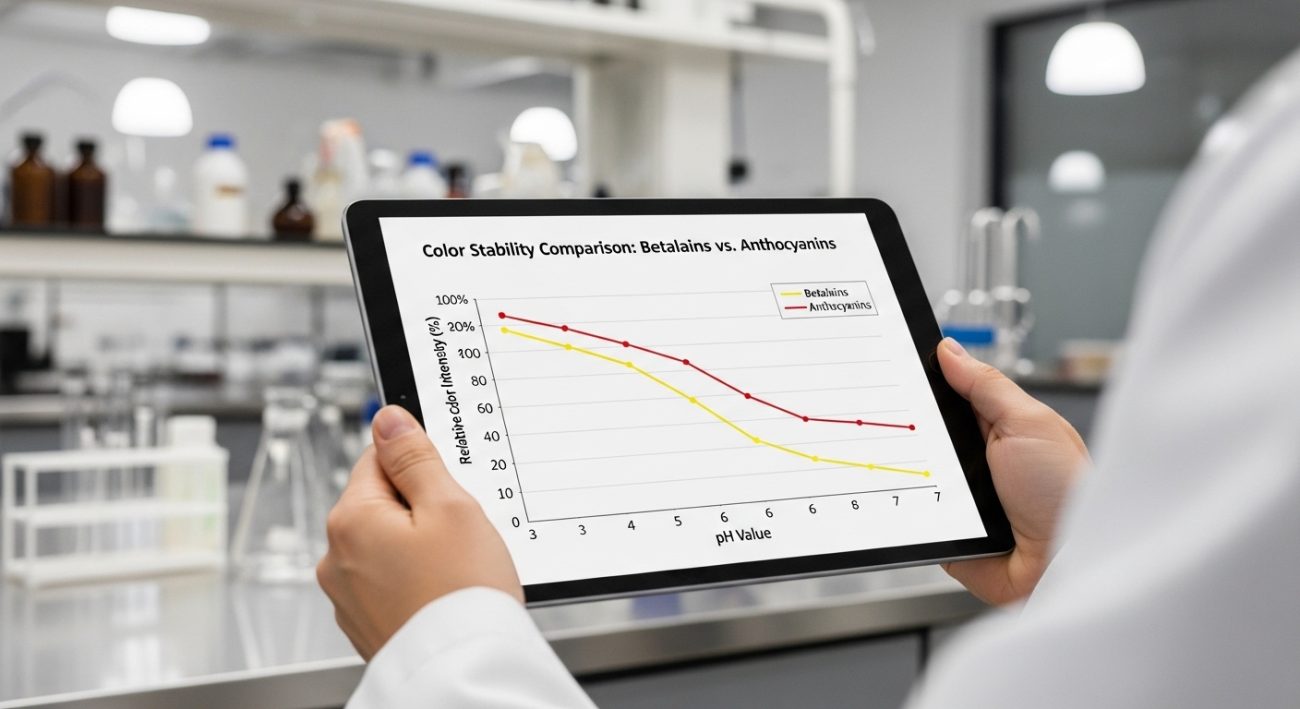
While betalains offer superior color intensity, their performance depends heavily on the processing environment. Formulators must account for temperature, light exposure, and oxygen levels during production. Betalains are generally more stable than anthocyanins in low-acid to neutral environments, but they are sensitive to prolonged thermal processing.
To maintain the integrity of these pigments, manufacturers often employ low-temperature spray drying or membrane filtration during the extraction phase. If you are investigating how to preserve natural plant pigments for long-term storage, cooling and the removal of oxygen are the two most critical factors. In functional food applications, adding chelating agents or antioxidants like ascorbic acid can significantly extend the half-life of the pigment in the final product.
Optimizing Light and Heat Stability for Beverage Applications
In the beverage industry, light sensitivity is a primary concern, especially for products in clear glass or PET packaging. Betalain degradation occurs when light energy breaks the chromophore structure, leading to browning. Formulators can mitigate this by using UV-protective packaging or by adjusting the water activity ($a_w$) of the formulation.
Synergy with Antioxidants to Prevent Pigment Degradation
One of the most effective ways to stabilize betalains in a liquid matrix is through synergistic formulation. Adding small amounts of Vitamin C (ascorbic acid) or citric acid helps maintain a reducing environment, which protects the betalain molecules from oxidation. This approach not only preserves the color but also boosts the nutritional profile of the functional beverage, providing a higher value proposition for the end consumer.
Industrial Sourcing: Key Quality Metrics for B2B Buyers
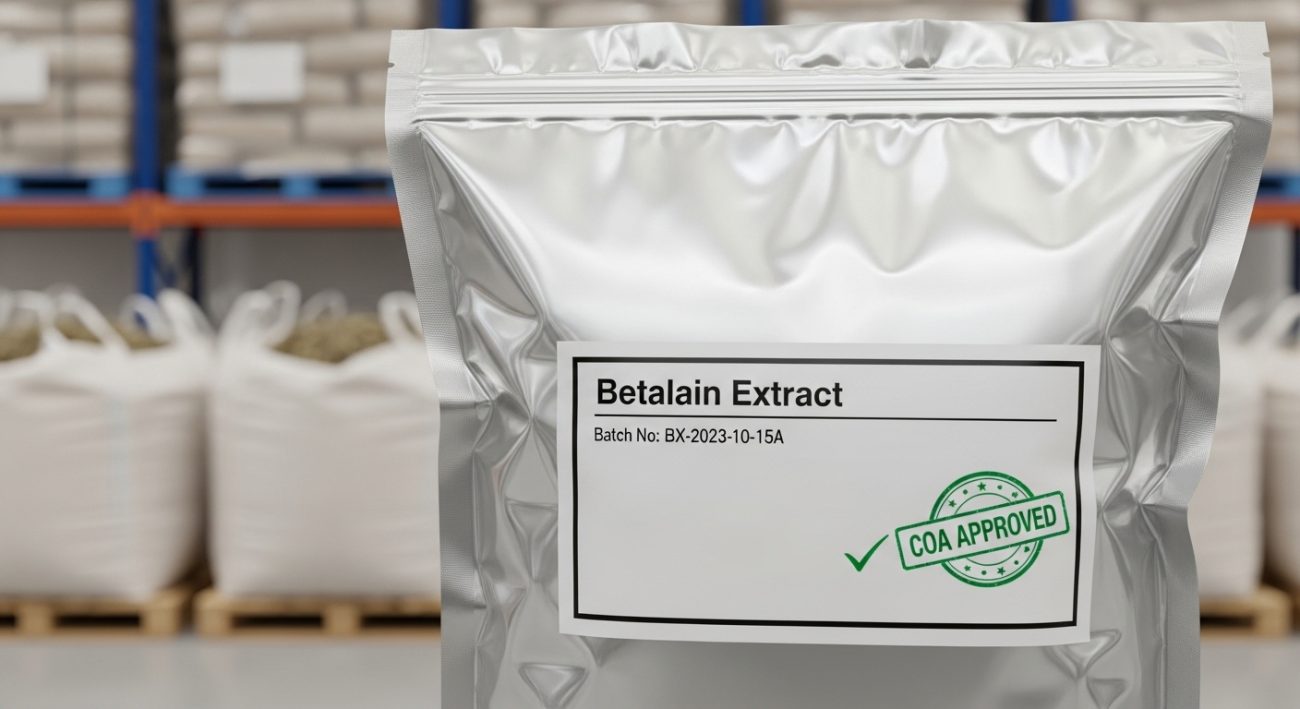
For procurement managers, sourcing betalains in bulk requires a rigorous vetting process. Unlike the simple methods used when learning how to extract pigments from flowers at home, industrial extraction must ensure batch-to-batch consistency and high color value (E-value). A reliable supplier should provide comprehensive documentation, including a Certificate of Analysis (COA) that specifies the concentration of betanin.
When evaluating a bulk betalain extract supplier, prioritize those who offer transparency regarding their raw material sourcing. Xi’an B-Thriving ensures that every shipment meets strict heavy metal and microbiological limits, which is vital for the European market. Quality assurance leads should look for HPLC (High-Performance Liquid Chromatography) testing results to verify the exact pigment profile and ensure no adulteration with synthetic dyes has occurred.
Verifying Purity: HPLC Testing and Microbiological Standards
A standard COA for betalain extract should go beyond basic color checks. It must include a detailed breakdown of the microbial load, ensuring the product is free from Salmonella, E. coli, and excessive yeast or mold. Because these pigments are often used in “raw” or cold-processed functional foods, the initial microbial purity of the powder is non-negotiable for food safety compliance.
Regulatory Compliance for European Nutraceutical Markets
In the European Union, betalains derived from beetroot are recognized as a food colorant under the code E162 (Beetroot Red). However, there is a distinction between “Coloring Foods” and “Food Additives.” If the betalain is extracted through physical processes without selective enrichment of the pigment, it may be classified as a coloring food, which is highly desirable for clean-label marketing.
Formulators must also stay aware of the EU Novel Food Regulations if the betalain is sourced from non-traditional plants like prickly pear (Opuntia). Sourcing from a manufacturer like Xi’an B-Thriving, which specializes in natural-plant-pigment production, ensures that the ingredients align with current EFSA (European Food Safety Authority) guidelines, reducing the risk of regulatory rejection during product registration.
Frequently Asked Questions About Betalains
Betalains are significantly more stable than anthocyanins in the pH 3 to 7 range, whereas anthocyanins often change color or lose intensity as the pH moves toward neutral. This makes betalains the superior choice for dairy products and neutral-pH functional snacks.
Betalains are heat-sensitive and may undergo some degradation during High-Temperature Short-Time (HTST) pasteurization. To minimize color loss, it is recommended to add the pigment at the latest possible stage of processing or use a slightly higher dosage to compensate for thermal loss.
Yes, our betalain extracts are derived from 100% natural botanical sources and are processed without any animal-derived processing aids. We provide full documentation to support Non-GMO and Vegan claims for your final product labeling.
When stored in a cool, dry place away from direct sunlight in airtight packaging, bulk betalain powder typically has a shelf life of 24 months. We recommend re-testing the color intensity if the product is stored beyond 12 months to ensure it still meets your formulation specifications.

