
Between 2016 and 2023, the existing literature on dihydromyricetin (DHM) grew substantially. Nevertheless, it is not uncritical to say that DHM has unique properties when compared to other health supplements. This flavored research aims to explore the tenability of claims marketing DHM as a beneficial product and look at the relevant literature to explore the scientific research around DHM to a greater extent.
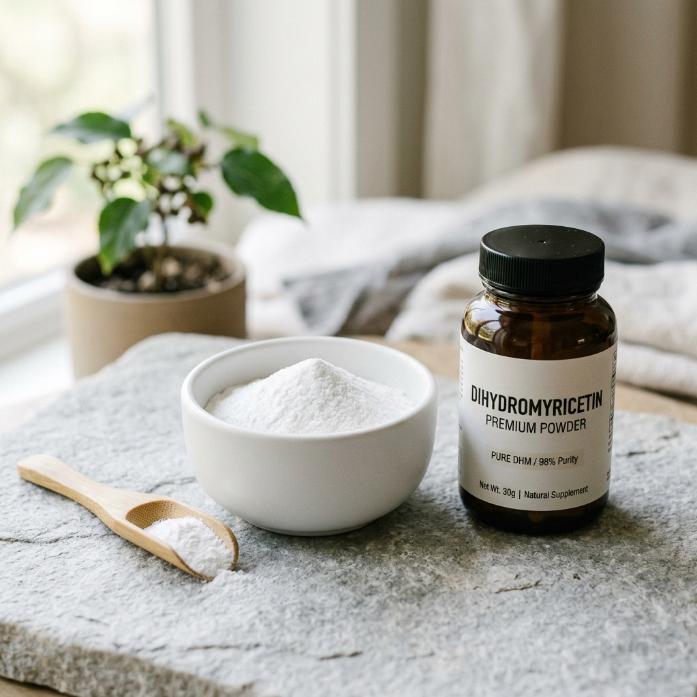
What is Dihydromyricetin? Beginning to Comprehend
Dihydromyricetin, or ampelopsin, is a bioactive, flavonoid, and a member of the flavanonol class. It has a molecular weight of 320.25 g/mol and is defined chemically as (2R,3R)-3,5,7-trihydroxy-2-(3,4,5-trihydroxyphenyl)-2,3-dihydrochromen-4-one. DHM has a strong safety profile and is a compound that exhibits a broad range of pharmaceutical properties and thus a candidate for a broad range of therapeutic areas.
What Are the Natural Sources of Dihydromyricetin?
Dihydromyricetin is primarily derived from Ampelopsis grossedentata (Vine Tea) and particularly its leaves. Recovery yields from this source can be as high as 39.4%. In addition to A. grossedentata the following sources contain DHM:
•Hovenia dulcis (Japanese raisin tree)
•Some Pinus and Cedrus species
•Myrica rubra
•Grapes, mulberries, and ginkgo biloba
DHM is present in high concentrations (30-40%) in the leaves of A. grossedentata.
Key Pharmacological Properties of Dihydromyricetin
What actions of dihydromyricetin have been recorded in the human body? A number of key pharmacological actions have been described in the literature as follows:
•Anti-inflammatory Effects: DHM decreases the activity of the TLR4/NF-κB signaling pathway and lowers serum levels of pro-inflammatory cytokines, e.g., IL-1β and TNF-α.
•Antioxidant Effects: DHM significantly decreases oxidative stress by clearing ROS and exerting antioxidants.
•Regulation of Metabolism: DHM manages diabetes through the PI3K/AKT/MAPK signaling pathway by reducing blood glucose levels and improving glucose metabolism.
•Protective Effects: DHM has protective effects on the liver, heart, kidneys, and other organs.
•Antitumor Effects: DHM has a variety of antitumor effects, such as the inhibition of proliferation, promotion of apoptosis, and autophagy induction.
Health Benefits: What Can Dihydromyricetin Do?
Liver Health and Alcohol-Related Support
DHM is very interesting because of it’s ability to help protect the liver. What exactly does dihydromyricetin do? Studies show that DHM greatly improves aminotransferase values and greatly decreases circulating lipids including LDL, VLDL, and triglycerides. It also helps by protecting the liver and by relieving the disruptions in ethanol-induced mitochondrial and lipid metabolism.
DHM is said to promote liver regeneration by miR-155-5p/SIRT1/VDAC1. In (NAFLD), DHM said to help by promoting microbiome balance and by inhibiting the pathways of inflammation.
Cardiovascular Benefits
DHM inhibits the hyperactivity of platelets, the main factor that drives the cardiovascular complications of type 2 diabetes, by inhibiting the generation of intraplatelet ROS. It decreases the markers of platelet activation, and also inhibits the aggregation of platelets.
Neurological and Cognitive Support
What do you think dihydromyricetin would do for brain health? It has revealed great potential to help with the treatment of disorders of the central nervous system. DHM is shown to have great value in the treatment of anxiety and in the improvement of memory, and cognitive function, as well.
Metabolic Health
DHM is also said to have great value in the treatment of diabetes and the complications that arise. It has also demonstrated potential in treating atherosclerosis and osteoporosis.
Safety and Bioavailability Considerations
Safety Profile
DHM has not been reported to be toxic in the conventional dose range. In rat studies, oral administration of 150–1500 mg/kg DHM showed no significant changes in physiological indexes such as body weight and temperature. Existing DHM preparations (200–300 mg per dose) demonstrate a good safety profile.
Limitations on Bioavailability
Like other natural flavonoids, Dihydromyricetin (DHM) faces common bioavailability limitations:
1. Low solubility in water
2. Low absorption
3. High first-pass metabolism
At room temperature, DHM has a solubility of 0.2mg/mL, which elevates to 0.9mg/mL at body temperature. There have been many efforts in the recent past to come up with alternative methods to formulate DHM to enhance bioavailability.
High Purity DHM: An Absolute Necessity
What is dihydromyricetin in a commercial sense? Quality and purity are important factors in estimating what dihydromyricetin is in commercial applications. High purity dihydromyricetin (≥98%) is derived from high standard purification and advanced extraction techniques, resulting in negligible impurities.
Why Choose B-Thriving for Dihydromyricetin (DHM)?
Dihydromyricetin (DHM) is an innovative high quality flavonoid, that we import from the leaves of a Chinese plant. The following are reasons for choosing us as your primary DHM supplier:
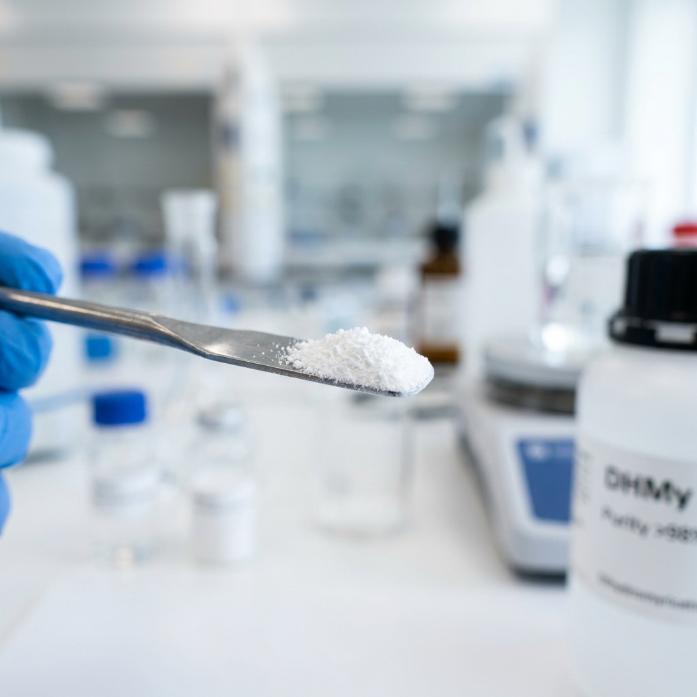
High Purity: Dihydromyricetin present in our product is 98% pure. Quality Control is fundamental. We use HPLC (High-Performance Liquid Chromatography) to guarantee the quality of products.
�� Product Information:
•Part used: Leaf
•Active ingredient: Dihydromyricetin 98%
•Testing method: HPLC
•Appearance: Pale yellow fine powder
�� Reliable Supply: We excel in supply chain management and enables us to stock Dihydromyricetin. While others fail to supply Dihydromyricetin, we succeed.
�� Application Support: Our team has a DHM application knowledge. We provide DHM for use primarily in functional formulations and supplements. We also support pharmaceutical applications.
�� Commitment to Quality: As your DHM supplier, you gain excellent products and services. It matters less what is dihydromyricetin; we know how it is made—if we were to be cutting corners, we wouldn’t be here.
Conclusion
Dihydromyricetin is a strong, natural flavonoid that possesses many pharmacological activities. It has a protective effect on the liver, supports the cardiovascular system, helps regulate the metabolism, and offers neuroprotection. As studies continue to expand the horizons of dihydromyricetin, so too does the need for premium DHM.
B-Thriving meets this demand as demonstrated by our 98% Pure DHM, high standards, and loyal clients. Clients expect a great product and our expertise and passion from our DHM offerings.
If you would like to learn more about Dihydromyricetin 98% (HPLC), and how we may help you with your future projects, contact us.
FAQs
Q1: What are the main health benefits of DHM?
DHM provides support for your liver, decreases inflammation, and counteracts oxidative stress. Additionally, benefits have been noted for metabolism, the cardiovascular system, and neuroprotection.
Q2: In what ways does DHM alleviate the impact of alcohol on the liver?
DHM positively affects the levels of liver enzymes (AST/ALT), reduces the accumulation of lipids, and lessens the effects of ethanol on mitochondrial dysfunction, thus enhancing the regeneration of the liver.
Q3: What is the acceptable standard of purity for DHM?
The standard of purity should be 98% or more, as products at this range will be more consistent in potency and will have fewer impurities.
Q4: What are the methods of extraction and assessment of quality of DHM?
DHM is extracted from the leaves of its source and purified using some of the more advanced extraction technologies. The assessment of quality is done using HPLC.
Q5: Is it acceptable to use DHM in functional beverages or as a supplement?
DHM can indeed be used as an ingredient in dietary supplements, energy drinks, and wellness products. While DHM is water-soluble, more recent techniques of formulation do address this issue.

