

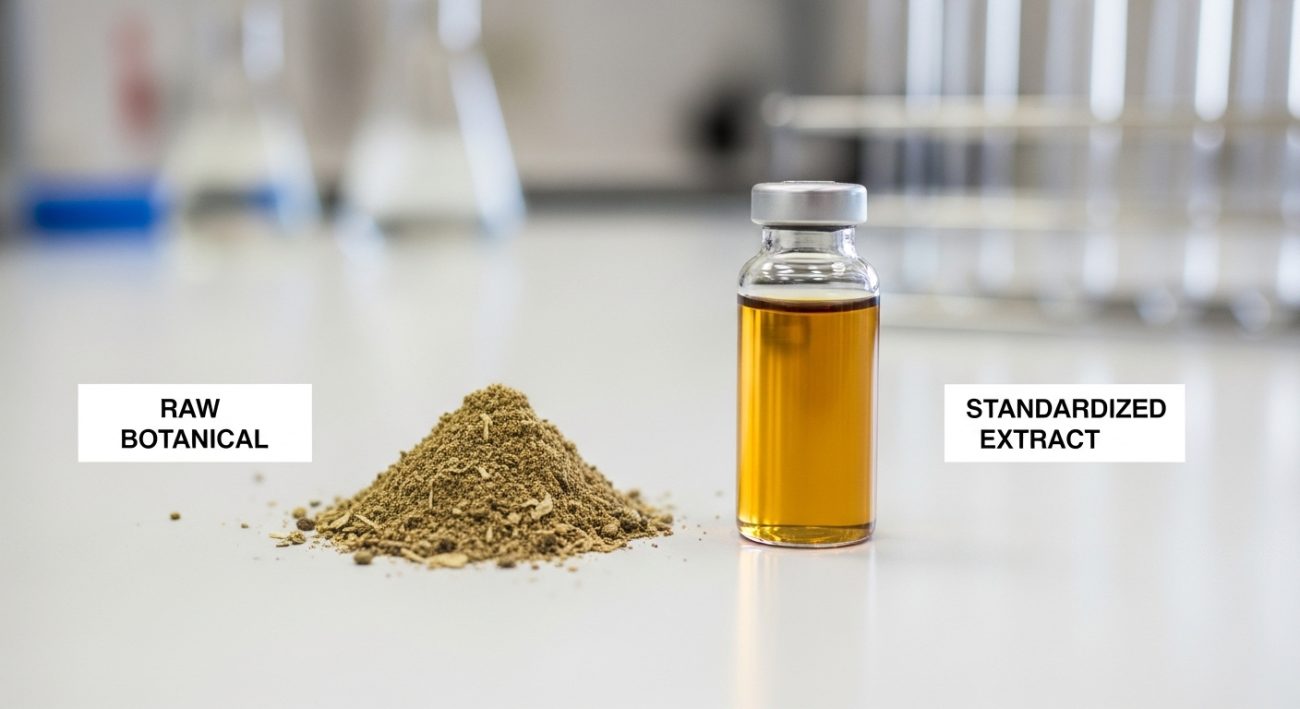
Standardized herb extracts generally cause fewer side effects than raw plant powders because they offer a predictable concentration of bioactive compounds. By removing unpredictable variations in potency and eliminating harmful contaminants like heavy metals or solvent residues, standardized extracts allow formulators to set precise safety margins. However, side effects can still occur if the dosage exceeds the established upper limit, if the extract interacts with other pharmaceuticals, or if the standardization process inadvertently concentrates specific alkaloids to toxic levels.
Why Standardization is Critical for Reducing Adverse Reactions
In the B2B botanical supply chain, “safety” is a byproduct of “predictability.” Raw herbal materials fluctuate in potency based on soil quality, harvest timing, and geographic origin. This variance makes it nearly impossible for a brand owner to guarantee a consistent safety profile for their finished product.
When a manufacturer uses a standardized herbal extract definition to guide their procurement, they are essentially buying a guarantee of chemical consistency. This consistency allows the QA/RA team to conduct accurate toxicological assessments. For example, knowing exactly what are marker compounds in herbal extracts enables a formulator to calculate the precise “No Observed Adverse Effect Level” (NOAEL) for a specific batch. Without this data, a product might vary from being ineffective to being potentially toxic between different production runs.
Common Side Effects of Standardized Herb Extracts: A Formulator’s Guide
While standardization improves safety, it does not eliminate the inherent biological activity of the plant. High-potency extracts can trigger physiological responses that, while intended in a therapeutic context, may be classified as side effects in a general wellness supplement.
The most frequent side effects reported by European consumers include gastrointestinal distress, mild allergic reactions, or headaches. From a manufacturing perspective, these are often linked to the specific benefits of using standardized herb extracts—namely, their high bioavailability. Because the body absorbs these concentrated compounds more efficiently, the window between a therapeutic dose and a reactive dose is narrower than with crude powders.
Understanding Bioactive Concentration and Dosage Thresholds
Formulators must respect the potency of modern extracts. For instance, understanding what does standardized to 95% curcuminoids mean is vital for safety. A 95% concentration is significantly more potent than the 3% found in raw turmeric root. If a developer uses a traditional raw-root dosage for a 95% extract, the risk of side effects like blood thinning or gastric irritation increases exponentially.
Precise dosing, supported by a rigorous Certificate of Analysis (COA), ensures that the final product remains within the safe daily intake limits defined by EFSA (European Food Safety Authority). Manufacturers must ensure their labeling reflects the actual bioactive content rather than just the total herb weight to prevent consumer over-consumption.
Solvent Residues and Contaminant-Induced Side Effects
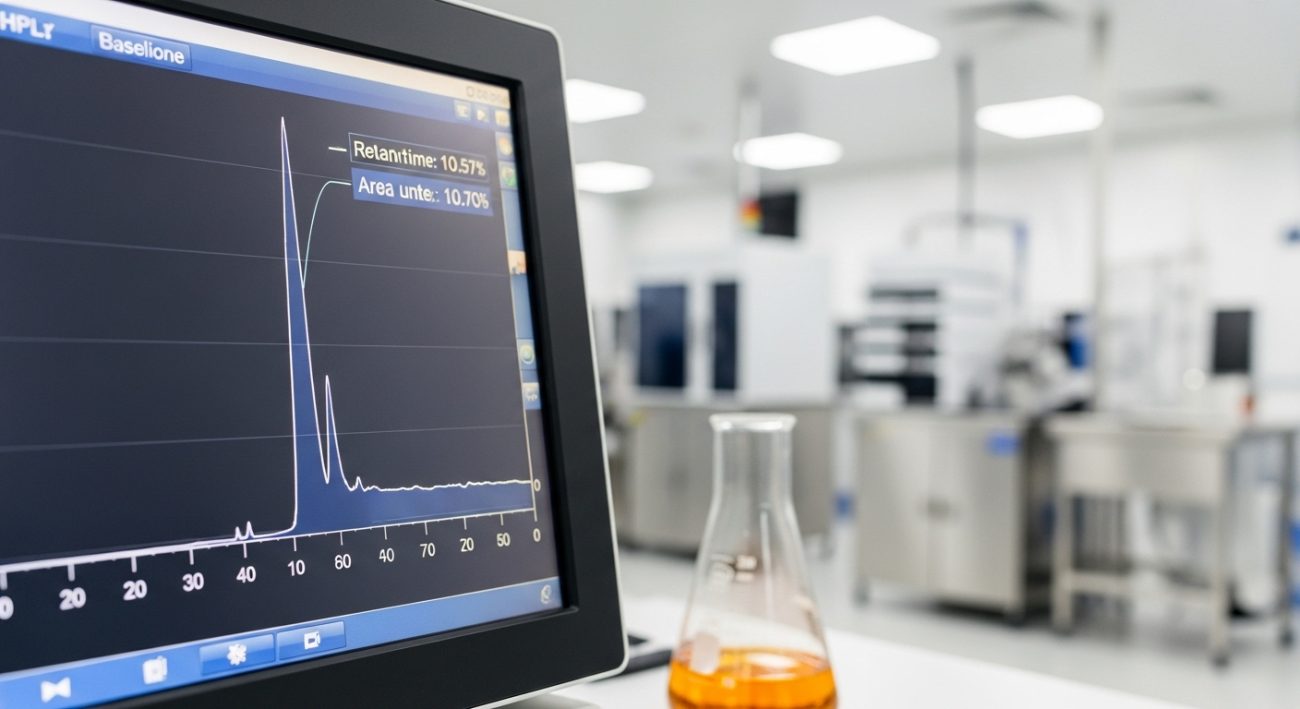
In many cases, what is labeled as a “herbal side effect” is actually a reaction to manufacturing impurities. Poorly controlled extraction processes may leave behind trace amounts of Class 1 or Class 2 solvents like hexane or methanol. These residues can cause nausea, dizziness, or long-term toxicity.
Furthermore, heavy metals (Lead, Arsenic, Mercury) and pesticide residues often co-extract with the desired bioactives. B-Thriving addresses this through a multi-stage herbal extract standardization process that includes advanced filtration and purification. By ensuring solvent residues are well below the parts-per-million (ppm) limits required by EU pharmacopeia, we help our partners minimize “accidental” side effects caused by poor quality control.
How to Evaluate Safety Data Sheets (SDS) for Botanical Raw Materials
A robust Safety Data Sheet (SDS) is the first line of defense for a B2B buyer. European procurement managers should look beyond the basic hazard identification and focus on Section 11 (Toxicological Information). This section must provide data on acute toxicity, skin irritation, and respiratory sensitization.
When sourcing from Xi’an B-Thriving, buyers receive a comprehensive documentation package. This package confirms that the extract has undergone rigorous testing for microbiological purity and chemical stability. Ensuring that your supplier provides a detailed SDS alongside the COA allows your regulatory team to clear the product for the European market with confidence. If you require specific stability data or an SDS for a custom formulation, you can request a technical consult with our RA team.
Minimizing Risks in Multi-Ingredient Nutraceutical Formulations
Many adverse reactions occur not from a single ingredient, but from the synergistic interaction of multiple botanical compounds. When two or more standardized extracts are combined, they may compete for the same metabolic pathways in the liver, such as the Cytochrome P450 enzyme system. This competition can slow down the clearance of the ingredients from the body, leading to an unintended buildup and subsequent side effects.
Product development leads should prioritize ingredients with a documented standardized herbal extract safety guide. This documentation helps in predicting how an extract will behave when paired with vitamins, minerals, or other botanicals.
Stability Testing and Shelf-Life Impact on Safety
Safety is not a static measurement; it changes as a product ages. If a standardized extract is not properly stabilized through microencapsulation or the addition of antioxidants, the bioactive compounds may degrade into secondary metabolites. These degradation products can sometimes be more reactive or irritating than the original compound.
We recommend that formulators perform accelerated stability testing on all new products. By choosing ingredients that have been processed with high-grade excipients and protective packaging, you ensure that the safety profile of your product at month 24 is identical to its profile on the day of manufacture.
Conclusion: Prioritizing Supply Chain Transparency for Consumer Safety
Managing the side effects of standardized herb extracts requires a shift in focus from “the plant” to “the process.” While botanicals are naturally occurring, their concentrated forms are technical ingredients that require precise handling, accurate dosing, and transparent documentation.
By partnering with a manufacturer that prioritizes HPLC-verified standardization and EU-compliant purity levels, you reduce the risk of adverse events and protect your brand’s reputation. Whether you are developing a new nutraceutical or pharmaceutical application, our team provides the technical data and high-purity ingredients necessary for a safe, effective launch.
Ready to verify the safety and purity of your next batch? Request a COA or Sample for Lab Testing Today.
FAQ: Botanical Extract Safety for B2B Buyers
Are standardized extracts always safer than raw plant powders?
Standardized extracts are generally safer because they provide a consistent, measurable dose of active ingredients, which prevents the accidental over-dosing associated with the natural variance of raw powders. They also undergo stricter purification to remove toxins and contaminants.
Can standardized extracts cause drug interactions?
Yes, because standardized extracts are highly concentrated, they can significantly affect how the body metabolizes certain prescription medications. Formulators must evaluate the pharmacokinetic profile of each marker compound to identify potential contraindications.
What documentation should I request to ensure extract safety?
You should always request a Batch-Specific Certificate of Analysis (COA), a Safety Data Sheet (SDS), and a Technical Data Sheet (TDS). These documents should confirm that the ingredient meets EU limits for heavy metals, pesticides, and solvent residues.
How does Bio-Thriving ensure the safety of its bulk extracts?
We utilize advanced HPLC and GC-MS testing to verify the concentration of active marker compounds and the absence of impurities. Every batch is produced under GMP-certified conditions to ensure it meets the strict safety requirements of the European pharmaceutical and nutraceutical markets.
Do standardized extracts lose their safety profile over time?
Extracts can become less safe if they are not stored correctly, as oxidation can lead to the formation of irritating degradation products. We provide stability data and recommend specific storage conditions to maintain the integrity of our ingredients throughout their shelf life.

