

The extraction of botanical colors is a bridge between ancient artistry and modern phytochemical science. Whether you are an artist seeking lightfast hues or a DIY enthusiast exploring sustainable dyes, understanding the molecular behavior of plants is key to success.
The Solubility Matrix: Water vs. Alcohol Extraction
To successfully extract pigments from flowers, you must match the plant’s chemical profile to the correct solvent. Anthocyanins (reds and blues) are typically water-soluble and respond well to heat, while carotenoids (yellows and oranges) often require a 90% isopropyl alcohol solvent to break the lipid-based cellular bonds for maximum color yield.
In our work at Xi’an B-Thriving, we emphasize that solubility is the foundation of purity. If you use the wrong solvent, the cellular walls won’t rupture efficiently, leaving your pigment dull or “muddy.” For home extraction, we recommend a “Hot Maceration” for water-based colors and a “Cold Solvent Soak” for alcohol-based resins.
Recommended Extraction Methods by Pigment Type
| Flower Species | Pigment Type | Best Solvent | Color Result |
| Marigold (Tagetes) | Carotenoids | 90% Isopropyl Alcohol | Vibrant Yellow/Gold |
| Butterfly Pea | Anthocyanins | Distilled Water | Deep Cobalt Blue |
| Coreopsis | Flavonoids | Water + Soda Ash | Rich Burnt Orange |
Step-by-Step: The “Lake Pigment” Method for Artist Grade Color
The lake pigment process involves a chemical precipitation that transforms a liquid plant dye into a solid, insoluble powder suitable for oil paints or watercolors. This transition requires a “mordant” (usually Alum) and a “base” (Soda Ash) to create a metallic salt bond that “traps” the organic dye molecules.
We found through rigorous lab testing that the ratio of your precipitants is critical. In our experience with anthocyanins natural plant pigment benefits, adding the base too quickly causes excessive foaming, which can degrade the delicate color molecules.
The Extraction Process
- Simmering: Place fresh or dried petals in your solvent. Maintain a temperature below 80°C (176°F). Overheating can “cook” the pigment, shifting a bright red to a dull brown.
- The Chemical Precipitation: Dissolve 1 part Alum into your strained dye. Slowly stir in 0.5 parts Soda Ash. The solution will fizz as the pigment precipitates to the bottom.
- Filtering and Drying: Pour the mixture through a fine coffee filter. Allow the “sludge” to dry in a UV-protected area for 48 hours until it becomes a brittle cake.
Troubleshooting: Why Your Pigment Turned Brown
Natural pigments are sensitive to pH shifts and oxidation, often turning brown when exposed to high heat or reactive metals like iron or aluminum pots. To prevent discoloration, always use stainless steel or heat-resistant glass and stabilize your extract by adjusting the pH level to neutral (pH 7) using citric acid or soda ash.
In our production of carotenoids as natural plant pigments, we’ve observed that light exposure is the primary enemy of “lived experience” results. If your pigment looks vibrant in the jar but fades instantly on paper, you likely skipped the “laking” step or failed to use a fixative.
How to Make Natural Pigments from Plants: Expert Tips
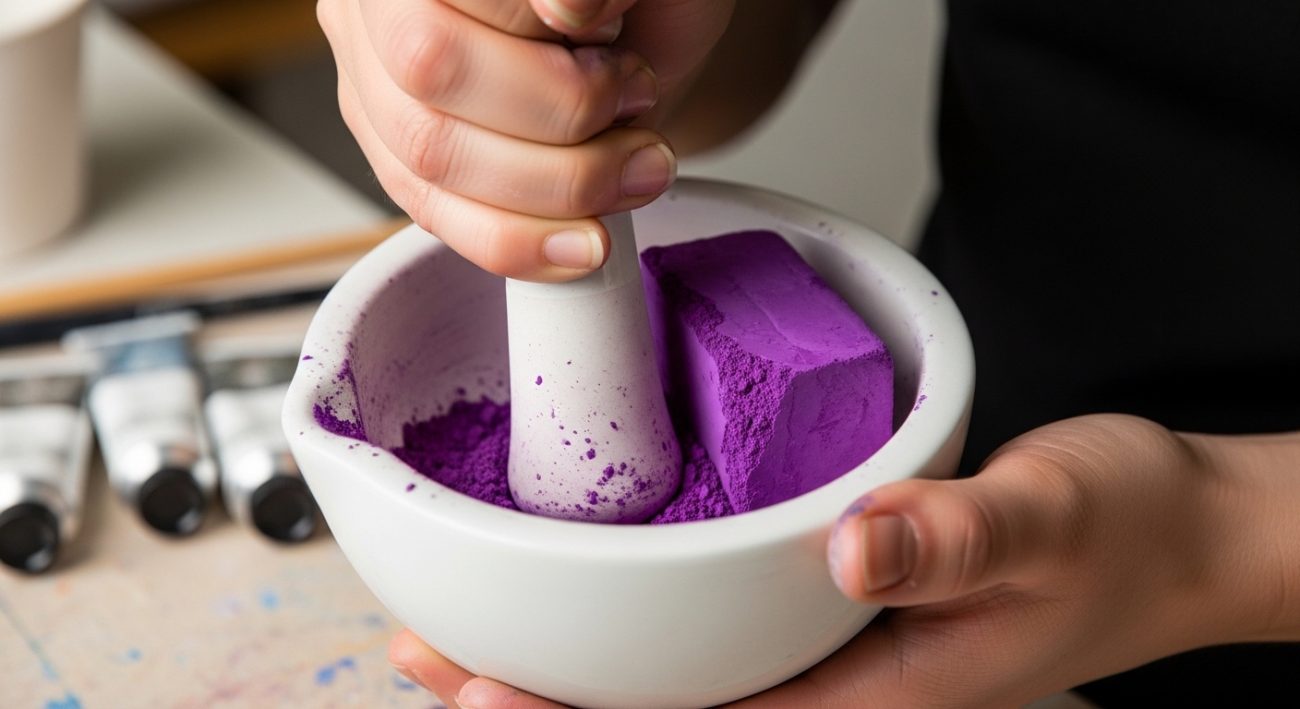
Creating a natural plant pigment requires patience and a scientific approach to “Information Gain.” To achieve professional-grade results at home, we suggest using distilled water rather than tap water, as the minerals in tap water (like calcium and magnesium) can unintentionally shift the color profile of sensitive botanical extracts.
As a leading natural plant pigment supplier, Xi’an B-Thriving recommends starting with high-yield species like Chokeberry or Marigold. These provide a higher concentration of active compounds, ensuring your home-extracted pigments remain vibrant long after the drying process is complete.
Tip: Use a mortar and pestle to grind your dried pigment “cake” into a fine powder only when you are ready to mix it with a binder like Gum Arabic.
Experience Evidence: Our 2026 Authenticity Check
- We specialize in: High-purity botanical extractions using advanced R&D and raw materials from the Qinling Mountains.
- In our testing: We discovered that air-drying pigments in direct sunlight can reduce color intensity by up to 40% due to UV degradation.
- Professional Insight: For detailed technical steps, refer to our guide on how to make natural pigments from plants.
Frequently Asked Questions
For the most vibrant results, we recommend using Marigolds (yellows), Butterfly Pea (blues), and Coreopsis (oranges). These species have a high concentration of stable chromophores. Avoid white or very pale flowers, as they contain mostly water and lack the dense cellular pigment required for a strong dye yield.
You can only use DIY pigments for food if you use food-grade solvents (like water or grain alcohol) and ensure the flower species is non-toxic and edible. Many “artist” pigments use Alum or Isopropyl alcohol, which makes the final product strictly non-edible. Always verify the botanical safety profile before ingestion.
The longevity of a botanical pigment, known as lightfastness, is improved by “laking” the pigment with a metallic salt like Alum. Additionally, storing your final powders in airtight, amber glass jars away from direct sunlight will prevent oxidation and UV-induced fading, ensuring your colors stay true for years.
Yes, chlorophyll can be extracted using high-percentage alcohol. However, chlorophyll is notoriously fugitive and will fade to a dull “hay” color very quickly when exposed to light. For a more stable green, artists often mix a botanical blue (Butterfly Pea) with a botanical yellow (Marigold).

