
Skincare enthusiasts will notice how ferulic acid is displayed in the lists of ingredients of popular high-end serums and moisturizers. Prominent ingredient? Or a buzzword? Certainly not the latter. Ferulic acid is a loving plant-based phenolic compound with a wide variety of persistence in grains, vegetables, and fruits. One of ferulic acid qualities is that it has a photoprotective and an antioxidant quality that already differentiates itself from most of the skincare ingredients. We will show you the science on how ferulic acid will benefit your skin in five transformative ways.
1. Powerful Antioxidant Protection
The most important quality of ferulic acid is the ability it has to neutralize free radicals. Free radicals are oxidizing destabilized molecules that are produced by the sun, environmental pollution, and stress, that in turn hurt the skin, break down collagen, and cause skin to age. Ferulic acid combats this issue in a couple of ways:
•Direct scavenging: The phenolic hydroxyl group in ferulic acid is able to oxidatively damage and spread free radicals and reactive oxygen species (ROS) by donating electrons.
•Pathway activation: Ferulic acid is able to move the Nrf2 in the cytoplasm and translocate it to the nucleus, thus, activating the antioxidant response element (ARE) and the protective gene (HO-1) is upregulated. This “dual-action” ensures that ferulic acid not only cleans free radicals but also strengthens and enhances the skin’s protective barriers.
According to some recent studies, Ferulic acid stands out from any other skincare product as it remains effective even in the presence of UVA rays. Ferulic acid becomes caffeic acid and retains its protecting quality to the cells.
2. UV Protection and Photodamage Prevention
Ferulic acid can’t replace sunscreen, but it helps boost UV protection. Ferulic acid also absorbs UV rays, preventing the UVB-induced forms of the main matrix metalloproteinases responsible for collagen and elastin degradation. It protects keratinocytes and fibroblasts from UVA damage that can cause mitochondrial damage and DNA lesions, and activates NF-κB and MAPK inflammatory responses. Using ferulic acid in your daytime products helps boost defense against UV and UVA damage.
3. Skin Brightening and Dark Spot Reduction
Frustrating lesions and uneven skin tone don’t have to be a problem thanks to ferulic acid’s safe and non-irritating characteristics. Ferulic acid works foaming to inhibit the enzyme tyrosinase which is the precursor to the formation of melanin, thus reducing the formation of melanin.
This has been shown in multiple studies:
•Ferulic acid, when tested in the B16F10 murine melanoma cell line, was found to be the most active phenolic compound and inhibited murine tyrosinase to cause a significant reduction in melanin.
•In a clinical trial with split face melasma, the side that was treated with ferulic acid showed a greater reduction of the melanin index and intensity of the pigment, and thus a greater fading of the melasma patches when compared to the side of the face that had other treatments.
•Ferulic acid derivatives inhibited melanocyte pigmentation in human skin cells showing a significant reduction in melanin in a dose-dependent manner and did not cause any toxicity to the cells.
Ferulic acid is a perfect option for those looking for a less irritating and effective brightening agent.
4. Anti-Aging and Collagen Preservation
Loss of collagen is just one cause of wrinkles and fine lines. Glycation is the alteration of proteins due to the bonding of sugar molecules to collagen and elastin. This causes the skin to harden and become inflexible. Ferulic acid aims to solve both of these problems.
•Protection of collagen: Collagenase (MMP-1) and hyaluronidase and both collagen and hyaluronic acid’s degradation are slowed down by ferulic acid, while also enhancing the synthesis of both forms. This keeps the skin plump and hydrated.
•Anti-glycation: Ferulic acid inhibits the formation of advanced glycation end-products (AGEs), and CML, reduces fructosamine, and inhibits the cross-linking of collagen which causes elastosis.
•Benefits of ferulic acid: In UV-B-activated CCD-986sk human dermal fibroblasts, Ferulic acid enhanced the synthesis of procollagen and hyaluronic acid, increased the deposition of tissue inhibitors of metalloproteinase, and inhibited the expression of MMP-1 and MMP-9.
Firm, elastic, and youthful skin is further enhanced by Ferulic acid.
5. Wound Healing and Skin Regeneration
Due to its properties, Ferulic acid is not limited to regular use for the care of the skin. It extends beyond and aids in skin repair and regeneration for the enhanced suspect of complete review of Ferulic acid and its skin repair processes 2024. This review describes the role of Ferulic acid in the synthesis of collagen, angiogenesis and re-epithelialization, in addition to its antioxidant, anti-inflammatory and antimicrobial effects.
In diabetic rat models, the use of ferulic acid in topical treatments stimulated the closure of wounds, increased the formation of granulation tissue, and promoted the deposition of collagen. It also decreased inflammation. These characteristics make ferulic acid an important component for formulations that target aging and also for post-procedure calming creams and repair-focused products. When your skin barrier is compromised, ferulic acid helps it bounce back faster.
Why Formulation Matters: The Remarkable CEF Synergy
Ferulic acid truly shines when paired with other antioxidants. In the classic CEF combination—15% vitamin C (L-ascorbic acid), 1% vitamin E, and 0.5% ferulic acid—ferulic acid stabilizes both vitamins, which are notoriously prone to oxidation. This triple-antioxidant network substantially amplifies UV photoprotection and is particularly effective at reducing thymine dimer mutations associated with skin cancer. Clinical expert opinion confirms that when combined with vitamin E and ferulic acid, vitamin C becomes eight times more effective.
Stability Challenges
It is worth noting that ferulic acid can be chemically unstable and prone to oxidation under high pH or light exposure. However, advanced formulation technologies—such as nanoencapsulation and low-pH hydrogel systems (below the pKa of ferulic acid)—have been shown to significantly improve its stability and controlled skin delivery.
Choose High–Quality Ferulic Acid from B–Thriving
To unlock these five powerful benefits, ingredient quality is non-negotiable. B-Thriving supplies premium ferulic acid for cosmetic and personal care formulations. To maintain consistency, purity, and performance in our products, we have set clear product specifications as follows:
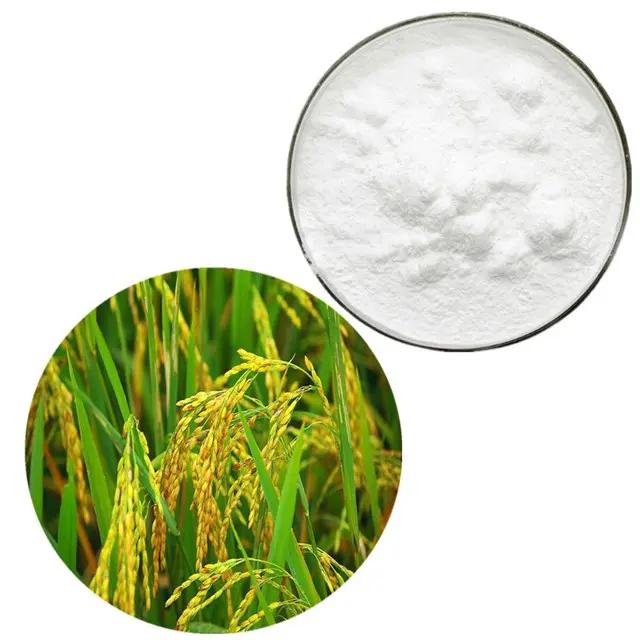
��Part Used: Bran
��Active Ingredient: Ferulic Acid 98%
��By choosing our company, you receive high-quality products and professional technical assistance.
If you are developing a brightening serum, an anti-aging cream, or a repair balm after medical procedures, B-Thriving offers dependable raw ingredients along with professional assistance to create safe, scientifically proven products. Contact our team now and allow ferulic acid to shine in your formula.
FAQs About Ferulic Acid in Skincare
Q1: Is Ferulic Acid safe for sensitive skin?
Ferulic acid has a good tolerance and is generally less irritating than many other active ingredients; however, you should start with a concentration of 0.5%–1% and perform a patch test.
Q2: Should retinol and ferulic acid be taken together?
Yes, ferulic acid is an excellent partner to retinol because it has antioxidant and anti-inflammatory properties. Ferulic acid and retinol should not be used together, ferulic acid should be used in the morning to protect from the sun’s UV rays and retinol should be used at night.
Q3: What is an appropriate concentration of Ferulic Acid in skincare?
Ferulic Acid has been shown to be effective at concentrations of 0.5% to 1%, particularly when formulated with C and E vitamins (the classic CEF formula).
Q4: Is Ferulic Acid fragile and likely to degrade?
Yes, when exposed to light, heat, or high pH, Ferulic Acid is likely to degrade; therefore you should seek low pH formulations with opaque, air-tight packaging. The stability of the ingredient is improved with advanced encapsulation and nano-delivery.
Q5: Can ferulic acid replace sunscreen?
Not at all. Ferulic Acid does not act as a UV filter like a sunscreen does. It may prevent some secondary damage caused by light. Ferulic acid gives some photoprotection, but should always be layered with a broad-spectrum sunscreen to ensure protection.

