
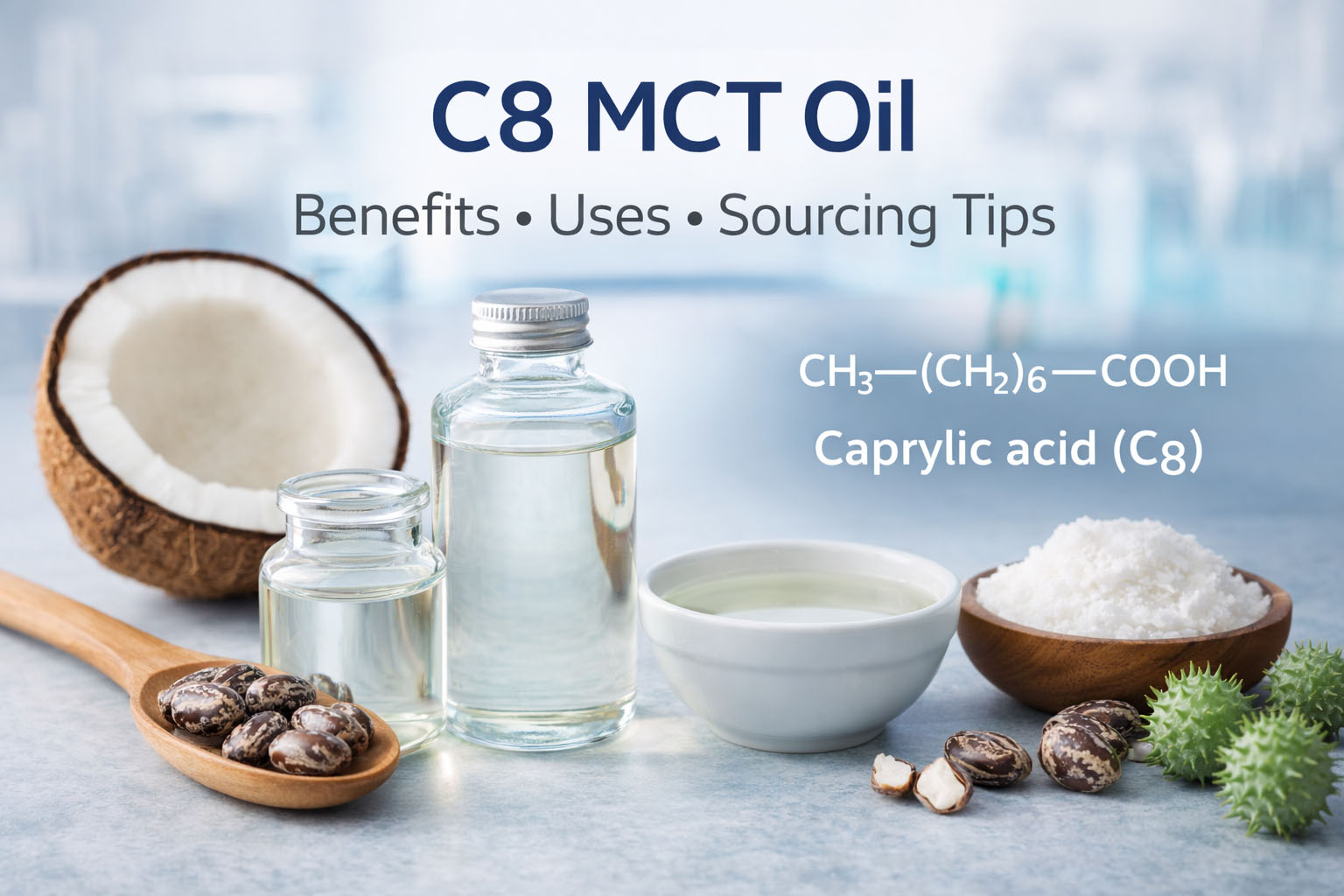
C8 MCT oil is a purified medium-chain triglyceride made primarily (or entirely) from caprylic acid (C8:0). It became popular because it digests quickly, supports ketone production faster than many longer fats, and works as a clean-tasting carrier oil in both nutrition and personal care applications. Kraft Chemical describes C8 MCT oil as an oil made from caprylic acid triglycerides sourced from coconut, often positioned for fast ketone support and easy digestion.
This article explains what C8 MCT oil is, how it differs from other MCT options, where it fits in real products, and what to check when sourcing.
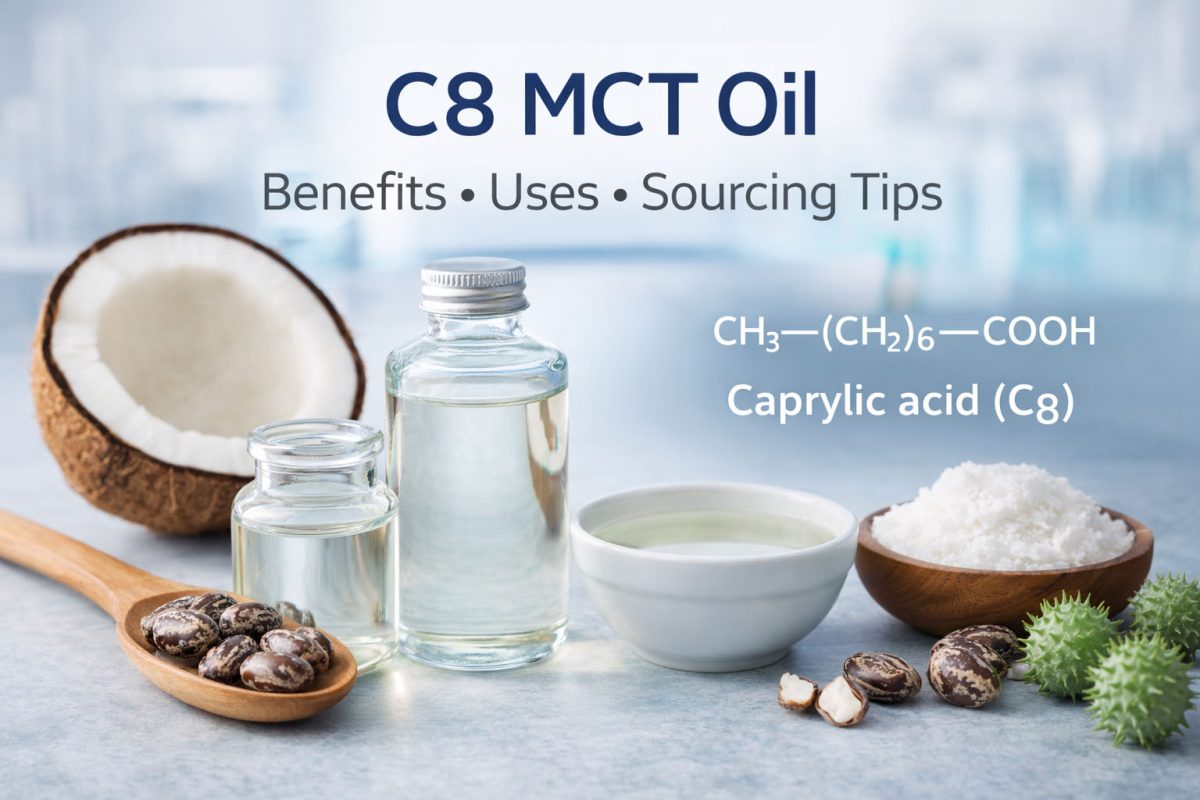
1) What “C8 MCT Oil” Actually Means
MCT stands for medium-chain triglycerides—triglycerides made with medium-chain fatty acids. In most nutrition and ingredient references, medium-chain fatty acids include caprylic (C8:0), capric (C10:0), and often lauric (C12:0), and they occur naturally in coconut, palm kernel, and dairy fats.
When a supplier labels a product “C8 MCT oil,” it usually means:
- The triglycerides are made largely from caprylic acid (C8), or
- The product is a high-C8 fraction compared with typical mixed MCT oils.
Kraft Chemical’s C8 overview explicitly frames C8 MCT oil as being made entirely from caprylic acid triglycerides.
Why this matters: the C8 percentage influences how quickly the oil is metabolized and how strongly it supports ketone production, compared with broader MCT blends. Research reviews note that ketosis response can vary based on MCT composition.
2) C8 vs “Regular” MCT Oil: What’s Different?
Many products on shelves are mixed MCT oils, most commonly:
- C8 + C10 blends (very common in nutrition)
- Sometimes C6/C8 blends, or blends that include C12 depending on labeling and region
Kraft Chemical contrasts C8 with other MCTs such as C6, C10, and C12 and positions C8 as a more concentrated ketone-supporting option.
A scientific review also highlights that MCT supplements can induce ketosis without strict ketogenic dieting, with results influenced by composition and dose.
Practical comparison (formulation + consumer experience):
- C8-dominant: often chosen when “fast ketone support” is the main message
- C8/C10 blends: commonly chosen for balance of performance, taste, and cost in mainstream products
- C12 (lauric): behaves more like a longer-chain fat in digestion, so it is often discussed separately from “pure MCT” positioning
3) Key Properties That Make C8 Useful
Fast metabolism and ketone support
Controlled studies have measured ketosis changes after C8 intake compared with other fats. For example, a Frontiers in Nutrition study examined ketosis after intake of coconut oil and caprylic acid (C8), using sunflower oil as a control.
A broader review in 2021 also discusses MCTs as ketogenic supplements and why dose and composition matter for ketone generation.
Neutral sensory profile in food systems
Many brands prefer C8 MCT oil because it can be formulated into drinks, powders, or capsules without heavy flavor. Kraft Chemical notes common delivery forms like liquids, powders, and capsules.
Carrier oil behavior (nutrition + cosmetics)
In topical applications, MCT-related triglycerides are often used for slip, spreadability, and as a solvent/vehicle for oil-soluble ingredients. Ingredient references describe caprylic/capric triglyceride as a widely used emollient/vehicle in cosmetics and personal care products.
4) Common Uses of C8 MCT Oil in Products
A) Supplements and functional nutrition
C8 MCT oil is commonly used in:
- ✅ Ketogenic powders and drink mixes
- ✅ Softgels and capsules (as the lipid fill)
- ✅ Ready-to-drink beverages (as part of a fat system)
- ✅ Meal replacement formats
The main buyer concerns here are purity, stability, oxidation control, and documentation.
B) Cosmetics and personal care
Many formulators use MCT-type triglycerides for:
- ✅ Lightweight emollience in creams and lotions
- ✅ Makeup textures (spreadability and feel)
- ✅ Hair oils and scalp products
- ✅ Fragrance and oil-soluble actives as a carrier phase
Kraft Chemical lists cosmetic and personal care uses for C8 MCT oil (creams/lotions, bath/body oils, makeup, shampoos/cleansers), reinforcing its role as a multifunctional base ingredient.
For INCI-driven formulations, caprylic/capric triglyceride references also describe broad use across many product types.
5) Safety and Tolerance Notes (for responsible content)
MCT oils are widely used, but tolerance can be dose-dependent. Many consumer resources advise starting with smaller amounts because rapid intake may cause gastrointestinal discomfort for some people (especially when new to MCT).
For B2B brands, this usually translates into:
- Clear serving guidance
- Sensible dosage design per format
- Good mixing directions (for powders and beverages)
(For consumer-facing claims, keep language careful and compliant in each target market.)
6) Sourcing Checklist: What to Ask Before You Buy
When purchasing C8 MCT oil for scale production, these checks reduce reformulation and quality issues:
- Fatty acid distribution (C8 %, C10 %, others)
Ask for a GC profile and set acceptance ranges. - Origin and feedstock clarity
Many products are coconut-derived; make sure the source is documented and consistent. - Oxidation and stability markers
Request typical specs like peroxide value and sensory requirements (odor/color). - Regulatory + documentation pack
COA, SDS, allergen statements, non-GMO/organic claims if needed, plus heavy metals and microbiology where relevant to your category. - Format support
If you need powders, confirm the carrier system and flow properties; Kraft Chemical notes C8 appears as powder, liquid, or capsule products in the market.
7) How Biobthriving Brands Often Use C8 MCT Oil With Botanicals
Many supplement and beauty brands pair carrier oils with botanical actives to improve processing, dosing, and sensory feel. In practice, C8 MCT oil is often chosen as a clean carrier phase for oil-soluble ingredients, while plant extracts help create differentiation in positioning and product story.
If you’re planning content for Biobthriving’s site, a strong internal linking approach is:
- C8 MCT Oil guide → botanical extract category pages (skin, hair, metabolic support themes)
- C8 MCT Oil guide → ingredient documentation / QC capability page (COA, specs, testing)

