
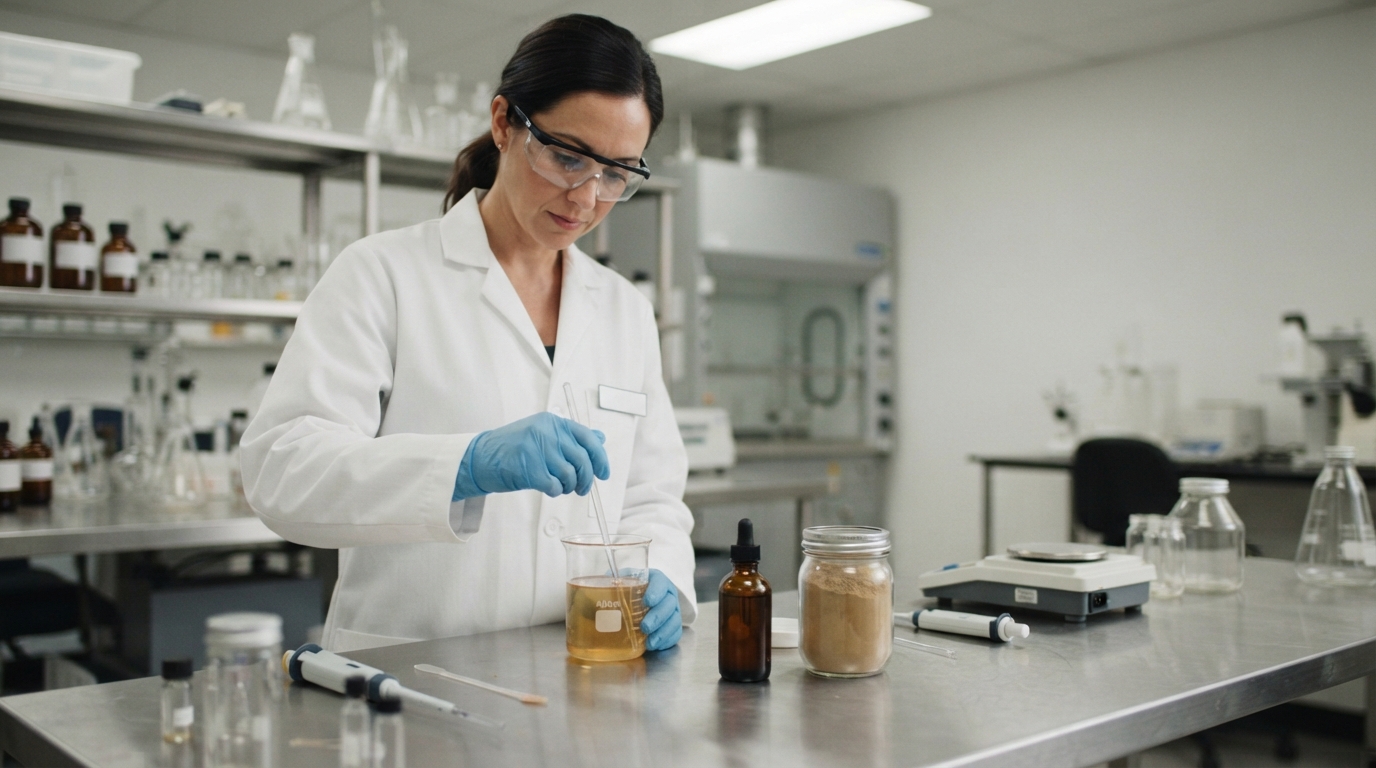
Botanical ingredients for functional beverages are plant-derived powders, extracts, or standardized preparations selected for a specific functional position and for their behavior in a water-based beverage system. The sourcing question is not only which plant to use, but whether a particular ingredient form, specification, and batch will survive formulation, processing, and shelf life without creating flavor, clarity, color, or compliance problems. This guide gives formulators, product developers, and sourcing teams a practical framework for that decision.
Plant extracts already have a wide role across food categories, and this guide narrows the focus to one application within the broader topic of plant extracts applications in food industry (inferred): functional beverages.
What Are Botanical Ingredients for Functional Beverages?
In this context, a botanical ingredient is any ingredient derived from a plant and used to contribute a functional, flavor, or color position to a beverage. The term covers several different forms:
- Whole botanical powders, such as dried and milled herbs or fruit powders.
- Botanical extracts, produced by extracting plant material with water, solvent, or another method.
- Standardized extracts, which are adjusted to contain a defined level of a marker or active compound.
- Liquid extracts, which may be solutions, suspensions, or concentrates.
- Water-dispersible, emulsified, or encapsulated formats designed for beverage compatibility.
The functional beverage category includes ready-to-drink teas, functional waters, energy drinks, sports beverages, juice-style drinks, and concentrated shots. That range matters because the same botanical can perform very differently in a clear water than in a cloudy, flavored RTD tea.
Why Beverage Sourcing Is Different from Supplement Sourcing
A botanical that works well in a capsule can fail in a beverage. Beverage systems are water-based, exposed to taste, and usually require specific visual and physical properties throughout shelf life. The main differences include:
- Solubility and dispersibility. The ingredient must dissolve or remain evenly suspended in a liquid.
- Sensory exposure. The consumer tastes bitterness, astringency, aroma, and mouthfeel directly.
- Clarity and sedimentation. Clear products will expose haze, particles, or precipitation.
- Processing conditions. Heat, shear, pH, and oxidation can affect botanical compounds.
- Stability over time. Color, flavor, and active-compound levels must remain acceptable until the end of shelf life.
- Regulatory context. A botanical used in a conventional beverage is assessed differently from a botanical used in a supplement.
That is why a sourcing decision should begin with the beverage format and intended use, not just with the plant name.
Botanical Ingredient Formats: Which One Fits Your Beverage?
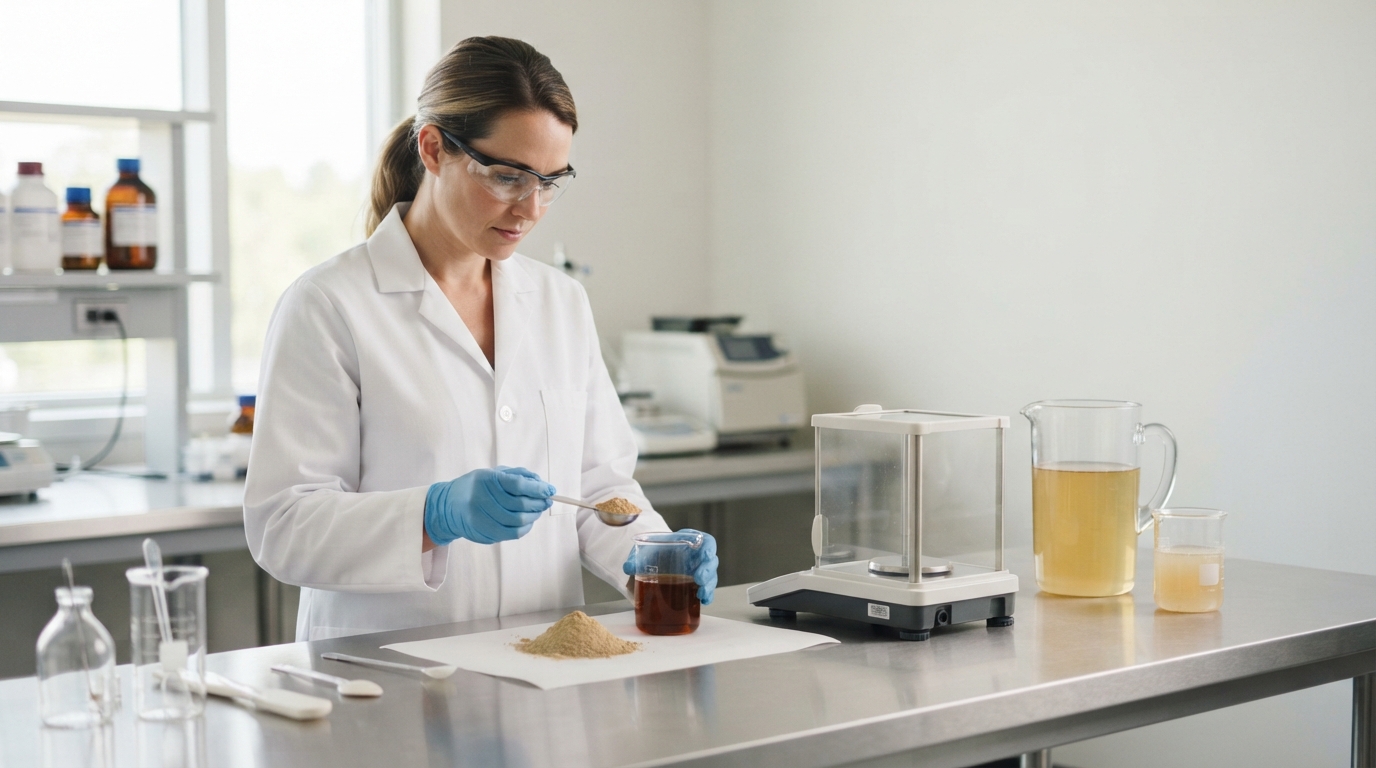
The format of the botanical ingredient determines much of its behavior in the final drink. There is no universal best format; the right choice depends on the beverage type, the desired label, the dosage, and the processing conditions.
| Format | What It Is | Beverage Fit | Common Cautions |
|---|---|---|---|
| Whole botanical powder | Dried and milled plant material | Best for opaque or textured products; can work in smoothies, juice blends, or “botanical cloud” beverages | Low solubility; sediment; strong flavor and color; variable potency |
| Traditional extract | Concentrated preparation from plant material | More practical than whole powder for filtered products; suitable for teas and flavored waters | Still needs solubility and clarity checks; solvent and extraction method matter |
| Standardized extract | Extract adjusted to a specified marker range | Preferred when consistent dosing and batch identity are important | Requires a defined marker, an analytical method, and reliable documentation |
| Liquid extract | Extract supplied as a liquid | Convenient for dosing, especially in manufacturing | Solvent type, sediment, concentration, and pH compatibility need verification |
| Water-dispersible, emulsion, or encapsulated format | Specialty form designed for beverage systems | Useful for poorly soluble compounds or for masking flavor | Can add cost, cloudiness, or labeling considerations; stability must be confirmed |
When a product brief calls for a clear beverage, a true solution or a fine dispersion is usually needed. When the product is naturally cloudy or juice-based, more formats become viable.
Matching Botanical Ingredients to Beverage Objectives and Formats
The market commonly groups botanicals by consumer positioning. These are not clinical claims; they are product-positioning categories used in beverage development.
| Objective | Typical Botanical Examples | Common Beverage Formats | Formulation Caveat |
|---|---|---|---|
| Energy and focus | Green tea, guarana, ginseng | RTD tea, energy drinks, energy shots | Natural caffeine levels and bitterness need control |
| Calm and relaxation | Lemon balm, chamomile | Herbal tea, relaxation water, evening shots | Sensory profile must fit a light flavor system |
| Daily wellness and immune-support positioning | Elderberry, echinacea, ginger, turmeric | Functional juice, wellness water, RTD tea | Color, spice heat, and pH stability vary widely |
| Flavor and color | Hibiscus, turmeric, spirulina, beetroot | Citrus water, botanical tea, functional lemonade | Natural colors are sensitive to pH, light, and oxidation |
These examples appear regularly in trade coverage of botanical beverage development, for instance in Beverage Industry’s review of botanical and adaptogen ingredients. The article should not be read as a complete list of approved or efficacious ingredients.
Energy and Focus Botanicals
Green tea, guarana, and ginseng are often associated with energy and focus positioning. These ingredients can contribute natural caffeine and polyphenols, but they also bring bitterness, astringency, and variable color.
If you are evaluating tea-derived materials, the green tea extract page on this site is a useful reference for that specific ingredient family.
Calm and Relaxation Botanicals
Lemon balm and chamomile are common examples for relaxation positioning. These ingredients tend to be milder in flavor, but they still need sensory and stability testing in a water-based product.
Daily Wellness and Immunity Botanicals
Elderberry, echinacea, ginger, and turmeric are frequently positioned for daily wellness or immune support. Formulators should be careful to separate the desired positioning from regulated health or disease claims. These botanicals also vary in color intensity, pH sensitivity, and flavor impact.
Flavor and Color Botanicals
Some botanicals are selected partly for visual appeal. Hibiscus provides a red-to-purple color, turmeric a yellow color, and spirulina a blue-green color. Beetroot and other anthocyanin-rich plants are also common in natural color systems.
For formulators exploring natural color sources, B-Thriving’s botanical pigment supplier page describes the company’s plant-derived pigment category.
Technical and Sensory Considerations for Beverage Botanicals
The practical success of a botanical ingredient depends on how it behaves in the actual beverage system. Four questions should be answered before the ingredient reaches production:
- Does it dissolve, disperse, or settle?
- Does it create bitterness, astringency, or an unpleasant aroma?
- Does it change the color or clarity of the drink?
- Does it remain stable through processing and shelf life?
How Soluble Does a Botanical Ingredient Need to Be?
True solubility is not the same as dispersibility. A powder might disperse in water well enough for an opaque beverage, but the same material could cause haze or sediment in a clear product.
For clear beverages, the ingredient should either form a true solution or be processed into a water-dispersible format. For cloudy or juice-style products, a fine suspension may be acceptable. The safest approach is to ask the supplier for the particle size, solubility or dispersibility data, and the recommended beverage-use level before scaling a formula.
How Do Bitterness and Astringency Affect the Formula?
Many botanical compounds, especially polyphenols and alkaloids, contribute bitterness, astringency, or drying mouthfeel. Flavor systems can help, and a carefully selected natural sweetener can balance the taste profile without changing the botanical positioning.
The key is to test the ingredient at the intended use level, not just taste the raw powder or extract. Bitterness that is acceptable in a concentrated shot may be unpleasant in a lightly flavored water.
How Do Color and Clarity Constraints Change Ingredient Selection?
Color is often the first visual signal of quality. Botanical pigments such as anthocyanins, curcumin, and chlorophyll can create attractive colors, but they can also shift with pH, fade under light, or oxidize over time.
For a clear beverage, a strongly colored botanical may be unsuitable unless the color is part of the product identity. For an opaque or naturally colored beverage, the same botanical may be a useful dual-purpose ingredient. Always request color-stability data for the exact beverage pH and packaging conditions.
Botanical Extract Specifications: What the Data Sheet Really Means
A specification sheet can be misleading unless the reader understands the units and the method behind them. Many sourcing problems come from confusing extract ratio, potency percentage, and physical specifications.
| Specification Type | Example | What It Means | What It Does Not Mean |
|---|---|---|---|
| Extract ratio | 10:1 | Ten parts of starting botanical material were used to produce one part of extract | It does not tell you the active-compound content |
| Potency or standardization percentage | 2% marker | The extract contains 2% of a specified marker measured by an analytical method | It does not describe the processing ratio |
| Particle size or mesh | 80 mesh | The powder passes a particular screen size | It does not guarantee solubility or dispersion |
| Moisture content | ≤ 5% | The powder contains a maximum percentage of moisture | It does not indicate active-compound concentration |
| Shelf life | 24 months | The supplier expects the ingredient to remain within specification for that period | It does not predict finished-beverage shelf life |
The distinction matters because a high extract ratio can sound powerful while actually containing a very low level of the compound responsible for the beverage position.
What Is a Standardized Extract?
A standardized extract is a botanical extract that has been adjusted or selected to contain a defined level of one or more marker compounds. The advantage is batch-to-batch consistency: each batch should meet the same specification when tested by the stated analytical method.
According to the NIH Office of Dietary Supplements, standardization is an important concept when evaluating botanical products, because methods and marker choices can vary between manufacturers.
Extract Ratio vs Potency Percentage: What’s the Difference?
Extract ratio and potency percentage are frequently confused.
An extract ratio, such as 10:1, describes the concentration of plant material into extract during manufacturing. It tells you how much starting botanical was used, but it does not tell you how much of a specific marker is present.
A potency or standardization percentage describes the measured content of a specified compound in the final product. It is the value that matters for dosing consistency.
If a supplier provides only an extract ratio, ask for the analytical marker, the assay method, and the specification range.
CoA vs TDS: The Documents That Verify a Botanical Ingredient
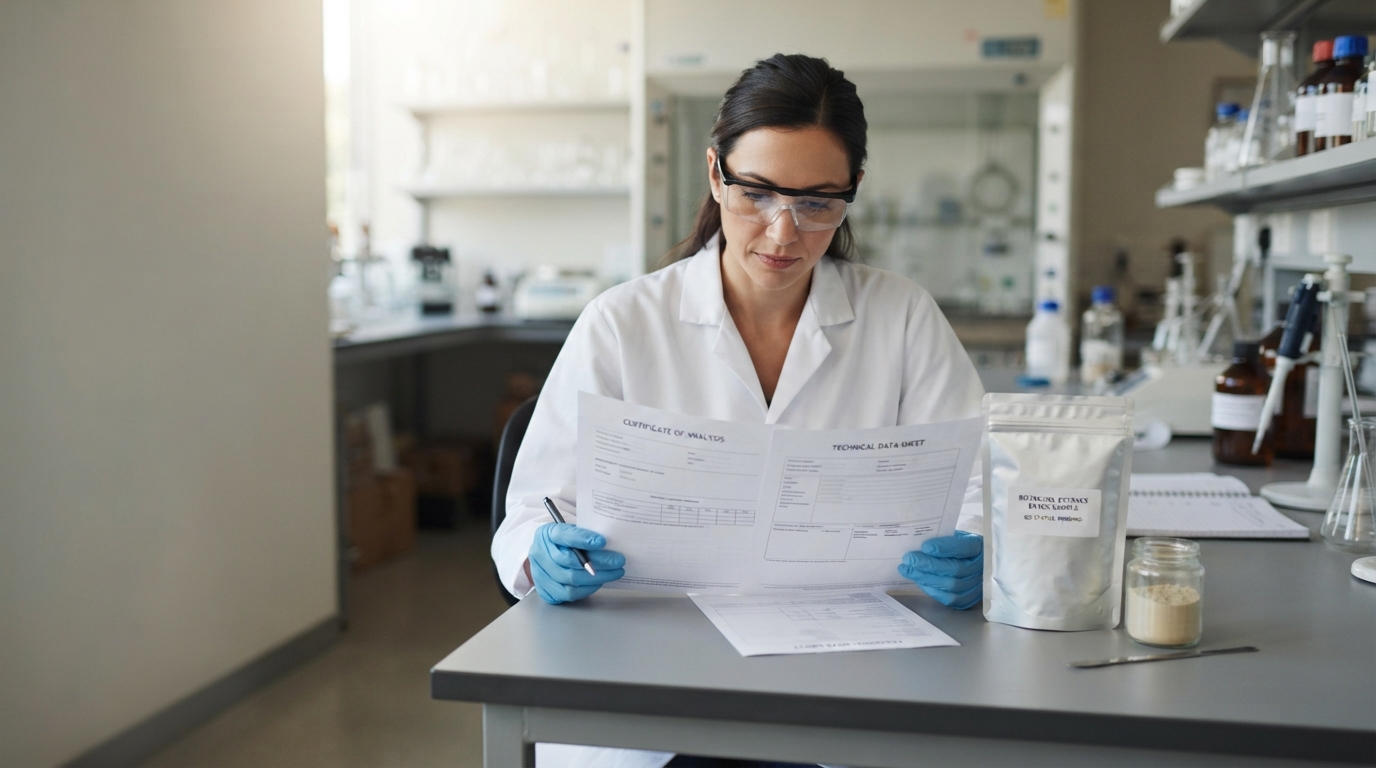
Two documents serve different purposes in botanical procurement.
| Document | Scope | What It Typically Includes | When You Need It |
|---|---|---|---|
| Certificate of Analysis | Batch-specific | Identity, assay, marker concentration, moisture, microbiological results, heavy metals, pesticide residues, batch number | Before approving a specific delivery or production batch |
| Technical Data Sheet | Product-specific | Physical description, extract ratio, particle size, solubility, recommended storage, shelf life | During qualification and for general handling information |
A CoA is not a substitute for a TDS, and a TDS is not a substitute for a CoA. The TDS describes what the product is in general; the CoA verifies what a specific batch actually measured.
Additional testing methods, such as high-performance liquid chromatography (HPLC) or UV-spectrophotometry, should be linked to the marker being measured. The method must be appropriate to the compound and stated clearly on the document.
Which Tests Should a CoA Include for a Beverage Ingredient?
A complete CoA for a beverage botanical should include or reference:
- Identity of the botanical material.
- Assay or marker concentration with the analytical method.
- Physical characteristics such as appearance, particle size, and moisture.
- Microbiological limits relevant to a beverage ingredient.
- Heavy metals, pesticide residues, and other contaminants.
- Adulterant screening where applicable.
- Batch number and manufacturing date.
- Method reference, approval signature, and issue date.
This checklist is not a legal standard. It is a practical baseline for evaluating whether a supplier has the documentation needed to support a beverage formulation.
Regulatory Considerations for Botanical Ingredients in Beverages
Regulatory review should begin before the ingredient is selected, not after the formula is finalized.
In the United States, botanical substances added to conventional foods and beverages may require evaluation under the Federal Food, Drug, and Cosmetic Act. The U.S. Food and Drug Administration’s guidance on substances added to food explains that a substance must be used in accordance with an applicable food additive regulation or be generally recognized as safe for the intended use, depending on the circumstances.
In the European Union, botanical preparations intended for food-supplement or beverage use may require a safety assessment. The European Food Safety Authority’s guidance on botanicals emphasizes the importance of the preparation type, exposure, and possible interactions.
In practice, the regulatory path depends on:
- The botanical identity and the part of the plant used.
- The extraction solvent and process.
- The intended use and use level.
- The target market.
- The exact claims made on the label.
- Whether the botanical is a traditional food ingredient or a novel addition.
A responsible supplier should be able to describe the regulatory status of its ingredient for the intended use. Final approval decisions should always be confirmed with qualified regulatory counsel for each target market.
How to Evaluate a Botanical Ingredient Supplier for Beverage Projects
Supplier evaluation should be treated as a staged process, not a single conversation.
- Define the specification first. Confirm the functional position, beverage format, use level, physical form, and target markets.
- Shortlist ingredient formats. Choose the format that fits the beverage’s clarity, flavor, and processing requirements.
- Request documents. Ask for the TDS, a sample CoA, the analytical method, and any stability data.
- Run a lab-scale trial. Test solubility, flavor, color, clarity, and process compatibility at the intended dose.
- Evaluate multiple batches. One good sample proves little; batch consistency is the real test.
- Check the commercial terms. Confirm MOQ, lead time, packaging, storage requirements, and after-sales support.
For a broader view of certifications and buyer expectations, B-Thriving’s guide to certifications when sourcing plant extracts is a useful companion document.
Questions to Ask Before You Request a Sample
- Which plant species and plant part are used?
- What extraction solvent or production method is used?
- What is the active marker or standardization basis?
- What assay method is used for the marker?
- What is the physical form and particle size?
- Is the ingredient soluble or dispersible in water at the intended dose?
- What flavor, bitterness, astringency, or color can we expect?
- What is the recommended use level?
- What documentation will accompany the sample?
- What is the regulatory status for the intended beverage use?
- What is the sample size, MOQ, and lead time?
If the supplier cannot answer these questions clearly, the ingredient is probably not ready for beverage development.
Common Sourcing Mistakes to Avoid
- Confusing extract ratio with potency. A 20:1 extract is not necessarily stronger in active compounds than a 4:1 extract.
- Assuming an ingredient is soluble. Solubility must be tested in the actual beverage system, not assumed from a datasheet.
- Skipping a sensory trial. Bitterness, astringency, and aroma can appear at levels that are unacceptable in the finished drink.
- Ignoring clarity and sedimentation. A fine powder that settles overnight will create a visual defect in a packaged beverage.
- Accepting a vague CoA. The CoA should identify the batch, the marker, the method, and the results.
- Evaluating only one batch. A single sample cannot confirm batch-to-batch consistency.
- Overlooking color stability. A beautiful botanical color can shift dramatically with pH, heat, and light.
- Choosing on price alone. The cheapest ingredient is rarely the cheapest to formulate successfully.
A Formulator’s Botanical Sourcing Checklist
| Category | What to Verify |
|---|---|
| Product objective | Functional position, beverage format, target market, and label claims |
| Botanical identity | Plant species, plant part, source, and intended use |
| Ingredient form | Powder, extract, standardized extract, liquid, or encapsulated format |
| Sensory profile | Bitterness, astringency, aroma, flavor, and mouthfeel |
| Technical performance | Solubility, dispersibility, clarity, particle size, pH, and process stability |
| Specification | Potency %, extract ratio, marker identity, moisture, and shelf life |
| Documentation | TDS, batch-specific CoA, analytical method, and traceability |
| Regulatory status | Food additive, GRAS, novel-food, or equivalent status for the target market |
| Commercial terms | Sample size, MOQ, lead time, packaging, and storage conditions |
This checklist can be used at the beginning of a project to structure the brief, and again before issuing a purchase order.
Starting Your Botanical Sourcing Project
A botanical ingredient is only suitable for a functional beverage if it performs in the product, not just on paper. Start by defining the beverage objective, then move through ingredient form, sensory and technical testing, documentation review, and supplier qualification. That sequence avoids the costly mistake of selecting a botanical for its marketing story and then discovering that it cannot survive a water-based formula.
B-Thriving is positioned as a supplier of herbal extracts, APIs, and natural ingredients, with website coverage of botanical extracts, natural sweeteners, botanical pigments, and related sourcing topics. The natural sweetener and green tea extract pages provide additional reference points for two categories that often appear in functional beverage work, and the botanical pigment supplier page covers natural color considerations.
Use the checklist above to define your requirements, then request the relevant specifications and samples from the supplier. A material that comes with a clear technical file, a batch-specific CoA, and useful formulation guidance is far more likely to make it from bench to bottle.

