
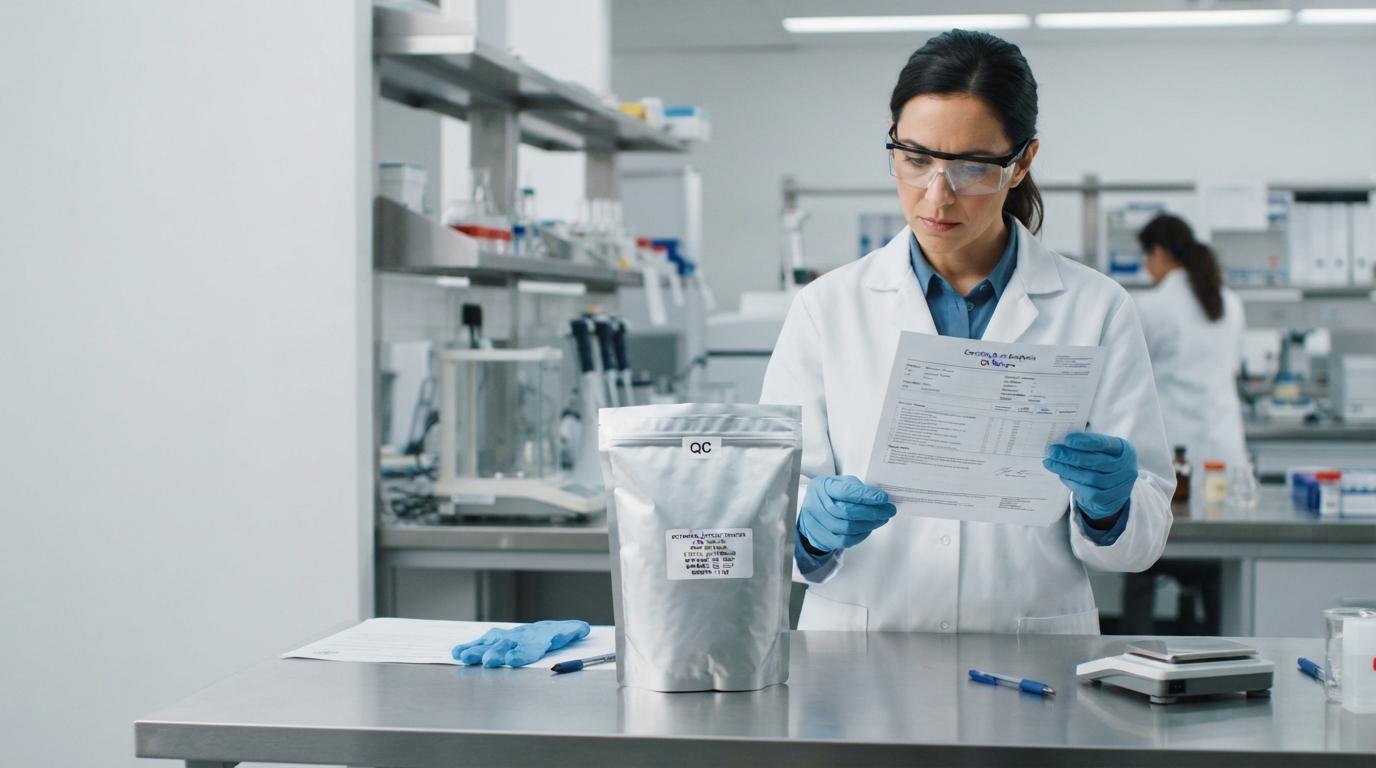
A botanical extract CoA supplier is a supplier that can provide a current, batch-specific Certificate of Analysis (CoA) for the botanical extract you are buying. That CoA should identify the material, list applicable specifications and test methods, report actual results, and trace the extract to the exact lot being supplied.
For B2B buyers, the CoA is the most important document in the sourcing process. It tells you whether the extract matches your specification, whether the active or marker compounds are within range, and whether contaminant testing was performed. But a CoA is only useful if you can verify it against your own requirements. This guide explains what to check, which other documents you need, and what to ask a botanical extract supplier before ordering.
What a Certificate of Analysis (CoA) Should Include for Botanical Extracts
A useful CoA is more than a form with a few test results. It should allow a qualified reviewer to confirm that the tested material is exactly the product you intend to buy and that the batch meets agreed specifications.
At a minimum, a botanical extract CoA should include:
- Product identity — the botanical name (Latin binomial), plant part used, extract form, and any standardization claim.
- Batch number — so the document can be linked to a specific production lot and shipment.
- Manufacture date and retest or expiry date — so you know the document is current and the material is within its valid storage window.
- Specification and results — the acceptance limit and the actual measured value for each test.
- Test methods — the analytical technique used (for example, HPLC or UV/Vis) and, where useful, the method reference.
- Identity tests — confirming the botanical is the species named on the label.
- Assay or potency tests — quantifying the specified active or marker compound.
- Contaminant tests — covering applicable heavy metals, microbiology, pesticide residues, and residual solvents.
- Authorized signatory and issue date — so the document has a clear owner and is not a stale or recycled file.
Regulatory guidance in several markets supports the same principle: a certificate of analysis should clearly identify the material, the laboratory or supplier issuing it, the tests performed, the methods used, the numerical results, and the approval date. For example, Health Canada’s guidance on active pharmaceutical ingredient certificates of analysis describes those expectations in the context of GMP-compliant supply.
CoA vs. TDS vs. SDS vs. Specification Sheet
Buyers often receive several documents from a supplier. Each one has a different purpose.
| Document | What It Is | Typical Contents | When to Request It |
|---|---|---|---|
| CoA (Certificate of Analysis) | Batch-specific test results | Identity, assay, contaminants, methods, batch number, dates, signatory | Before accepting a specific batch |
| TDS (Technical Data Sheet) | Product-level technical specification | Physical and chemical characteristics, solubility, particle size, moisture, packaging, storage | When evaluating the product for a formulation |
| SDS (Safety Data Sheet) | Safety and handling information | Hazards, first aid, transport, storage, disposal | When receiving the material or reviewing workplace safety |
| Specification Sheet | Agreed acceptance criteria | Limits for identity, assay, impurities, and physical properties | When negotiating a supply agreement or quality agreement |
A CoA answers the question “What was in this batch?” A TDS answers “What is this product generally and how should it be handled?” A specification sheet answers “What limits must every batch meet?” Keep these documents separate in your supplier review.
How to Verify a Supplier’s CoA Against Your Specification
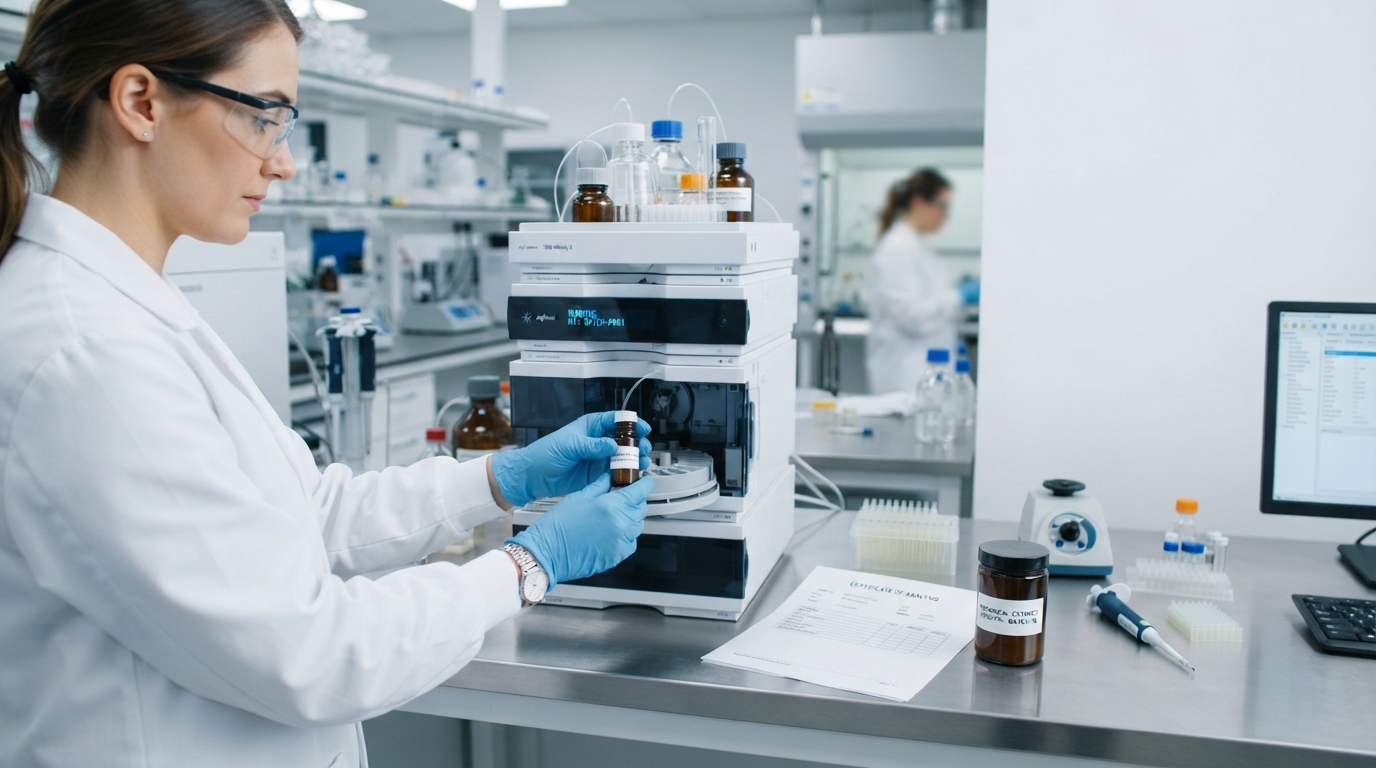
A supplier’s certificate of analysis is not automatically a guarantee that the material meets your specification. The U.S. FDA’s ICH Q7 guidance for active pharmaceutical ingredients makes this point directly: a supplier’s CoA may not always align with the user’s specifications, which is why independent review and supplier evaluation remain necessary.
Use this workflow to verify a CoA before you commit to an order:
- Confirm the product identity. Check the Latin binomial, plant part, extract form, standardization claim, and any extract ratio. A common name is not enough.
- Match the batch number. The CoA batch number should correspond to the batch number on the quotation, packing list, or shipping documents. If they differ, ask why.
- Compare specification limits with your own specification. Look at each acceptance range. Does the supplier’s limit meet your requirement? A result that is “within range” on the supplier’s CoA may still be outside your specification.
- Check the test methods. HPLC and UV/Vis are not interchangeable for every analyte. The CoA should state the method used and, where appropriate, the method reference.
- Review the dates. The manufacture date and retest date must be realistic for the batch you are buying. An old CoA attached to a new batch is a red flag.
- Look for the full test panel. Identity, assay, heavy metals, microbiology, and other applicable contaminants should be covered for your intended application.
- Confirm the document is formally issued. Check for the supplier name, batch reference, signatory name, issue date, and document control references.
If any part of the CoA does not match your specification, do not assume the product is wrong. Ask the supplier to explain the discrepancy. In some cases, the supplier’s limit is tighter than yours. In other cases, the test method differs and the results are not directly comparable. If the document cannot be reconciled, treat the batch as non-conforming until the supplier provides a corrected CoA or an acceptable explanation.
Potency, Purity, and Extract Ratio: Understanding the Numbers
Many sourcing errors come from confusing three different ways to describe an extract.
| Term | Example | What It Tells You | What It Does Not Tell You |
|---|---|---|---|
| Assay or potency (%) | 10% marker compound by HPLC | How much of a specified marker or active compound is present in the extract | Whether the extract is “strong” in a clinical sense |
| Purity (%) | 95% purity of an isolated compound | How much of the material is the stated compound versus other compounds | Which botanical the compound came from |
| Extract ratio | 10:1 | How many parts of raw botanical material were processed into one part of extract | The concentration of any specific active compound |
| Concentration (mg) | 500 mg per serving | How much extract or compound is present in a finished dose | The percentage of active compound in the raw extract |
A 10:1 extract does not automatically contain 10% of anything. A 95% pure compound does not automatically have a specific potency in a biological assay. Always check which unit the supplier is using and compare the same unit on both sides of the specification.
Identity and Contaminant Tests to Look For
The tests required for a botanical extract depend on the botanical, the extraction process, and the intended application. Most commercial CoAs cover at least the categories below.
| Test Category | What It Detects | Why It Matters |
|---|---|---|
| Identity testing | Botanical species, plant part, and chemical profile | Confirms the material is the correct botanical and has not been substituted |
| Assay / potency | Concentration of a specified marker or active compound | Confirms the extract meets the agreed strength |
| Heavy metals | Lead, arsenic, cadmium, mercury | Critical for food, supplement, and many cosmetic applications |
| Microbiology | Total aerobic count, yeast and mold, E. coli, Salmonella | Required for products consumed or applied to the body |
| Pesticide residues | Agricultural pesticides remaining in the raw material | Important for botanicals grown as agricultural crops |
| Residual solvents | Solvents carried over from the extraction process | Important when solvents are used in manufacturing |
If your application is regulated, do not rely on a generic “all relevant tests performed” statement. Ask the supplier to show which tests were run for the exact batch and whether the limits align with your market’s requirements.
What to Ask a Botanical Extract Supplier Before Ordering

Before you send a purchase order, confirm the following:
- Can the supplier provide a current CoA for the exact batch you are buying?
- Does the CoA include the botanical name, plant part, batch number, manufacture date, and retest date?
- Which test methods are used for identity and assay?
- Which contaminant tests are routine, and which are available on request?
- Can the supplier provide a TDS and SDS for the product?
- What source material, country of origin, and extraction method are used?
- Is the product standardized to a marker compound, or is it sold on an extract ratio basis?
- Are batches reviewed against your specification, or only against the supplier’s own limits?
- Are samples available for evaluation before a production order?
- What packaging, storage conditions, and shelf life apply to the material?
- What are the MOQ and lead time for the product form you need?
- Can a quality agreement define the specification, testing, and documentation responsibilities?
These questions are not just procurement formalities. They reveal whether the supplier treats documentation as a routine attachment or as a real quality commitment.
Why a CoA Alone Does Not Guarantee Supplier Quality
A CoA is evidence about one batch. It is not proof of the supplier’s overall manufacturing standards, certification scope, or long-term consistency.
A supplier may provide a clean CoA for a sample batch but fail to maintain batch-to-batch consistency. A supplier may hold a GMP or ISO certificate that covers one site or one product line, while a completely different line does not fall under that scope. A supplier may also issue a CoA that is accurate for the batch tested but does not match the specification you originally requested.
That is why the CoA should be one part of a broader supplier evaluation. In addition to reviewing the document, confirm which certifications apply to the exact product and site, and check whether the supplier can support the claims with a certificate number, issuing body, and scope. For guidance on which quality marks actually matter for plant extracts, review what certifications should i look for when sourcing plant extracts. If you are specifically evaluating a manufacturer’s GMP status, see our guide to choosing a gmp certified botanical extract manufacturer.
A CoA is necessary. It is not sufficient by itself.
Sourcing Botanical Extracts From B-Thriving
B-Thriving I/E Co., Ltd. supplies herbal extracts, APIs, and natural ingredients to B2B buyers worldwide. When you contact B-Thriving, ask for the current CoA and TDS for the exact extract you are sourcing, and specify the botanical name, plant part, standardization or extract ratio, and intended application.
A responsible supplier should be able to tell you which batch the CoA refers to, which test methods were used, and which specification the results are measured against. If you need a sample, a quotation, or confirmation of packaging and lead time, those details should be tied to the same product specification so you can compare documents and not just product names.
Start by reviewing the product information on the B-Thriving website, then request the batch-specific documentation for the extract on your specification sheet. That step turns a general supplier conversation into a concrete, verifiable sourcing process.
Frequently Asked Questions
Can I request a sample CoA before ordering?
Yes. A responsible supplier should be able to provide a current, representative CoA and TDS for the extract you are evaluating. Keep in mind that a sample CoA covers an existing batch. If you order a different production lot, you should receive the CoA for that specific batch before shipment.
What should I do if the supplier’s CoA does not match my specification?
Ask the supplier to explain the difference. The discrepancy may be due to a different test method, a different specification limit, or a non-conforming batch. If the supplier cannot reconcile the document with your specification, do not accept the batch unless the deviation is formally agreed in writing.
Is third-party testing always required?
Not always, but it depends on your application and risk tolerance. A reliable supplier CoA can be sufficient for many ingredients. For regulated applications, high-risk botanicals, or new suppliers, third-party laboratory testing provides independent confirmation and should be considered part of your supplier qualification process.

