
As a prominent Manufacturer of Monk Fruit Extract, B-Thriving I/E Co., Ltd. appreciates how this extraordinary fruit is transforming the space for natural sweeteners. But, first, what is Monk Fruit Extract, and why do food companies worldwide want to add this to their recipes? This is the definite guide.
What is Monk Fruit, and What is Its Origin?
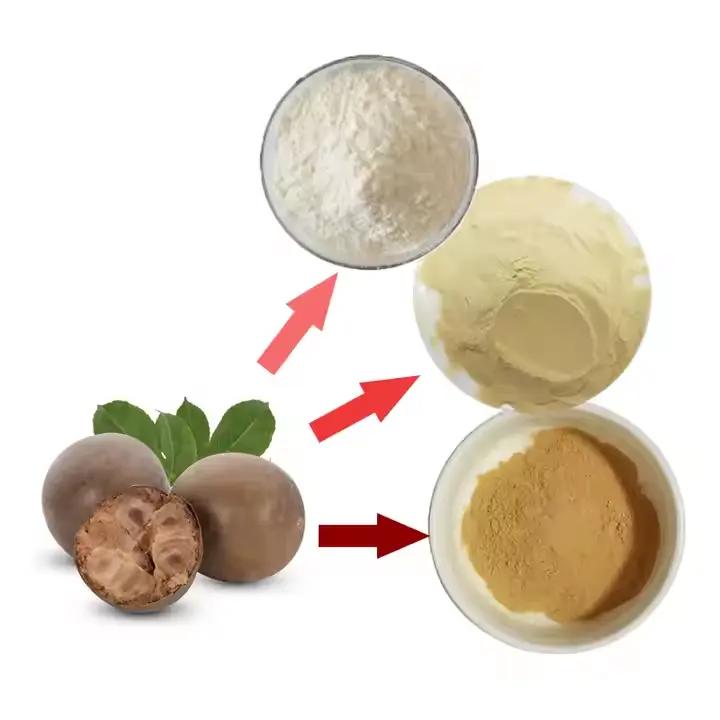
Monk fruit or Luo Han Guo is a small gourd or green melon fruit that grows in the southern mountainous region of China. Its scientific name is Siraitia grosvenorii and is a member of the Cucurbitaceae family, the same family that cucumbers, pumpkins, and melons belong to.
Due to its cooling, soothing, and anti-inflammatory character, the fruit has played an important role in Traditional Chinese Medicine. The fruit is dried and then made into tea or added to broths and soups.
The unique quality of Monk fruit is its ability to dry and extract the sweet element of the fruit to produce Monk fruit Extract as the final product.
The Sweet Component: Mogrosides
Monk fruit has a sweet taste, but this is not as a result of the sugar, but the fruit pulp contains Mogrosides. Mogrosides are a family of bioactive compounds that are non-caloric and provide impressive sweetness. These compounds are triterpene glycosides.
•Mogrosides V is the powerhouse that contributes about 30% of the sweetening properties of Monk fruit and is the most abundant sweetening compound in the fruit.
•Up to 300 Times Sweeter than Sugar: Mogrosides are said to be around 300 times sweeter than table sugar.
•Zero Metabolic Impact: Mogrosides are unlike carbohydrates, as they do not break down into glucose, and thus, do not spike blood sugar or insulin levels.
The Benefits of Monk Fruit are More than Just Zero Calories
Monk fruit extract is a unique sugar alternative that not only aids in the reduction of sugar, but serves to improve the quality of a product.
•All the sweetness, none of the calories. Monk fruit extract is comprised of mogrosides, which are not processed in the body like sugar is, and therefore, do not contain any calories or carbohydrates. This aids in the reduction of sugar in weight reduction product formulations.
•Sweetness without blood sugar concerns. Since monk fruit does not spike blood glucose levels, it is appropriate to include in formulations that need to consider and manage the glycemic index. It has been found in studies that it can help to stabilize, more than traditional sugar, the blood glucose and insulin levels after meals.
•Antioxidants combined with anti-inflammation activities. Monk fruit provides more than just sweetness. Amino acids, terpenoids, flavonoids and other antioxidant compounds that improve protection against the cellular damage that is the result of chronic diseases.
•Celebration of clean labels. Monk fruit extract, as a whole fruit extract, and as minimally processed also lends itself beautifully to the clean label, which consumers are demanding from brands.
Market Expansion: A Billion Dollar Industry
The monk fruit extract market is experiencing magic in the market, which presents a trusted Monk Fruit Extract manufacturer the opportunity to help brands capture the growing demand.
The monk fruit extract powder market was 276 million dollars in 2024 and is expected to hit 1,392 million dollars in 2031, showing a compounded annual growth rate (CAGR) of 26.4% between 2025 and 2031.
The greatest concentration of industry activity and consumption – approaching 45% of global market ownership – is located in North America. This is explained by the widespread and fast-growing acceptance of beverages and functional foods that are marketed as having a zero-sugar content.
Industry studies predict this direction of progress and behavior will continue. The “Pure Monk Fruit Extract” segment alone is expected to reach US$2.5 billion by 2033.
Why Traditional Sourcing Creates Supply Chain Gaps
Despite the booming demand, traditional monk fruit sourcing has struggled to keep pace. Over 90% of the world’s monk fruit supply is concentrated in a narrow geographic region of southern China. This dependency creates persistent problems for global buyers:
•Harvest-season limitations: The fruit is only available during a short annual harvest window, making year-round supply consistency a major challenge.
•Volume constraints: Scaling production requires more farmland, more labor, and ideal growing conditions—none of which can be expanded quickly.
•Price volatility: Geopolitical factors, trade policies, and agricultural disruptions can swing pricing unpredictably, squeezing brand margins.
•Mogroside V yields are naturally low: Mogroside V comprises only about 0.5% to 1.3% of dried monk fruit weight, so producing high-purity extract requires processing massive quantities of fruit.
The Future Is Fermentation: B-Thriving‘s Biotech Advantage
B-Thriving has taken a unique position as a Monk Fruit Extract Manufacturer by being one of the first companies in the industry to use biotechnology-enabled precision fermentation.
The company has a patented process for producing identical mogroside V, which is the sugar molecule in monk fruit, from fermentation. This has a few unique benefits:
•Production is possible year-round: Unlike orchard farming, which relies on the seasons, fermentation can be done around the clock.
•Bioreactors coupled with the ability to bring more farmland under cultivation means B-Thriving is flexible enough to meet an ever-changing market.
•No supply chain issues: You can expect the same prices and lead times because differences in farming and geography are removed.
•More consistency: The uncertainty in farming is eliminated. Say goodbye to crop-based extracts. Say hello to the consistent fermentation of mogroside V.
If you’d like to learn more about B-Thriving monk fruit extract updates and custom manufacturing, please visit HERE.
Common Queries
Q: Is monk fruit extract bad for people with diabetes?
A: Monk fruit extract is good for those with diabetes. Monk fruit extract is sugar and is typically safe. Monk fruit has a glycemic index of 0 and is a good addition for diabetes-friendly recipes.
Q: What about monk fruit extract aftertaste?
A: Monk fruit extracts that have a high purity and use mogroside V ≥50% have a taste that is very similar to sugar with no aftertaste of bitterness and licorice.
Q: Is monk fruit extract good for cooking and baking?
A: Yes! Monk fruit extract is good for cooking and baking and has a heat conviction. Monk fruit extract can be used for baked goods, beverages, sauces, and dairy products.
Q: How is B-Thriving’s monk fruit extract taste different from extracts that are fermented?
A: Because of the fermentation process, the monk fruit extract can be produced throughout the ear with the same quality and purity no matter the time of the year and where the monk fruits are grown.
Q: Monk fruit extract is a clean label. Is this correct?
A: Of course! Because the monk fruit extract is a whole-fruit-derived ingredient and has a very small surface processing and artificial additives, monk fruit extract has no issues with the clean label standards.

