

If you’re building a bar soap, a liquid hand wash, or a sulfate-free syndet bar, the “secret” is rarely one hero ingredient. Most performance comes from choosing the right ingredients used in soap making and balancing them for cleansing, foam, mildness, stability, and cost.
This guide breaks down what each ingredient class does, where it fits best, and what to watch during sourcing—so your formula behaves the same in pilot batches and in full production.
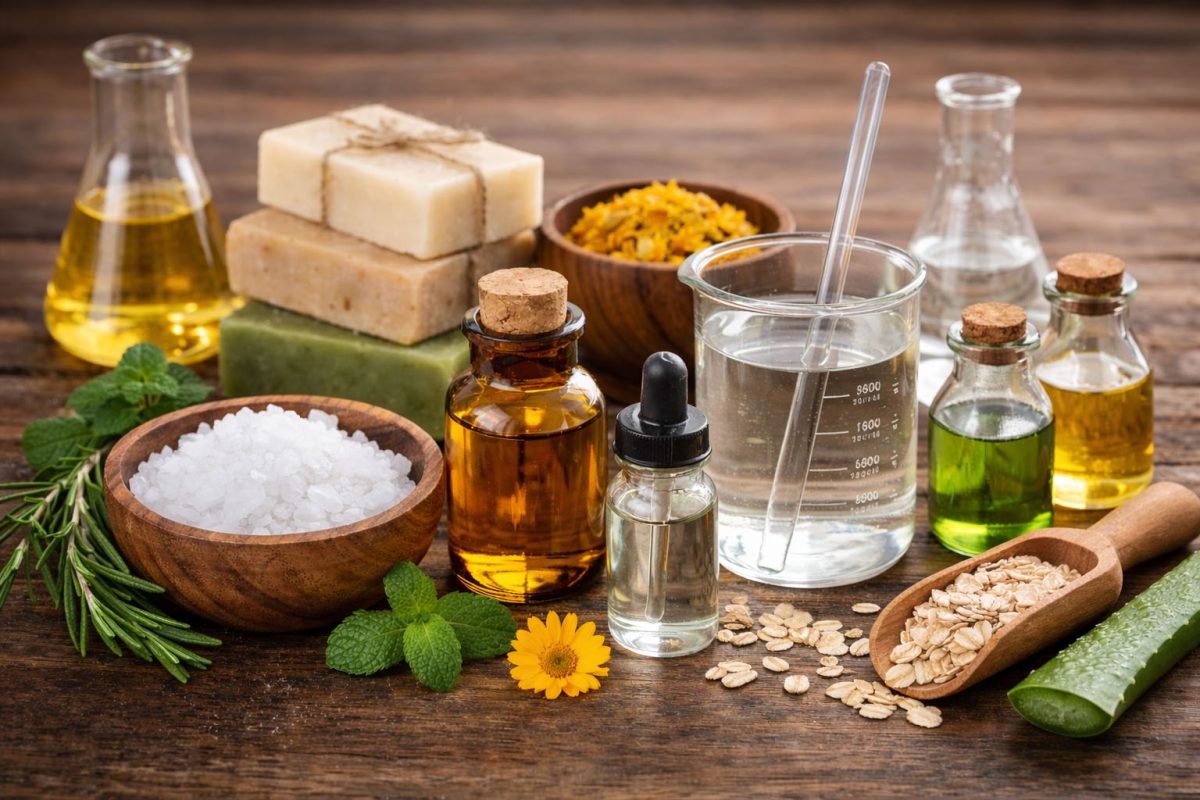
What “Soap” Means in Real Manufacturing
In chemistry, soap is the sodium or potassium salt of fatty acids, created when fats or oils react with an alkali (saponification). That classic route remains common for bar soaps and some liquid soaps.
At the same time, many modern “soap” products—especially gentle facial bars and premium body bars—are actually syndets (synthetic detergent bars). They use surfactants (often milder than traditional soap) plus binders, emollients, and functional additives. Kraft Chemical’s overview highlights how today’s cleansing products often mix traditional soap chemistry with surfactant-based systems to improve performance in hard water and to tune sensory feel.
So, when you evaluate ingredients used in soap making, start by deciding which system you’re building:
- Traditional soap (saponified oils + NaOH/KOH): classic feel, simple label options, can struggle in hard water.
- Surfactant-based wash (liquid hand wash / body wash): strong performance range, easier viscosity control, needs preservation.
- Syndet bar: gentle cleansing + good foam, more complex sourcing and processing.
The Core Building Blocks: Oils, Fats, and Alkali
1) Oils and fats (your “fatty acid profile”)
In saponification, oils/fats provide the fatty acids that become soap molecules. Different oils shift hardness, lather, cleansing strength, and how the bar feels after rinsing.
Common choices and what they typically contribute:
- Coconut / palm kernel: quick lather and stronger cleansing; can feel drying if used too high
- Olive / high-oleic oils: milder feel, creamier lather, slower trace
- Tallow / lard: hard bars, stable lather, “traditional soap” sensory profile
- Castor: helps stabilize foam and improve lather density (often used in smaller amounts)
For B2B planning, the key is not only “which oil,” but also spec consistency (fatty acid profile range, peroxide value, odor, and color), because those drive batch-to-batch behavior.
2) Sodium hydroxide (NaOH) and potassium hydroxide (KOH)
NaOH is often used for solid bars; KOH is often used for softer soaps or liquid soaps. In the manufacturing view shared by Kraft Chemical, saponification is the central step where triglycerides react with an alkali to form soap plus glycerin.
Practical notes that matter in production:
- Purity and assay of NaOH/KOH affect calculation accuracy
- Water quality affects trace time and appearance
- Safety controls are non-negotiable (handling, PPE, storage, training)
3) Water (and why hard water changes results)
Water isn’t just a carrier. Mineral-rich water (hard water) can react with soap to form insoluble salts (“soap scum”), reducing lather and leaving residue. This is one reason detergent surfactants are widely used in modern cleansing formulas.
Surfactants Used in Modern Soap and Wash Formulas
If you’re formulating liquid hand soap, body wash, shampoo bars, or syndets, surfactants do most of the cleansing work. Kraft Chemical’s list highlights several common surfactants seen in soap and personal care formulas.
Anionic surfactants (cleansing + foam)
- SLS / SLES: strong cleansing and foam; widely used, often blended for mildness and viscosity control
- Sodium coco-sulfate (SCS): coconut-derived blend often positioned as a “milder sulfate” option
- Sodium cocoyl isethionate (SCI): common in syndet bars for rich foam with a softer skin feel
- Alpha olefin sulfonate (AOS): strong foam and good hard-water tolerance in many systems
Amphoteric surfactants (mildness + foam boosting)
- Cocamidopropyl betaine (CAPB) is often used to reduce irritation potential and stabilize foam when blended with anionics.
A practical buying tip: ask suppliers for active matter %, salt curve guidance, and recommended blend ratios for your target viscosity and clarity. Those details cut reformulation time.
Supporting Ingredients That Make Formulas Stable and Pleasant
Once cleansing is solved, the next fight is stability: viscosity drift, microbial risk, oxidation, scent fade, and discoloration.
Humectants and skin-feel builders
- Glycerin: can improve glide and reduce tight feel after rinsing (also a byproduct of saponification)
- Emollients / esters / oils: used more in syndets and liquid washes to soften feel
Chelators (performance in hard water)
Chelators bind calcium and magnesium so your cleanser performs more consistently in different regions. Hard water’s impact on soap is well documented, so chelation is often a practical “insurance policy” for national or global launches.
Common chelator options in personal care include EDTA salts and other modern alternatives (choice depends on label goals and regional requirements).
Preservatives (mainly for liquid products)
Liquid soaps and washes often need preservation because they contain water and can be exposed during use. Your preservation strategy depends on:
- pH range
- surfactant system
- packaging
- target markets and compliance needs
Kraft Chemical’s article lists examples like methylchloroisothiazolinone and sodium benzoate in the wider chemical set used around soap and cleansing systems. (Your final selection should be made with regulatory and safety review for the markets you sell into.)
pH and viscosity adjusters
- Citric acid is often used for pH adjustment in wash formulas
- Sodium chloride (salt) can increase viscosity in many surfactant systems (though the response depends on the blend)
Fragrance, essential oils, and botanical extracts
This is where many brands differentiate. In soap and wash products, botanicals may be used for:
- scent profile (essential oils)
- color (natural pigments)
- marketing story (oat, aloe, calendula, turmeric, charcoal, clays)
- mild functional support (comforting skin feel, deodorizing perception)
For these materials, documentation matters: origin, allergens, pesticide controls, heavy metal limits, and microbiology specs.
Antibacterial Soap vs Regular Soap: What to Know
“Antibacterial” claims bring extra scrutiny and can change your ingredient choices.
The FDA has stated that certain active ingredients (including triclosan and triclocarban) are not allowed in OTC consumer antiseptic wash products marketed under that monograph pathway. So, if your plan includes antibacterial positioning, you need a compliance-first strategy for target markets.
Benzalkonium chloride (BZK) appears as an active ingredient on OTC antiseptic hand wash labels, showing how some products are positioned and labeled in practice. Still, regulatory status and allowed claims depend on region, product type, and intended use—so treat this as a regulatory project, not only a formulation choice.
How to Choose Ingredients That Scale
Here’s a practical checklist procurement and R&D teams can share:
- Define the system early: saponified soap, liquid surfactant wash, or syndet bar
- Lock key specs: active matter, assay, fatty acid profile range, odor/color limits
- Plan for water variability: consider chelation if you sell across regions
- Control microbes: preservation strategy + packaging choice + micro testing plan
- Request full documentation: COA, SDS, allergen statements, heavy metals, micro limits, country of origin
- Pilot with the same grades you will scale: small grade changes can shift viscosity, foam, and color
Where Biobthriving Fits for Soap and Personal Care Brands
Biobthriving (Xi’an B-Thriving I/E Co., Ltd.) supplies herbal extracts, natural products, and plant pigments used across cosmetics and personal care applications. For soap and wash brands, botanical extracts and natural color solutions are often the fastest way to create a signature line—while keeping your base cleansing system stable.
If you’re planning a new cleanser or a soap line, share your target format (bar, liquid, syndet), your preferred label style (natural focus, fragrance-free, color-free, etc.), and your compliance markets. Then you can shortlist the right ingredients used in soap making—without rework after scale-up.

