In 2026, Natural Plant Extract is transforming brand strategies for selecting and qualifying botanical actives. China remains the pivot point for innovation, scale, and regulatory alignment. As a manufacturer and exporter, B-Thriving shares a practical view of what new buyers and experienced procurement teams should consider to purchase confidently, verify quality, and scale supply without unwelcome surprises.
Why China Leads in Natural Plant Extract
China’s advantage in Natural Plant Extract comes from three pillars: deep agricultural resources, mature processing know-how, and robust pharmacopoeia standards. This foundation helps brands move faster from ideation to launch. Yet even with this strength, buyers often encounter familiar hurdles – variation in raw herbs, drift in active content, and lab reports that are hard to reconcile across suppliers.
B-Thriving closes the gap between farm and chromatogram by controlling the full chain: authenticated starting material, validated drying/milling to protect actives, and orthogonal identity verification to ensure data-to-botany concordance. The result is predictable Natural Plant Extract performance in your formulation and fewer deviations when you scale.
Who We Are: B–Thriving In Brief
Founded in 2010, Xi’an B-Thriving I/E Co., Ltd. manufactures and supplies herbal extracts, natural products, and select active pharmaceutical ingredients. We serve pharmaceuticals, biotechnology, molecular biology, cosmetics, nutrition, and feed additives. For buyers, our edge shows up as quicker formulation, fewer quality deviations, and documentation that passes audits without delay.
Our advanced pulverizing technology preserves volatile oils and thermolabile compounds while delivering fine milling for hygroscopic and aromatic botanicals. That improves blend uniformity, dissolution, and compression behavior in tablets. Our R&D team studies both well-known and rare medicinal plants, grounding development in pharmacology references and building stable supply lines that match your pipeline needs.
Quality by Design From Source to Lab
Quality is embedded throughout, reducing corrective actions and schedule variability.
Raw Material Selection
• Origin/species verification via botanical identification, morphological evaluation, and confirmatory chemical markers.
• Clean starting material: documented field inspections; only lots meeting acceptance criteria are released to manufacture.
• Storage discipline: Because many Natural Plant Extract powders are hygroscopic, we control temperature, humidity, and packaging to protect active compounds.
Advanced Processing and Testing
• Low-temperature drying: Preserves actives and helps lower microbial load. Decontamination: Validated, matrix-specific workflows for each plant material.
• Fine grinding: Even particle size helps blending, boosts extraction, and supports tablet compression.
• Multiple checks for identity: We use microscopes and spectroscopy plus HPLC, GC, and UV-Vis, rather than relying on just one test.
Compliance that Keeps Improving
We follow the Chinese Pharmacopoeia. Typical limits we use:
• Heavy metals: Pb ≤ 3 ppm; As ≤ 2 ppm; total heavy metals ≤ 10 ppm
• Microbiology: Total plate count ≤ 1,000 CFU/g; yeast and mold ≤ 100 CFU/g; E. coli and Salmonella absent
• Moisture: usually ≤ 5% for dry powders
• Our own lab tests raw materials, monitors production, and approves final batches with COAs.
• We keep refining methods, reducing variation, and updating files as standards change.
Focused Range of Natural Plant Extracts
• Standard herb extracts: Ratio extracts for nutrition and cosmetics, with stable taste and active levels.
• Monomers: Purified actives for pharma and advanced nutraceuticals, measured with precise assays.
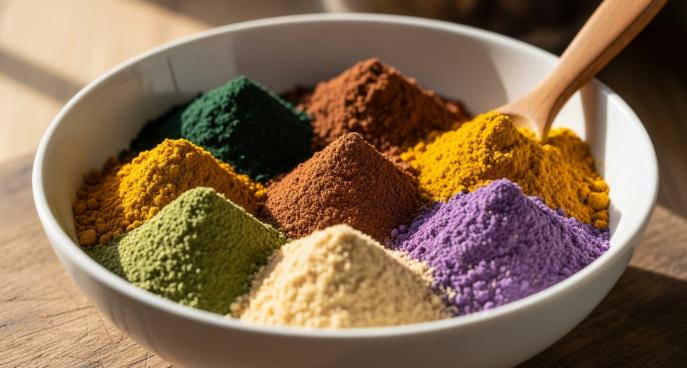
• Plant pigments: Natural colors for drinks, food, and personal care, backed by stability data.
• Fungal extracts: Mushroom compounds for immune and wellness.
• APIs: Select pharmaceutical ingredients under GMP-aligned controls with full traceability.
• Amino acids, vitamins, enzymes: Core ingredients for nutrition and biotech that work well with plant extracts.
• Lipidosome And Microcapsule Products: Encapsulation improves stability, taste masking, and bioavailability – useful in gummies, beverages, and topical formats.
Sourcing Playbook: What Smart Buyers Do First
If you are new to Natural Plant Extract procurement, start by defining three essentials: the plant, the target actives, and the regulatory pathway. Then build simple checks that catch variation before it lands in your factory.
• Confirm identity and assay: Request HPLC, GC, or UV-Vis data tied to the Chinese Pharmacopoeia or harmonized methods. Orthogonal identity (microscopy or spectroscopy) reduces false matches.
• Ask for microbial and heavy metals limits: Practical ranges for many extracts are TPC ≤ 1,000 CFU/g; yeast and mold ≤ 100 CFU/g; Pb ≤ 3 ppm; As ≤ 2 ppm. Ask your lab reports to show which test methods were used.
• Pick safe solvents: Prefer water or food-grade ethanol, and check residuals meet the rules for your market.
• Keep powders dry and stable: Hygroscopic products need moisture-barrier packaging and controlled storage. Aim for ≤ 5% moisture and get shelf-life data from real warehouse conditions.
• Set expectations: Typical lead time is 7–15 days after you approve the spec. Confirm MOQs and how scaling will work.
Gather the paperwork: COA, validated methods, species proof, and full traceability protect your brand and make audits faster.
One Rule That Always Helps
Lock your spec early, then sample and approve against that spec. When lab and production stay aligned – on identity, assay range, particle size, microbial limits, and packaging – downstream issues drop sharply. This is especially true for Natural Plant Extract products destined for compressed tablets, transparent beverages, or high-aroma cosmetics, where small quality drifts are easy to detect.
Data Buyers Frequently Request
To streamline onboarding, prepare a short checklist when you evaluate a Natural Plant Extract supplier:
• Target actives and assay range (e.g., 95% monomer or 10:1 ratio extract).
• Residual solvent statement and extraction flowchart.
• Heavy metals and microbiology limits with method references.
• Moisture content targets and packaging type (moisture-barrier inner bag, carton or drum).
• Stability summary and recommended storage conditions.
• Batch size, lead time, and contingency capacity for surge demand.
• COA samples, signed specifications, and change-control policy.
With these points documented, teams can compare suppliers objectively and flag gaps early – before a trial batch leaves the factory.
How B–Thriving Simplifies Natural Plant Extract Sourcing
Predictability matters when you move from R&D to commercial production. With B-Thriving, you gain transparent testing, stable supply, and a team that understands end-use realities – whether your product is a tablet, serum, beverage, or feed additive. Our process preserves actives, our analytics validate identity and purity, and our documentation aligns with audits in major markets.
We also offer application support. Whether it’s particle sizing for consistent mouthfeel, odor control for cosmetic bases, or encapsulation for taste and bioavailability, we’ll deliver the right Natural Plant Extract or microencapsulated option – on spec and on time.
Partner with B–Thriving: Get COAs, samples, and pricing, or schedule a lab consult. Share actives, regulatory scope, and packaging. We’ll propose the fit-for-purpose extract, lock the quality plan, and commit to a schedule you can operationalize.
Make 2026 the year you build a resilient, streamlined Natural Plant Extract supply.

