
Cordyceps Sinensis Extract for Fatigue is receiving renewed attention in 2026 because the conversation around energy support is becoming more clinical, more evidence-led, and more quality-focused. At B-Thriving, we see a clear shift in how buyers, formulators, and health-conscious consumers evaluate this category. They no longer respond to tradition alone. They want to understand what human studies suggest, which product forms are more practical, and how a manufacturer can deliver consistency in a market shaped by both scientific interest and sourcing pressure.
Why Fatigue Support Is Being Reframed in 2026
Fatigue is no longer treated as a vague wellness topic. In 2026, it is increasingly discussed through the lens of recovery, work capacity, exercise tolerance, sleep quality, and post-viral health. That change matters for the cordyceps category.
Recent human research has kept attention on this space. A 2025 randomized waitlist-controlled trial in Hong Kong assigned 110 participants with long COVID to receive Cs4 or waitlist control for 12 weeks. The study reported improvements in overall symptom severity, fatigue, insomnia, respiratory symptoms, and physical and mental quality of life, with no severe adverse events reported. That does not mean cordyceps is a universal fatigue solution, but it does show why the ingredient remains clinically relevant in fatigue-related discussions.
For manufacturers, this trend changes the message. The market now values:
•Measurable outcomes rather than broad wellness language
•Human data over folklore alone
•Stable ingredient forms over rare wild sourcing stories
•Safety and traceability alongside efficacy claims
This is exactly where a responsible Cordyceps Sinensis Extract for Fatigue product must stand today.
What Human Studies Actually Suggest
The most useful trend in 2026 is not hype. It is selectivity. Buyers are learning to separate animal data, mechanistic theories, and human outcomes.
One often-cited human study in amateur marathoners used 2 g per day for 12 weeks in a randomized, double-blind, placebo-controlled design. The authors reported lower heart rate at the same submaximal intensity by week 8 and improved aerobic performance by week 12. That is important because fatigue support is often connected with endurance, energy efficiency, and perceived exertion rather than instant stimulation.
An earlier placebo-controlled trial in healthy older adults used Cs-4 for 12 weeks and found a 10.5% increase in metabolic threshold and an 8.5% increase in ventilatory threshold, while VO2 max did not significantly change. In practical terms, that suggests cordyceps may be more relevant to submaximal performance and functional stamina than to dramatic headline-grabbing changes.
This pattern is valuable for client education. A professional market message should not promise instant energy. It should explain that Cordyceps Sinensis Extract for Fatigue is better positioned as a structured daily support ingredient for resilience, physical output, and recovery-oriented wellness.
Why Product Form Matters More Than Marketing
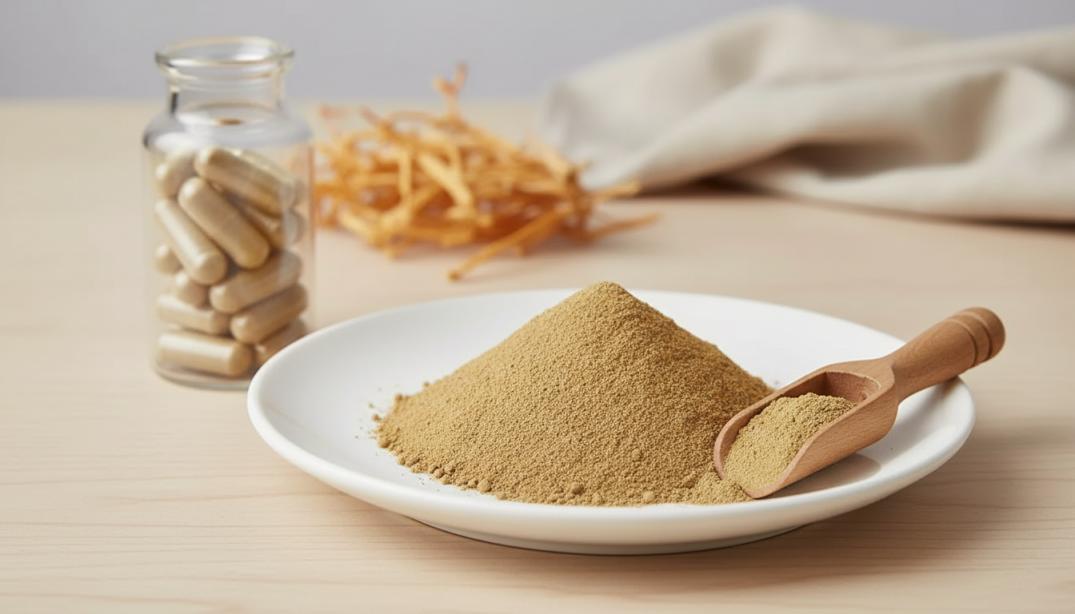
Another 2026 trend is the growing focus on product form. Many commercial cordyceps supplements are not harvested from wild caterpillar fungus. They are made from cultured or fermented material, including Cs-4-type preparations. NIH LiverTox notes that many current commercial products are derived from laboratory-grown versions rather than the natural fungus, and commonly marketed doses range from 0.5 to 4 g daily.
That matters for two reasons.
First, wild OphioCordyceps Sinensis Extract is under serious sourcing pressure. The 2025 review concluded that climate change and overharvesting have placed this species in a critically endangered position, while artificial cultivation remains necessary for a more sustainable supply chain.
Beyond that, cultivated and fermented forms are significantly more practical for modern manufacturing use. They offer better batch planning, better quality control, and more realistic pathways for standardized production.
At B-Thriving, we believe the future of Cordyceps Sinensis Extract for Fatigue is not built on rarity. It is built on controllable quality. For clients, that means asking the right questions:
•Is the ingredient wild, cultivated, or fermented mycelium based?
•Are marker compounds and identity testing clearly documented?
•Is the formula designed for daily use, not novelty value?
•Can the supplier support traceability and repeat orders?
Safety and Compliance Are Now Part of the Sales Story
In 2026, safety is no longer a secondary note at the bottom of a product page. It is part of the core buying decision.
NIH LiverTox states that cordyceps extracts are generally well tolerated, with reported adverse events usually mild, such as abdominal discomfort, diarrhea, dry mouth, nausea, poor appetite, and rash. It also notes that published reports of clinically apparent acute liver injury attributed to cordyceps are lacking, although rare case-level concerns still underline the need for proper manufacturing oversight.
For brands and distributors, this has direct commercial value. A credible product story should include:
•Ingredient identity and specification control
•Contaminant and heavy metal testing
•Transparent dosage guidance
•Careful wording that avoids unsupported disease claims
This is especially important for Cordyceps Sinensis Extract for Fatigue, because fatigue is associated with many different health contexts. A supplement should be presented as supportive nutrition, not as a substitute for medical diagnosis or treatment.
What Buyers Should Expect From a Modern Manufacturer
From a manufacturing perspective, 2026 buyers are more educated than before. They do not only ask what the ingredient is. They ask how it is made, how it is tested, and how it fits into a wider product strategy.
At B-Thriving, our view is straightforward. A strong cordyceps product should combine evidence awareness with manufacturing discipline. That includes stable raw material selection, practical dosage form design, and documentation that helps clients build trust in their own market.
For example, a modern Cordyceps Sinensis Extract for Fatigue offering may be positioned through:
•Capsule, tablet, powder, or sachet formats for different channels
•Cultivated or fermented raw materials that support supply continuity
•Specification-driven sourcing for better consistency
•Label-friendly positioning for energy, stamina, and recovery support
This is where good manufacturing becomes commercial advantage. A well-designed product is easier to explain, easier to register, and easier to scale.
Where the Category Is Going Next
The most important clinical trend in 2026 is not that cordyceps has suddenly become new. It is that the category is becoming more mature. Research is moving toward defined populations, measurable fatigue-related outcomes, and more realistic interpretations of what supplementation can and cannot do. Systematic review work in athlete populations also shows that fungal supplementation studies now pay closer attention to dose, duration, and study quality, which is helping the market move beyond vague claims.
For brands, distributors, and private-label buyers, this creates a better opportunity. The winning products in this space will not be the ones with the loudest language. They will be the ones that combine responsible science, dependable sourcing, and clear customer education.
If your brand is exploring Cordyceps Sinensis Extract for Fatigue, B-Thriving is ready to help you build a product strategy around quality, compliance, and market-ready positioning. Contact our team to discuss raw material options, dosage forms, and manufacturing support for your next fatigue-support formula.

